Lacework antique tatting
1344×768 · AVIF · CC BY 4.0

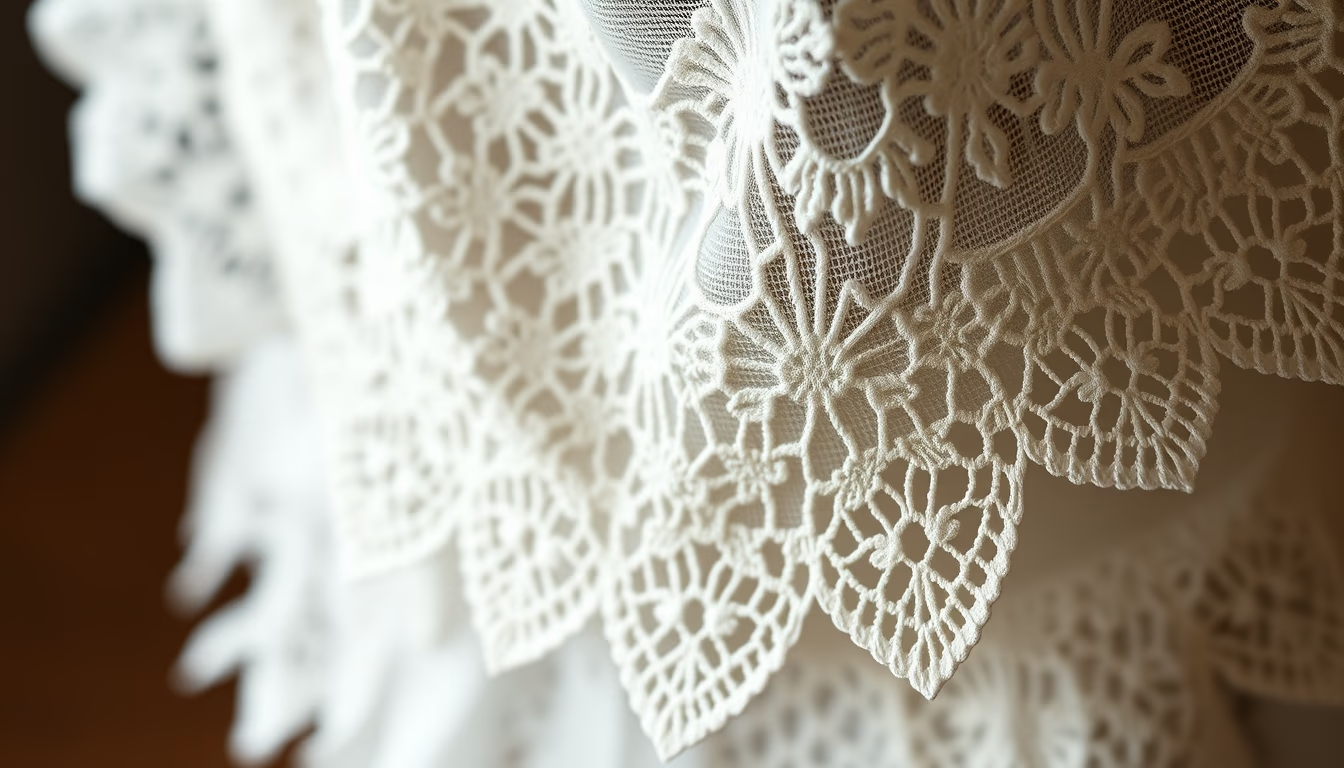
Antique tatting lacework: a textile technique that creates lace with knots and loops, popular in the 19th and 20th centuries in Europe and America.
About this subject
Tatting is a textile craft that produces delicate lace through knots and loops. Originating in the 19th century, it is believed to have evolved from earlier bobbin lace or frivolité techniques. Tatting became popular in the Victorian era, when middle-class women practiced it as a respectable pastime and a way to adorn clothing, linens, and household items.
Unlike other laces, tatting is made with a shuttle or special needle that creates rings and chains using simple knots. Traditional materials include linen, cotton, or silk, in light colors like white, ivory, or cream. The technique is known for its durability, as knots are tight and do not fray easily. Pieces of tatting have survived for over a century, passed down as family heirlooms.
Culturally, tatting was associated with femininity and refined handiwork, but it also had economic importance: in Ireland and parts of France, workshops produced tatting for export during the 19th century. Today, the technique is valued by enthusiasts of historical crafts and can be found in textile museums such as the Victoria and Albert Museum in London and the Brazilian Craft Museum in Recife. Antique tatting pieces are collected and studied as examples of textile design.
The complexity of tatting lies in combining geometric patterns like fans, flowerets, and arabesques, which require precision and patience. Unlike bobbin lace, which uses multiple threads simultaneously, tatting works with a single thread, giving it a more uniform and defined appearance. Despite its decline due to industrialization, tatting has resurged at craft fairs and online communities, keeping this centuries-old tradition alive.
Frequently Asked Questions
What is tatting?
Tatting is a textile technique that creates lace through knots and loops, using a shuttle or special needle.
How does tatting differ from other laces?
Tatting uses a single thread to form tight knots, resulting in a more uniform and durable fabric, unlike bobbin lace which uses multiple threads.
Where can I find antique tatting pieces?
Textile museums such as the Victoria and Albert Museum in London and the Brazilian Craft Museum in Recife have collections. Antique shops and fairs also offer them.
Direct URL
https://pub-c7d6a6ea828543ac903a74a341ccb2e1.r2.dev/imagens/lacework-antique-tatting-long-exposure-fresh7.avifHow to credit
Include a visible link back to UtilizAí. Copy one of the snippets below:
<a href="https://xn--utiliza-eza.com/en/midia/imagens/lacework-antique-tatting-long-exposure-fresh7">Lacework antique tatting</a> by <a href="https://xn--utiliza-eza.com">UtilizAí</a>, licensed under <a href="https://creativecommons.org/licenses/by/4.0/">CC BY 4.0</a>.
[Lacework antique tatting](https://xn--utiliza-eza.com/en/midia/imagens/lacework-antique-tatting-long-exposure-fresh7) by [UtilizAí](https://xn--utiliza-eza.com), CC BY 4.0
License: CC-BY-4.0