Lacework antique tatting
1344×768 · AVIF · CC BY 4.0

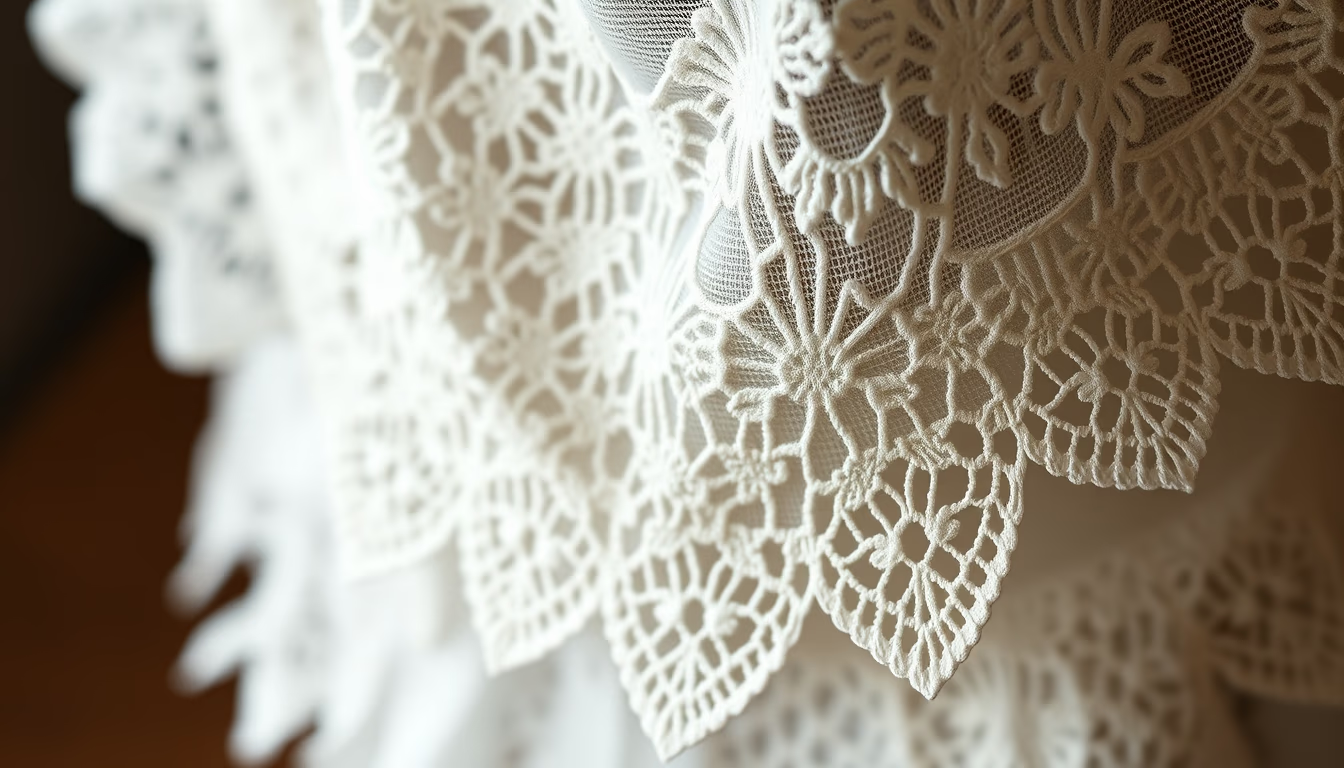
Antique tatting lacework, a manual shuttle technique that creates delicate lacy patterns, prized in vintage pieces and high-fashion collections.
About this subject
Tatting, also known as shuttle lace or frivolitê, is a centuries-old textile technique that creates knots and rings using a small shuttle. Unlike bobbin lace or needle lace, tatting does not require a support or warp: the thread is wound onto the shuttle, and with precise movements, double stitches, picots, and rings are formed. The technique boomed in the 19th century with the mass production of shuttles made from ivory, bone, or metal, and became a fashionable pastime for Victorian ladies. European patterns featured floral and geometric designs, used in trousseaux, hems of sheets, and collars of dresses. In Brazil, tatting arrived with European immigrants and survives as a handcraft, especially in the South and Southeast, though less widespread than the bobbin lace (renda de bilro) of the Northeast. Today, designers revive tatting as an exclusive detail in wedding gowns, fine lingerie, and high-fashion accessories. The durability and natural sheen of cotton or silk thread give a sophisticated vintage touch. Antique tatting, especially from the late 19th and early 20th centuries, is collected by textile museums and enthusiasts, valued for pattern complexity and thread quality. Recent runway collections by houses like Valentino and Chanel have incorporated tatting elements, showcasing the technique's versatility between handcraft and contemporary luxury.
Frequently Asked Questions
What is tatting and how does it differ from other laces?
Tatting is a lace technique made with a shuttle, producing knots and rings. Unlike bobbin lace (which uses many threads and a pillow) or needle lace (which uses a needle and frame), tatting creates patterns exclusively through double stitches and picots, resulting in a firmer, more geometric texture.
Is tatting still practiced in Brazil?
Yes, though less common than bobbin lace, tatting is maintained by artisan communities of European descent, mainly in Rio Grande do Sul, Santa Catarina, and São Paulo. There are groups and online courses teaching the technique, which is gaining new followers as traditional crafts are revived.
Why is antique tatting valued in fashion and collecting?
For its rarity, pattern complexity, and thread quality (Egyptian cotton, raw silk). 19th-century pieces are hard to find in good condition, and high-fashion designers use them as inspiration or authentic details, adding exclusivity and historical value to their collections.
Direct URL
https://pub-c7d6a6ea828543ac903a74a341ccb2e1.r2.dev/imagens/lacework-antique-tatting-high-fashion-editorial-fresh2.avifHow to credit
Include a visible link back to UtilizAí. Copy one of the snippets below:
<a href="https://xn--utiliza-eza.com/en/midia/imagens/lacework-antique-tatting-high-fashion-editorial-fresh2">Lacework antique tatting</a> by <a href="https://xn--utiliza-eza.com">UtilizAí</a>, licensed under <a href="https://creativecommons.org/licenses/by/4.0/">CC BY 4.0</a>.
[Lacework antique tatting](https://xn--utiliza-eza.com/en/midia/imagens/lacework-antique-tatting-high-fashion-editorial-fresh2) by [UtilizAí](https://xn--utiliza-eza.com), CC BY 4.0
License: CC-BY-4.0