Lacework antique tatting
1344×768 · AVIF · CC BY 4.0

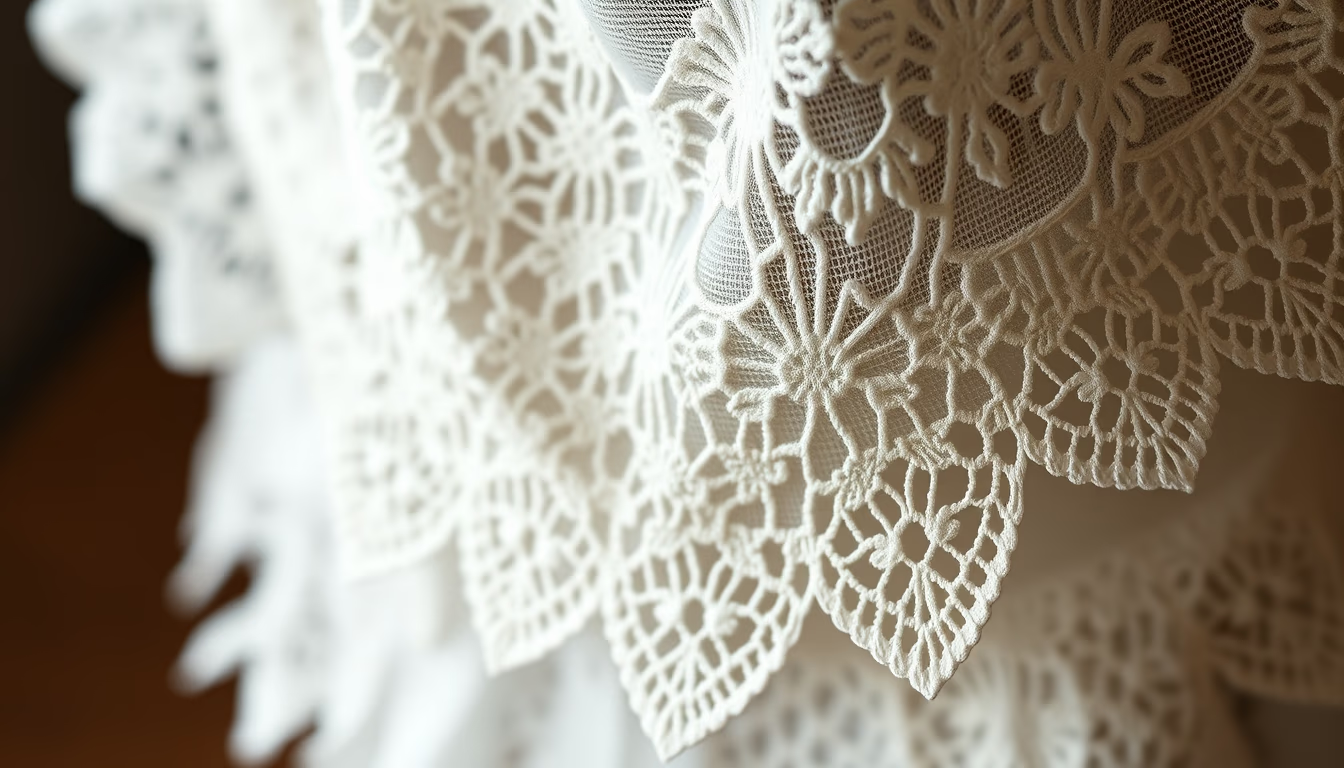
Antique tatting lacework is a textile technique that creates intricate lace using only a needle and thread, highly prized in 19th-century pieces.
About this subject
Tatting is a lace-making technique that uses knots and loops to form geometric patterns, without the need for looms or pillows. Unlike bobbin lace or crochet, tatting is executed with a shuttle or needle, allowing the creation of motifs such as rings and chains. This technique emerged in 19th-century Europe, possibly derived from older methods of making fringes and trimmings.
Antique tatting pieces are often found in museum collections and family heirlooms, including collars, cuffs, tablecloths, and napkins. The peak of its popularity was during the Victorian era, when upper-class ladies dedicated hours to handwork. In Brazil, tatting arrived with European immigration and was adapted in regions like Minas Gerais and Rio Grande do Sul, where artisans still preserve the technique.
A historical curiosity: tatting was taught in girls' schools as part of domestic education, and pattern books circulated in Europe as early as 1850. The technique requires patience and precision, as each knot must be firm and uniform. Today, antique tatting is valued by collectors and can fetch high prices at auctions, especially when accompanied by provenance documentation.
In the global textile culture, tatting represents a link between handcraft tradition and innovation. While industrial lace production has modernized, hand tatting continues as a practice of cultural resistance, with enthusiast groups in various countries sharing patterns and techniques online.
Frequently Asked Questions
What is the difference between tatting and crochet?
Tatting uses a shuttle or needle to form knots and loops, while crochet uses a hooked needle to create continuous loops. Tatting produces more open and geometric lace.
Where can I find authentic antique tatting pieces?
Antique tatting pieces can be found at antique shops, flea markets, specialized auctions, or family heirlooms. Textile museums also hold collections.
Is tatting still practiced today?
Yes, there are communities of artisans and enthusiasts who keep the technique alive, with online tutorials and pattern exchange groups. It is valued as a hobby and art form.
Direct URL
https://pub-c7d6a6ea828543ac903a74a341ccb2e1.r2.dev/imagens/lacework-antique-tatting-film-grain-authentic-fresh4.avifHow to credit
Include a visible link back to UtilizAí. Copy one of the snippets below:
<a href="https://xn--utiliza-eza.com/en/midia/imagens/lacework-antique-tatting-film-grain-authentic-fresh4">Lacework antique tatting</a> by <a href="https://xn--utiliza-eza.com">UtilizAí</a>, licensed under <a href="https://creativecommons.org/licenses/by/4.0/">CC BY 4.0</a>.
[Lacework antique tatting](https://xn--utiliza-eza.com/en/midia/imagens/lacework-antique-tatting-film-grain-authentic-fresh4) by [UtilizAí](https://xn--utiliza-eza.com), CC BY 4.0
License: CC-BY-4.0