Lacework antique tatting
1344×768 · AVIF · CC BY 4.0

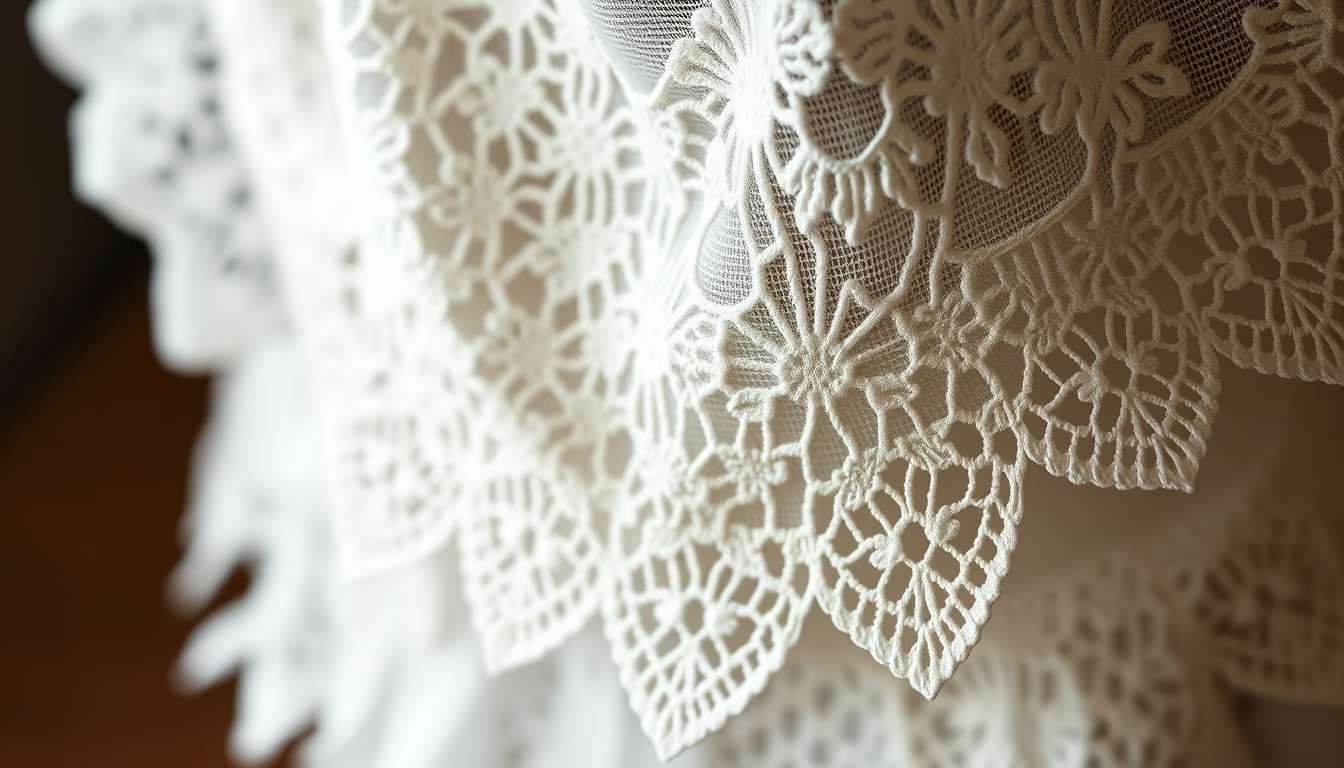
Antique tatting is a handmade lace technique using a shuttle, popular in the 19th and 20th centuries for adorning clothing and household items.
About this subject
Tatting, also known as frivolite, is a lace-making technique that uses a shuttle to create decorative knots. Unlike bobbin lace or crochet, tatting forms rings and arches with a specific knot called the tatting knot or double stitch. This technique emerged in early 19th-century Europe, possibly as an evolution of macramé, and quickly spread as a feminine pastime and a way to produce delicate trims for clothing, handkerchiefs, towels, and other textile articles.
Antique tatting pieces are valued for their fineness and complexity. Older pieces from the 19th century are often made with very fine cotton or linen threads, resulting in lightweight and detailed lace. Over time, tatting evolved to include more elaborate patterns, such as floral and geometric designs, and was used not only for edgings but also for collars, cuffs, and even wedding dresses. The technique was particularly popular in Victorian England and the United States, where instructional manuals helped spread the knowledge.
An interesting fact is that tatting was one of the few lace forms that could be easily transported and made anywhere, requiring only a shuttle and a spool of thread. This made it an ideal pastime for train journeys or leisure moments at home. Today, antique tatting is collected by enthusiasts and studied by textile historians, often found in thrift stores, antique fairs, or in museum collections dedicated to fashion and material culture of the past.
Though less common today, tatting is still practiced by artisans who preserve traditional techniques. There are associations and online groups dedicated to teaching and sharing patterns, ensuring this craft does not disappear. For those who appreciate antique handiworks, tatting represents a link to fashion and craft history, revealing the patience and skill of past generations.
Frequently Asked Questions
What is the difference between tatting and crochet?
Tatting uses a shuttle to form double stitches that create rings and arches, while crochet uses a hook to form chains and stitches. Tatting produces a firmer, more geometric lace with less stretch than crochet.
Where can I find antique tatting pieces?
Antique tatting pieces can be found in thrift stores, antique fairs, online marketplaces like eBay or Etsy, and in textile museum collections. They are often passed down as family heirlooms.
Is tatting difficult to learn?
There may be a learning curve to master the double stitch and read diagrams, but with practice it becomes accessible. Video tutorials and support groups make learning easier for beginners.
Direct URL
https://pub-c7d6a6ea828543ac903a74a341ccb2e1.r2.dev/imagens/lacework-antique-tatting-documentary-nature-style-fresh1.avifHow to credit
Include a visible link back to UtilizAí. Copy one of the snippets below:
<a href="https://xn--utiliza-eza.com/en/midia/imagens/lacework-antique-tatting-documentary-nature-style-fresh1">Lacework antique tatting</a> by <a href="https://xn--utiliza-eza.com">UtilizAí</a>, licensed under <a href="https://creativecommons.org/licenses/by/4.0/">CC BY 4.0</a>.
[Lacework antique tatting](https://xn--utiliza-eza.com/en/midia/imagens/lacework-antique-tatting-documentary-nature-style-fresh1) by [UtilizAí](https://xn--utiliza-eza.com), CC BY 4.0
License: CC-BY-4.0