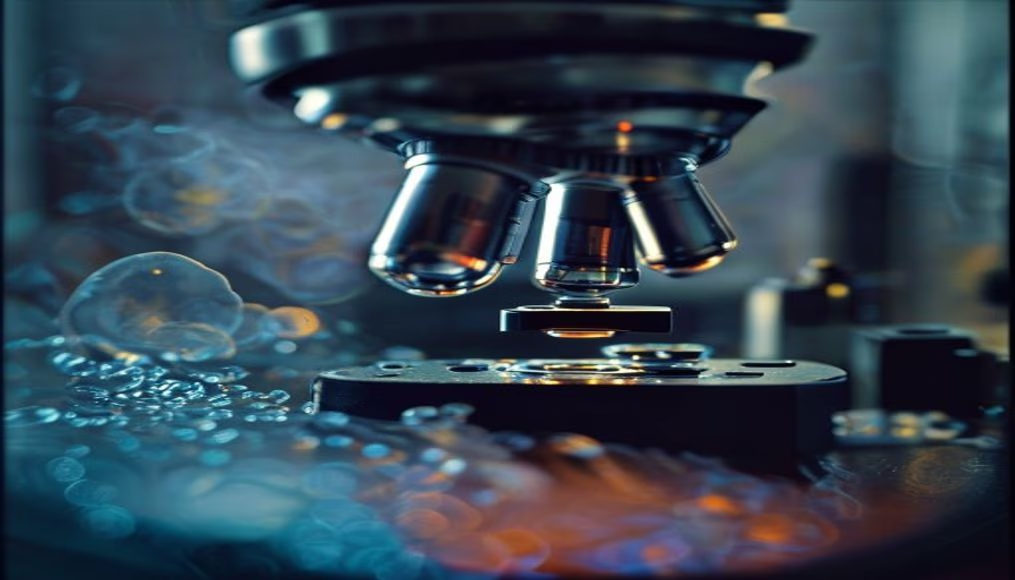
Lab technician looking through microscope
1344×768 · AVIF · CC BY 4.0
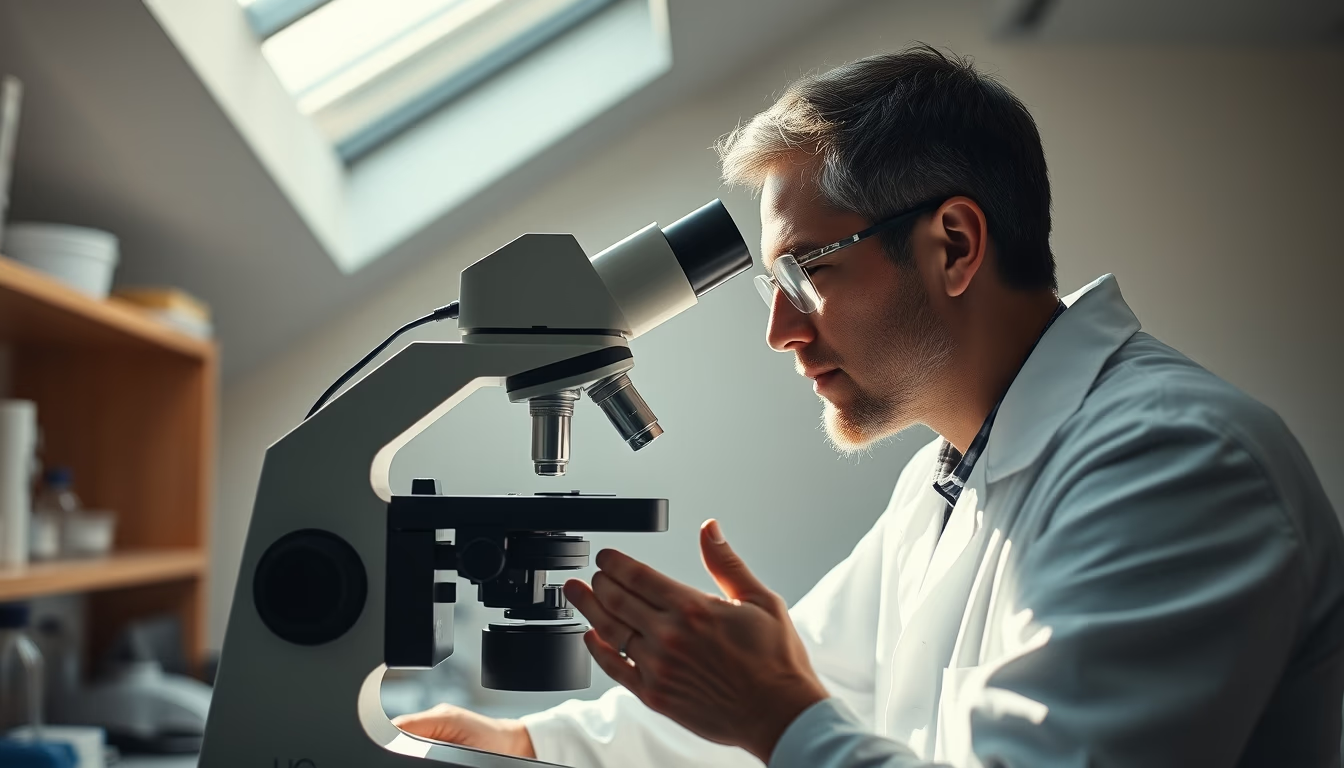
Lab technician examines a sample under a microscope in a hospital diagnostic routine.
About this subject
The lab technician plays a key role in the medical diagnostic chain, analyzing biological samples such as blood, urine, and tissues. In Brazil, training in clinical analysis is regulated by the Federal Council of Biomedicine and the Ministry of Education, requiring a technical course at the high school or higher level. Professionals operate equipment like optical and electron microscopes, as well as automated systems, to identify abnormal cells, microorganisms, or chemical changes.
The routine includes slide preparation, sample staining, and result interpretation, which are passed on to physicians for diagnosing conditions like infections, anemia, and cancer. According to the Brazilian Society of Clinical Pathology, each test may involve 10 to 20 steps, and accuracy depends on both technique and equipment maintenance. The microscope, invented in the 17th century, remains the central tool, with magnifications ranging from 40x to 1000x to visualize structures such as red and white blood cells.
In hospital settings, labs operate 24/7 in emergency units, processing urgent tests like complete blood counts and cultures. Demand in Brazil has grown with an aging population and the expansion of the SUS, which performed over 2 billion lab tests in 2023. The symmetrical and controlled lighting of the environment, as seen in the image, is essential to avoid reading errors. Interestingly, bright-field microscopy, the most common technique, was refined by Ernst Abbe in 1873 and remains standard in Brazilian labs.
Frequently Asked Questions
What training is required to become a lab technician in Brazil?
A technical course in clinical analysis (high school level) or a bachelor's degree in Biomedicine is required. Registration with the professional council (CRBM) is mandatory.
What can a lab technician identify under a microscope?
Abnormal blood cells (e.g., in leukemia), parasites in stool, bacteria in samples, and cellular changes indicative of cancer.
How many lab tests does the Brazilian public health system (SUS) perform per year?
In 2023, SUS performed over 2 billion lab tests, including complete blood counts, urinalyses, and cultures.
Direct URL
https://pub-c7d6a6ea828543ac903a74a341ccb2e1.r2.dev/imagens/lab-technician-looking-through-microscope-symmetric-bright-midday-6.avifHow to credit
Include a visible link back to UtilizAí. Copy one of the snippets below:
<a href="https://xn--utiliza-eza.com/en/midia/imagens/lab-technician-looking-through-microscope-symmetric-bright-midday-6">Lab technician looking through microscope</a> by <a href="https://xn--utiliza-eza.com">UtilizAí</a>, licensed under <a href="https://creativecommons.org/licenses/by/4.0/">CC BY 4.0</a>.
[Lab technician looking through microscope](https://xn--utiliza-eza.com/en/midia/imagens/lab-technician-looking-through-microscope-symmetric-bright-midday-6) by [UtilizAí](https://xn--utiliza-eza.com), CC BY 4.0
License: CC-BY-4.0