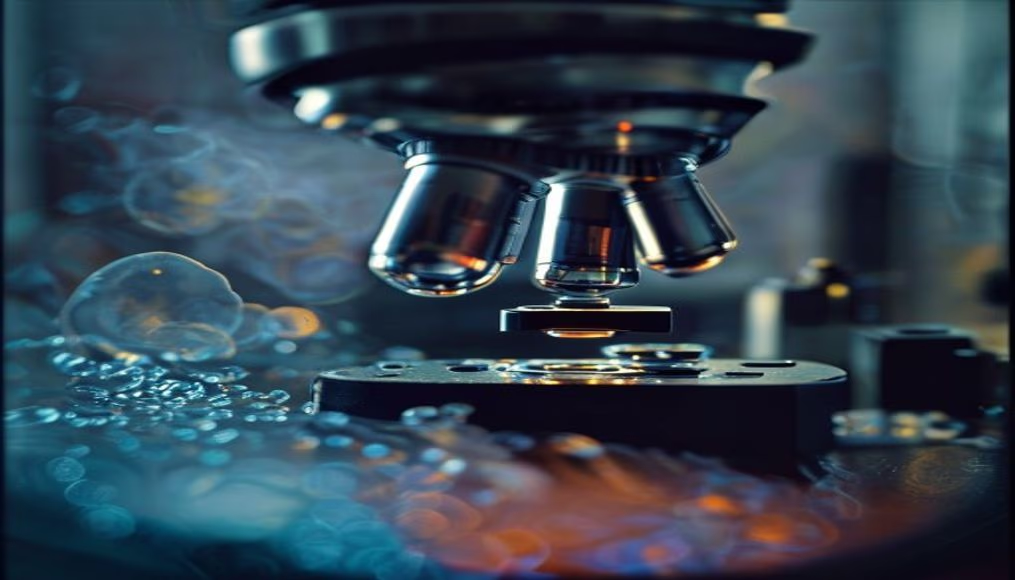
Lab technician looking through microscope
1344×768 · AVIF · CC BY 4.0

Lab technician examines samples under a microscope during twilight, highlighting the scientific routine in Brazilian clinical laboratories.
About this subject
The lab technician is a key professional in healthcare, responsible for performing clinical analyses that aid in disease diagnosis. In Brazil, technical training in clinical analysis is offered by institutions like SENAC and state technical schools, with an average duration of two years. The work involves handling equipment such as optical microscopes, centrifuges, and autoclaves, as well as preparing slides and microbiological cultures. The laboratory environment requires strict biosafety protocols, including the use of lab coats, gloves, and safety goggles, especially when processing biological samples.
The microscope, invented in the 17th century by Antonie van Leeuwenhoek, revolutionized medicine by allowing the visualization of microorganisms. Today, models like the compound optical microscope are widely used in Brazilian laboratories, with magnifications ranging from 40x to 1000x. Lighting is crucial for image quality; therefore, twilight with its soft natural light does not interfere with reading, but the technician relies on controlled artificial light. The routine includes daily equipment calibration and preventive maintenance to avoid errors in results.
In the Brazilian context, clinical analysis laboratories follow ANVISA (National Health Surveillance Agency) standards, which regulate everything from collection to waste disposal. Lab technicians work in hospitals, clinics, and private laboratories, often during night shifts or twilight hours when urgent exam demand increases. The profession is regulated by the Federal Council of Biomedicine and requires registration with the regional council. A curious fact: Brazil has over 200,000 clinical analysis technicians, according to IBGE, and demand for these professionals grows about 5% per year, driven by population aging and healthcare network expansion.
Frequently Asked Questions
What is the role of a lab technician?
A lab technician performs clinical analyses on biological samples, such as blood and urine, to aid in disease diagnosis. They operate equipment like microscopes and centrifuges, following biosafety protocols.
What does twilight period mean in the lab?
Twilight, the period between day and night, may coincide with work shifts. Controlled artificial lighting is used to ensure analysis accuracy, regardless of external light.
How to become a lab technician in Brazil?
It is necessary to complete a technical course in clinical analysis, lasting about two years, at institutions recognized by the Ministry of Education. After graduation, one must register with the regional council of Biomedicine.
Direct URL
https://pub-c7d6a6ea828543ac903a74a341ccb2e1.r2.dev/imagens/lab-technician-looking-through-microscope-closeup-twilight-3.avifHow to credit
Include a visible link back to UtilizAí. Copy one of the snippets below:
<a href="https://xn--utiliza-eza.com/en/midia/imagens/lab-technician-looking-through-microscope-closeup-twilight-3">Lab technician looking through microscope</a> by <a href="https://xn--utiliza-eza.com">UtilizAí</a>, licensed under <a href="https://creativecommons.org/licenses/by/4.0/">CC BY 4.0</a>.
[Lab technician looking through microscope](https://xn--utiliza-eza.com/en/midia/imagens/lab-technician-looking-through-microscope-closeup-twilight-3) by [UtilizAí](https://xn--utiliza-eza.com), CC BY 4.0
License: CC-BY-4.0