Kris malay wavy
1344×768 · AVIF · CC BY 4.0

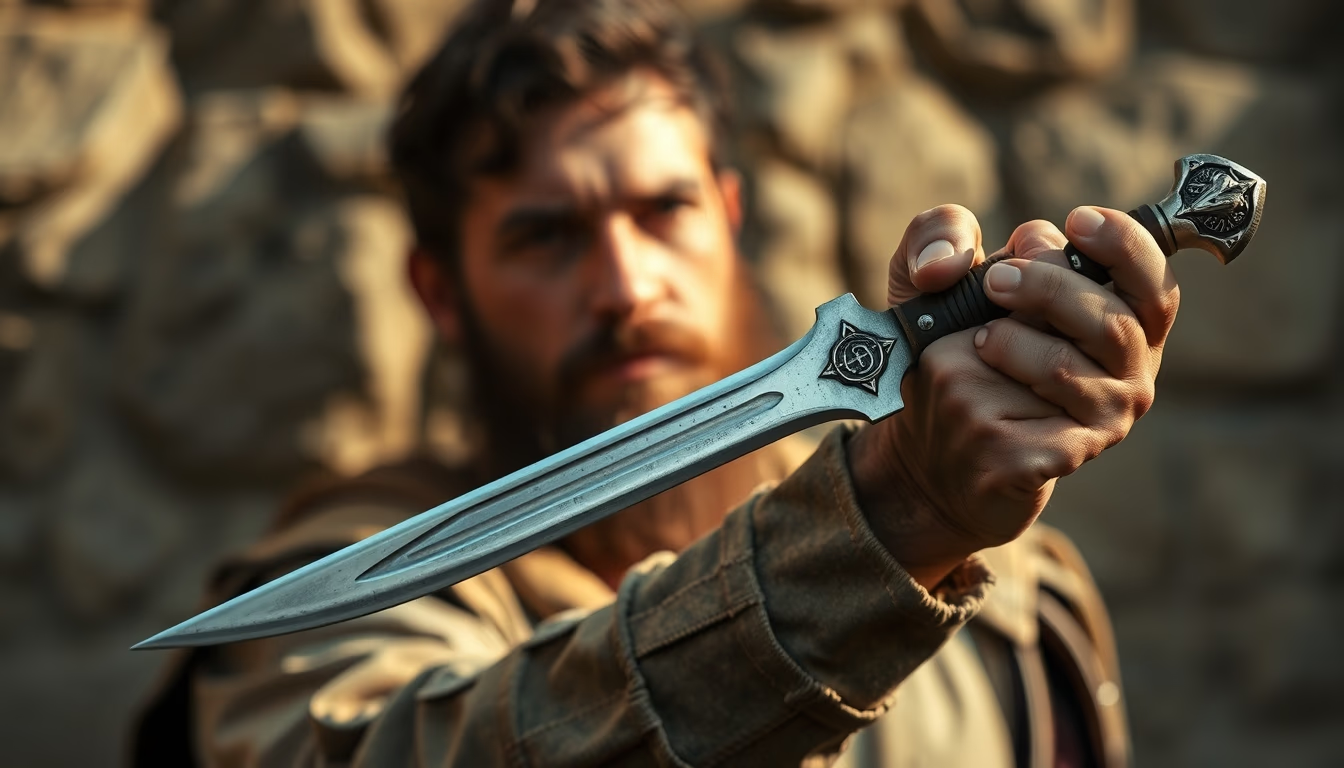
The Kris is a ceremonial dagger from the Malay archipelago, recognized for its wavy blade and rich spiritual symbolism.
About this subject
The Kris is an asymmetrical dagger originating from the Malay archipelago, with historical records dating back to the 9th century. Its wavy blade, known as "luk," typically has an odd number of curves, ranging from 3 to 13, each carrying symbolic meanings. The blade is forged in layers of nickel and iron, forming a pattern called "pamor," which not only beautifies the weapon but is also considered a spiritual protective amulet.
This weapon was not merely a tool of war; it was a symbol of social status and spiritual power. It was common for kings and nobles to possess Kris blades made by renowned empu (smiths), who sometimes incorporated meteorites into the composition to enhance mystical potency. The Kris also plays a central role in rites of passage, such as weddings and coronations, where it is passed down as an heirloom through generations.
Geographically, the Kris is widespread across Indonesia, Malaysia, Brunei, southern Thailand, and the Philippines, with distinct regional variations. The Balinese Kris, for instance, has a thicker blade and more ornate hilt, while the Javanese Kris is slender and focuses on iconographic details. UNESCO recognized the Kris as a Masterpiece of the Oral and Intangible Heritage of Humanity in 2005, highlighting its cultural significance.
Interestingly, the wavy shape of the blade is not accidental: besides increasing the cutting surface, it is believed to deflect negative energies and confuse evil spirits. There are straight Krises (bentuk lurus), used by high-ranking warriors, while the wavy ones (bentuk luk) are associated with spiritual leaders. Each curve of the blade represents an aspect of life, such as the cycle of birth and death, or the phases of the moon.
Frequently Asked Questions
What does pamor mean in the context of the Kris?
Pamor is the layered pattern visible on the Kris blade, formed by forging different metals, especially nickel and iron. This pattern is aesthetically valued and is believed to provide spiritual protection to the bearer.
Why is the Kris blade wavy?
The waviness, called luk, serves multiple purposes: it increases the cutting surface, symbolizes aspects of life (such as lunar cycles), and, according to traditional beliefs, helps deflect negative energies and confuse evil spirits.
Is the Kris still used today?
Yes, the Kris is used in traditional ceremonies, such as weddings and leadership installations, and is also a collector's item and cultural display. In 2005, UNESCO declared it a Masterpiece of the Oral and Intangible Heritage of Humanity, underscoring its importance.
Direct URL
https://pub-c7d6a6ea828543ac903a74a341ccb2e1.r2.dev/imagens/kris-malay-wavy-magazine-editorial-fresh3.avifHow to credit
Include a visible link back to UtilizAí. Copy one of the snippets below:
<a href="https://xn--utiliza-eza.com/en/midia/imagens/kris-malay-wavy-magazine-editorial-fresh3">Kris malay wavy</a> by <a href="https://xn--utiliza-eza.com">UtilizAí</a>, licensed under <a href="https://creativecommons.org/licenses/by/4.0/">CC BY 4.0</a>.
[Kris malay wavy](https://xn--utiliza-eza.com/en/midia/imagens/kris-malay-wavy-magazine-editorial-fresh3) by [UtilizAí](https://xn--utiliza-eza.com), CC BY 4.0
License: CC-BY-4.0