Kris malay wavy
1344×768 · AVIF · CC BY 4.0

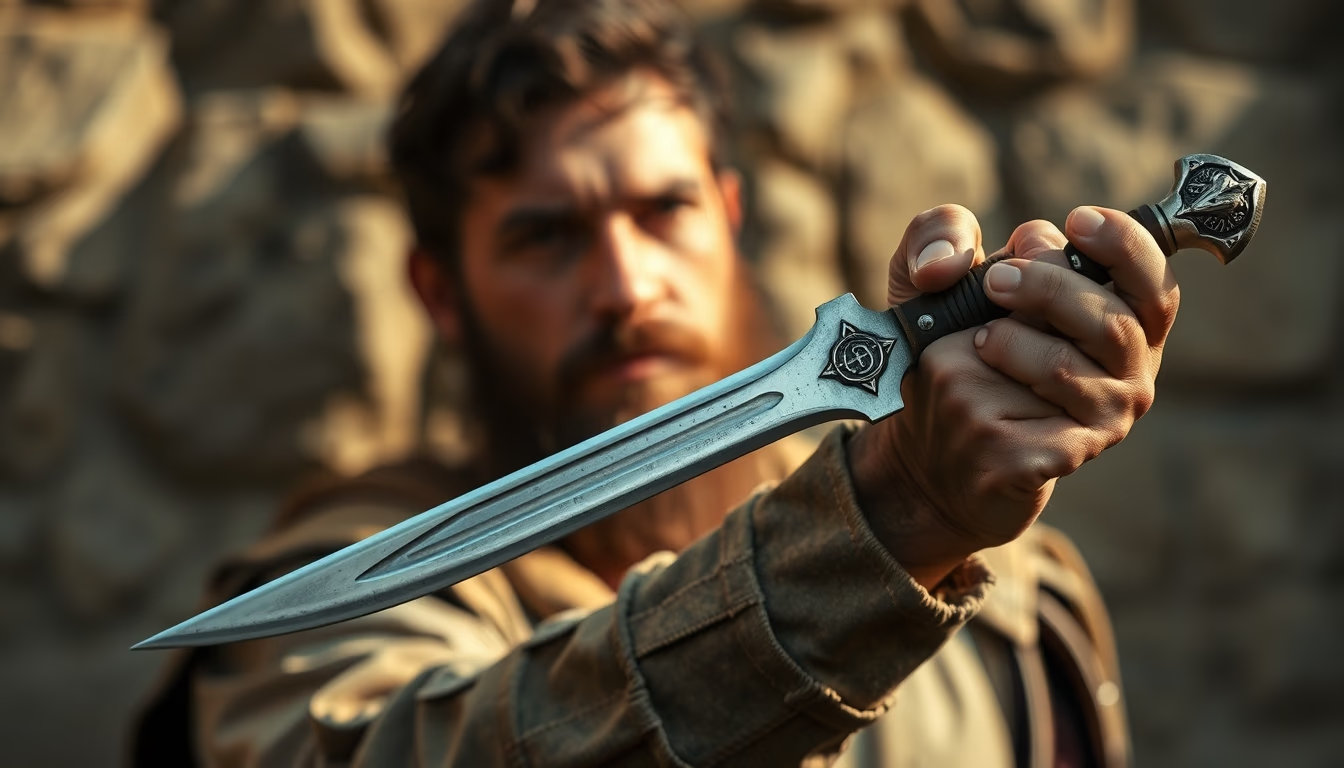
The Malay wavy-bladed kris is a ceremonial dagger with deep spiritual and historical significance, originating from the Malay Archipelago.
About this subject
The kris is a traditional dagger from Southeast Asia, particularly associated with the cultures of Indonesia, Malaysia, Brunei, and southern Thailand. Its most striking feature is the wavy blade (luk), which typically has between 3 and 13 curves, each with symbolic meaning. An odd number of waves is considered auspicious, representing harmony and protection. The wavy blade mimics the form of a serpent naga (dragon), a mythological creature that guards treasures and brings good luck. The kris is not just a weapon; it is an object of spiritual power, often treated as a family heirloom and used in ceremonies such as weddings and coronations.
The origin of the kris dates back to the 9th century, with archaeological evidence found in Java. Its production involves complex forging techniques using layers of iron and nickel, creating patterns (pamor) that are highly valued. Each kris is unique, and the hilt (pegangan) and scabbard (warangka) are carved from wood, ivory, or metal, often with gold detailing. The Malay wavy-bladed kris is especially recognized for its elegance and symbolism, being one of the most important cultural icons in the region.
In many contexts, the kris is considered a living being that must be cared for and honored. There are rituals to “feed” the blade with oil and offerings. Folk belief attributes mystical powers to the kris, such as protection against evil spirits and the ability to bring luck or misfortune to the bearer. During the colonial period, Europeans were fascinated by the kris, taking many specimens to museums. Today, the kris is recognized by UNESCO as an Intangible Cultural Heritage of Humanity since 2005, highlighting its importance to Malay identity.
For collectors and enthusiasts, a Malay wavy-bladed kris in extreme macro close-up reveals the details of the pamor and the waves. Each curve is hand-forged, and symmetry among them is a sign of the pandai's (smith's) skill. The wavy blade is not merely aesthetic; it also enhances cutting efficiency at specific angles. Although now rarely used as a weapon, the kris continues to be a symbol of status, courage, and tradition in various ceremonies and cultural events.
Frequently Asked Questions
How many waves does a traditional Malay kris have?
The number of waves (luk) ranges from 3 to 13, always an odd number. Each number has a symbolic meaning, such as wisdom, courage, or spiritual protection.
What does the pattern on the kris blade mean?
The pattern is called pamor, created by welding layers of iron and nickel. Different patterns indicate status, origin, or mystical properties.
Is the kris used as a weapon today?
Rarely. Today the kris is a cultural and ceremonial symbol. Its use as a weapon is historical, but it remains an object of reverence and family heritage.
Direct URL
https://pub-c7d6a6ea828543ac903a74a341ccb2e1.r2.dev/imagens/kris-malay-wavy-macro-closeup-fresh0.avifHow to credit
Include a visible link back to UtilizAí. Copy one of the snippets below:
<a href="https://xn--utiliza-eza.com/en/midia/imagens/kris-malay-wavy-macro-closeup-fresh0">Kris malay wavy</a> by <a href="https://xn--utiliza-eza.com">UtilizAí</a>, licensed under <a href="https://creativecommons.org/licenses/by/4.0/">CC BY 4.0</a>.
[Kris malay wavy](https://xn--utiliza-eza.com/en/midia/imagens/kris-malay-wavy-macro-closeup-fresh0) by [UtilizAí](https://xn--utiliza-eza.com), CC BY 4.0
License: CC-BY-4.0