Kris malay wavy
1344×768 · AVIF · CC BY 4.0

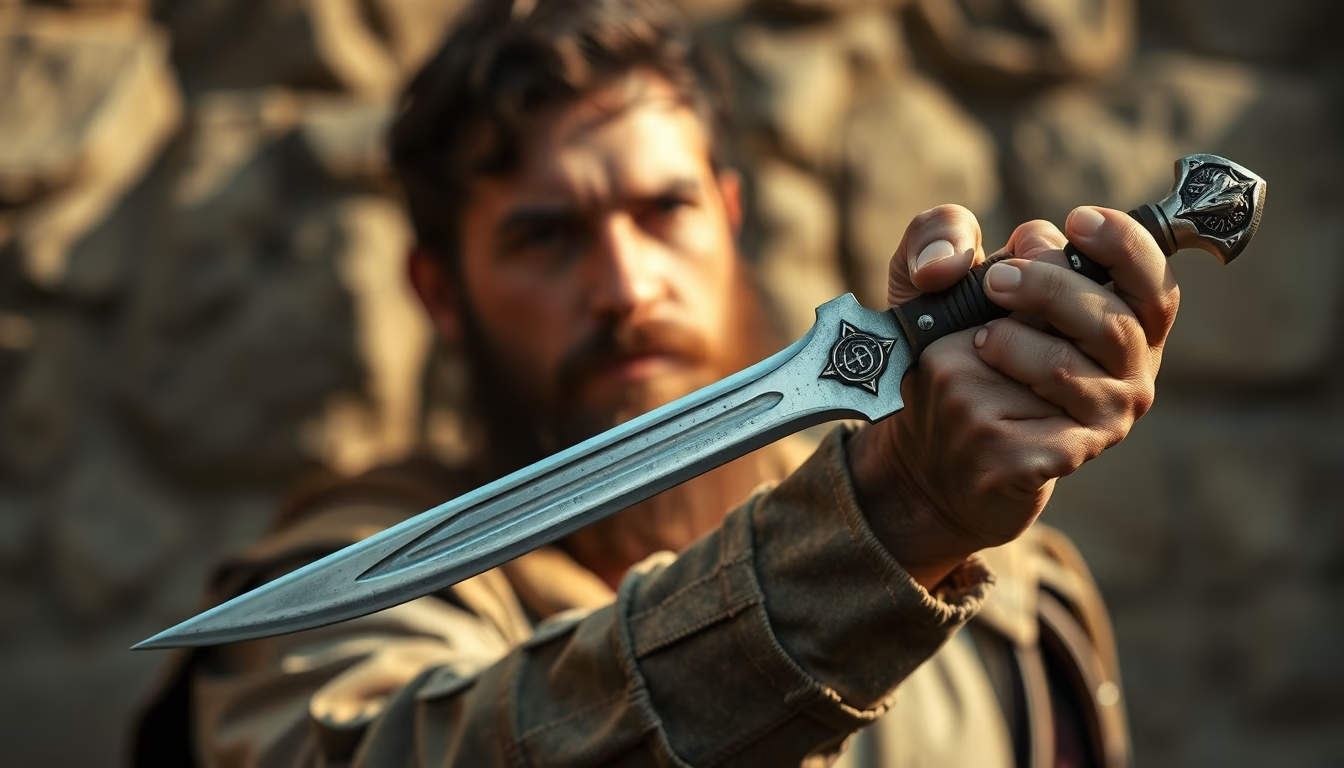
The Malay kris with a wavy blade is an iconic ceremonial dagger from Southeast Asia, symbolizing power and spirituality.
About this subject
The kris is an asymmetrical dagger originating from the Malay archipelago, traditionally used in Indonesia, Malaysia, Brunei, the southern Philippines, and southern Thailand. Its wavy blade, known as “luk,” typically features an odd number of curves ranging from 3 to 13, each with symbolic meaning. The forging of a kris involves complex damascus techniques, combining layers of different iron and nickel ores to create patterns called “pamor,” which are valued both aesthetically and spiritually.
Historically, the kris served as both a weapon and an object of status and spirituality. It was believed to possess a soul or inner power (tuah) and could bring good luck or protection to its owner. Many kris were considered family heirlooms passed down through generations, often associated with legends and myths. The hilt, often made of wood, ivory, or horn, is carved into anthropomorphic or zoomorphic forms, representing deities or spirits.
In ceremonies, the kris is used in rites of passage, weddings, and coronations. In the modern world, it remains an important cultural symbol, frequently displayed in galleries and art collections. UNESCO recognized the kris as a Masterpiece of the Oral and Intangible Heritage of Humanity in 2005, highlighting its cultural significance and traditional manufacturing techniques. An art photograph of a Malay kris with a wavy blade captures not only the metallic beauty but also the intangible heritage surrounding it.
Frequently Asked Questions
What does the number of waves on a kris blade signify?
The number of waves (luk) is always odd, typically between 3 and 13. Each wave is believed to represent aspects of nature or cosmic balance, and a kris with 13 waves is considered the most powerful.
How is a traditional kris made?
A kris is forged by an empu (master smith) using damascus techniques. Layers of iron and nickel are hammered and repeatedly heated to create the pamor pattern. The blade is then ground and curved, while the hilt is carved separately.
Why is the kris considered a spiritual object?
Each kris is believed to possess an inner power called tuah, which can protect, bring luck, or influence the owner's destiny. Consecration rituals and offerings are performed to activate this spiritual energy.
Direct URL
https://pub-c7d6a6ea828543ac903a74a341ccb2e1.r2.dev/imagens/kris-malay-wavy-fine-art-photography-fresh2.avifHow to credit
Include a visible link back to UtilizAí. Copy one of the snippets below:
<a href="https://xn--utiliza-eza.com/en/midia/imagens/kris-malay-wavy-fine-art-photography-fresh2">Kris malay wavy</a> by <a href="https://xn--utiliza-eza.com">UtilizAí</a>, licensed under <a href="https://creativecommons.org/licenses/by/4.0/">CC BY 4.0</a>.
[Kris malay wavy](https://xn--utiliza-eza.com/en/midia/imagens/kris-malay-wavy-fine-art-photography-fresh2) by [UtilizAí](https://xn--utiliza-eza.com), CC BY 4.0
License: CC-BY-4.0