Koto japanese strings
1344×768 · AVIF · CC BY 4.0
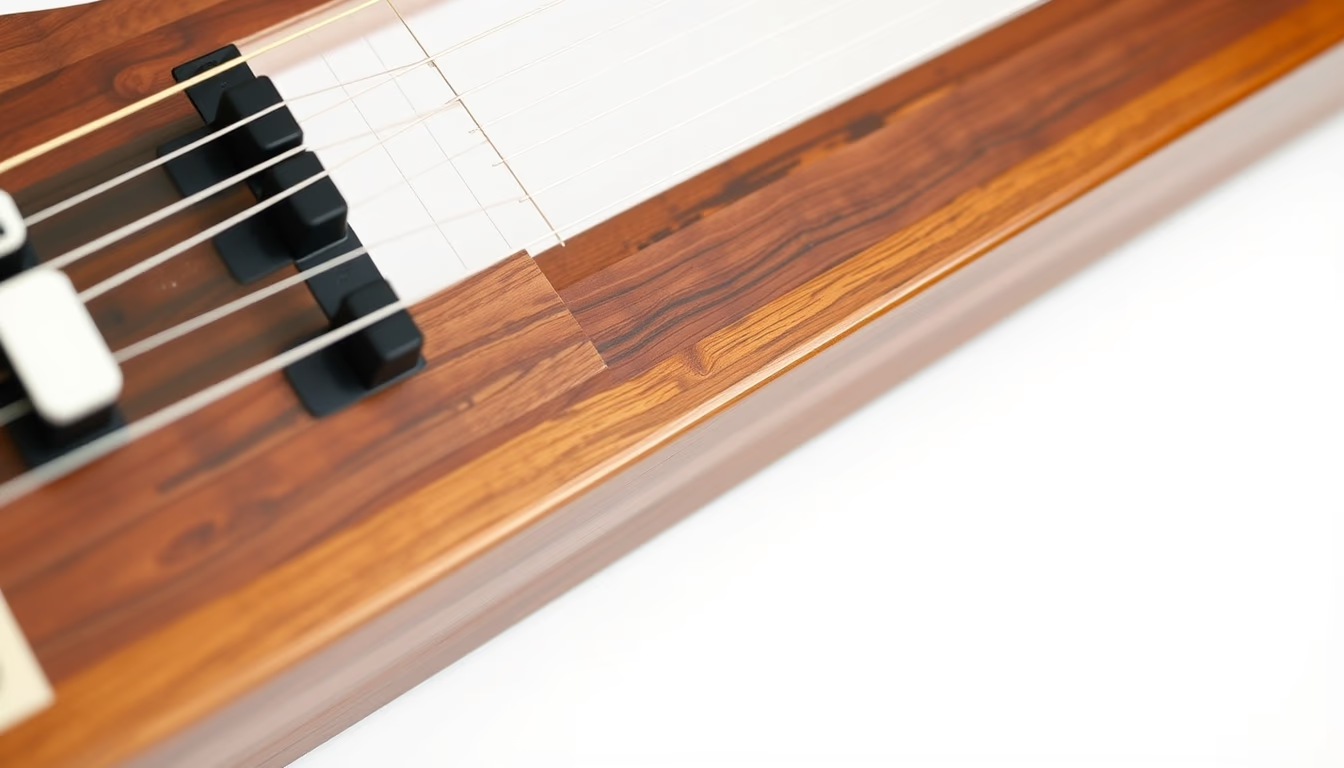
The koto is a traditional Japanese string instrument with over a thousand years of history, producing sounds that evoke nature.
About this subject
The koto, also known as kin no koto, is a traditional Japanese string instrument plucked with picks. It consists of a long, resonant wooden body, typically made from Paulownia wood, over which thirteen strings are stretched. These strings, originally silk but now often nylon, are supported by movable bridges called ji, allowing each note to be tuned individually. The instrument measures about 180 cm (71 inches) in length and has an elegant, elongated shape. It is played with three picks (tsume) made of ivory or plastic, worn on the thumb, index, and middle fingers of the right hand.
The koto's origins date back to the Nara period (710-794 CE), when it was introduced to Japan from China, where its ancestor is the guzheng. During the Heian period (794-1185), it became popular among the aristocracy and is frequently mentioned in classical literature, such as "The Tale of Genji," where the protagonist Genji is portrayed as a skilled koto player. There are two major schools of performance: the Yamada-ryū, which emphasizes singing and narrative, and the Ikuta-ryū, which focuses on instrumental technique and musical expression.
Traditional koto repertoire includes pieces like "Rokudan no Shirabe" (Music of Six Verses), composed in the 17th century, which explores rhythmic and melodic variations. The koto is also used in contemporary music and fusion with Western styles, as seen in the works of Michio Miyagi, who composed "Haru no Umi" (Spring Sea) for koto and shakuhachi. Notably, the koto is one of Japan's national instruments and is taught in traditional music schools with certification systems and exams. The standard tuning is based on the pentatonic scale, but movable bridges allow adjustments for different modes like hirajoshi and kumoijoshi, each evoking specific atmospheres.
Beyond classical Japanese music, the koto appears in ceremonies and festivals, such as the Gion Matsuri in Kyoto, where outdoor performances captivate audiences. Its handcrafted construction is considered an art form, with luthiers dedicated to selecting woods and carving details. The koto's sound is often described as ethereal and meditative, capable of imitating natural sounds like wind and water. Contemporary players like Junko Ueda and Vanessa Clair explore new possibilities, blending the koto with electronics and jazz, keeping this ancient tradition alive.
Frequently Asked Questions
How many strings does a traditional koto have?
A traditional koto has thirteen strings, originally made of silk but now often nylon. Each string is individually tuned using movable bridges called ji.
What is the difference between the Ikuta-ryū and Yamada-ryū schools of koto?
The Yamada-ryū school emphasizes singing and narrative, integrating poetry into performance. The Ikuta-ryū school focuses on pure instrumental technique, with greater emphasis on musical expression through strings.
Is the koto only used in traditional Japanese music?
No, the koto is also used in contemporary music, jazz, and electronic fusion. Artists like Michio Miyagi and modern composers explore new genres, keeping its cultural relevance alive.
Direct URL
https://pub-c7d6a6ea828543ac903a74a341ccb2e1.r2.dev/imagens/koto-japanese-strings-commercial-product-photography-p5.avifHow to credit
Include a visible link back to UtilizAí. Copy one of the snippets below:
<a href="https://xn--utiliza-eza.com/en/midia/imagens/koto-japanese-strings-commercial-product-photography-p5">Koto japanese strings</a> by <a href="https://xn--utiliza-eza.com">UtilizAí</a>, licensed under <a href="https://creativecommons.org/licenses/by/4.0/">CC BY 4.0</a>.
[Koto japanese strings](https://xn--utiliza-eza.com/en/midia/imagens/koto-japanese-strings-commercial-product-photography-p5) by [UtilizAí](https://xn--utiliza-eza.com), CC BY 4.0
License: CC-BY-4.0