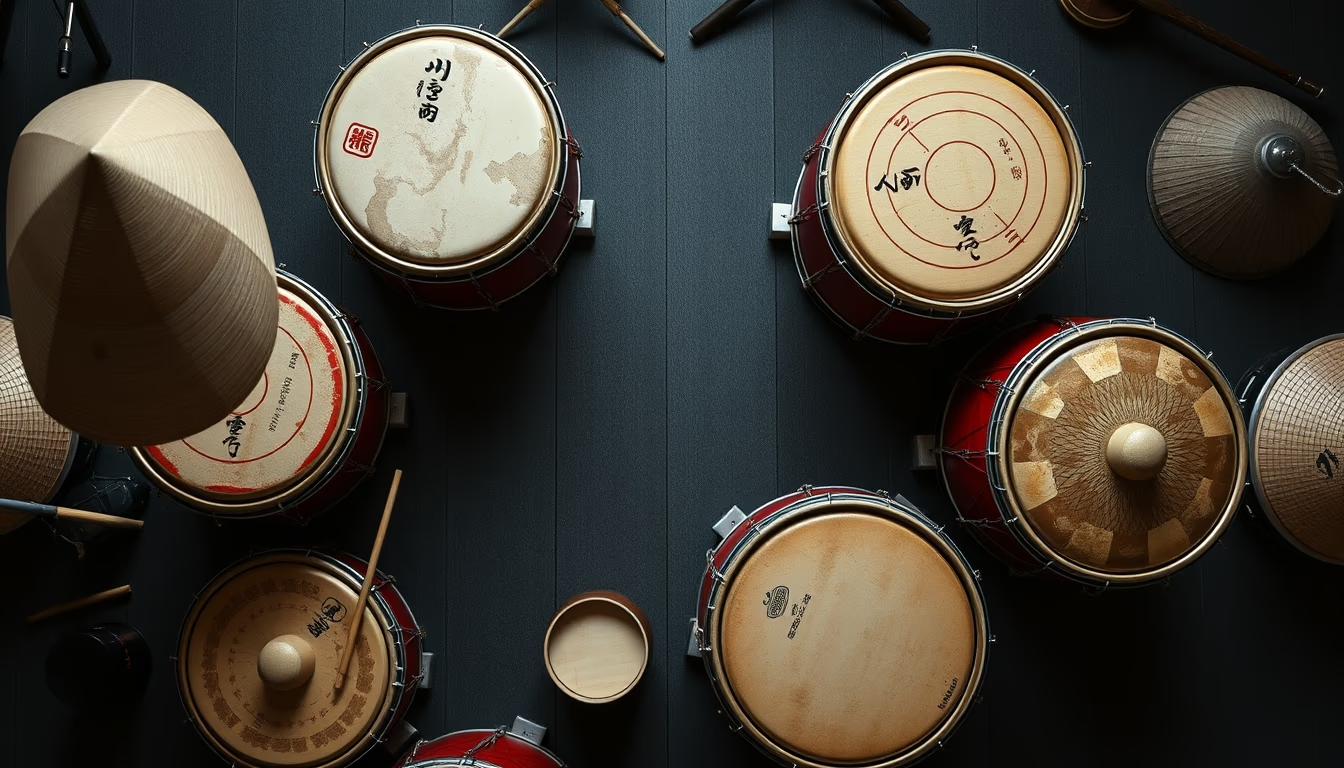
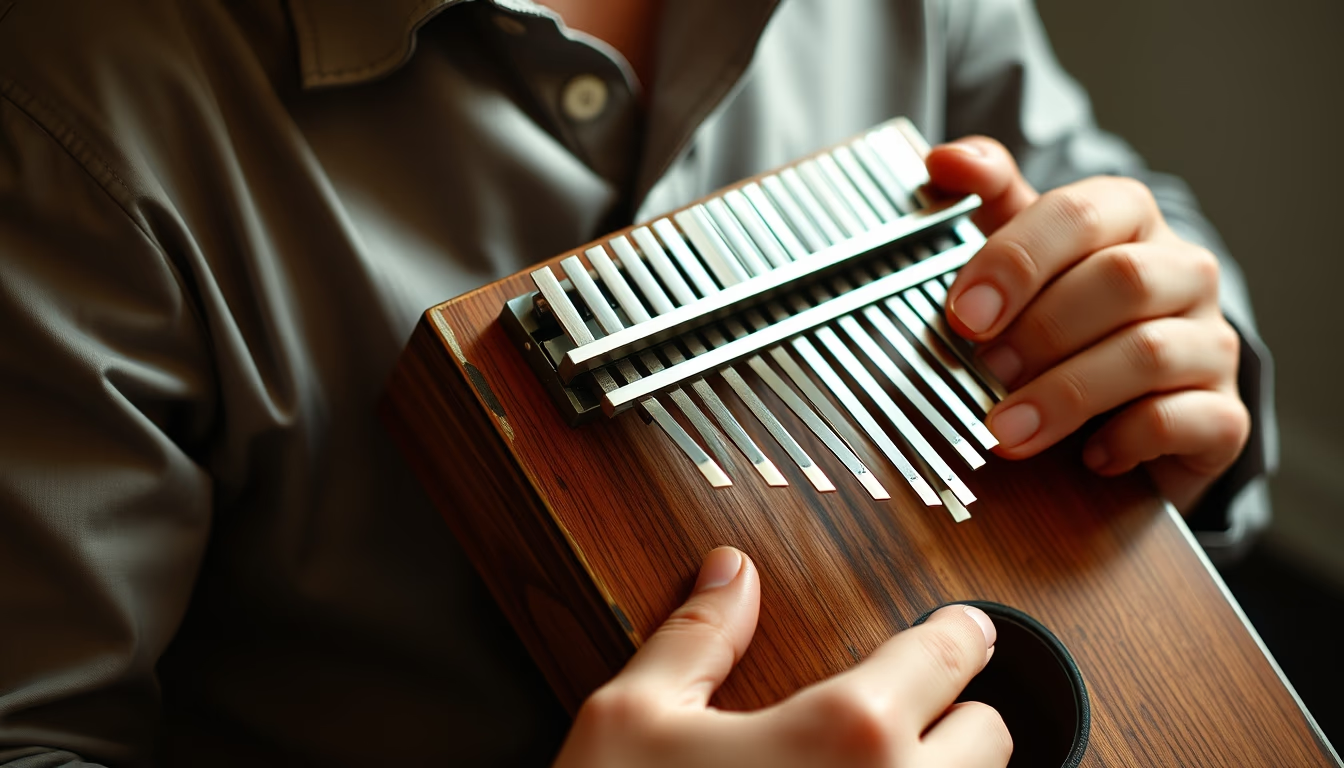
Koto japanese strings
1344×768 · AVIF · CC BY 4.0

The koto is a traditional Japanese plucked string instrument with over 1,200 years of history and a strong presence in classical Japanese music.
About this subject
The koto, Japan's national instrument, dates back to the Nara period (8th century), when it was introduced from China, where its ancestor is the guzheng. Initially called gaku-so, it was played in the imperial court as part of gagaku ceremonial music. Over time, it evolved into more popular forms like tsukushi-goto and zoku-so, the latter spreading among samurai and then the general populace, especially during the Edo period.
The construction of the koto is meticulous: a long resonating box made of paulownia wood (kiri) with a gentle curve, and 13 silk or synthetic strings passing over movable bridges (ji) that can be adjusted for different tunings. The musician uses ivory or plastic picks (tsume) on the thumb, index, and middle fingers of the right hand to pluck the strings, while the left hand presses strings behind the bridges to create ornaments like vibrato and slides.
Culturally, the koto symbolizes elegance and refinement. It was associated with female education during the Edo period, and pieces like "Rokudan no Shirabe" (by blind composer Yatsuhashi Kengyo) became classics. In the 20th century, Miyagi Michio revolutionized the instrument with compositions such as "Haru no Umi" (Sea of Spring), blending koto and shakuhachi. Today, the koto is taught in music schools and appears in fusion with jazz, pop, and electronic music, maintaining its global relevance.
Frequently Asked Questions
What is the origin of the koto?
The koto was introduced to Japan from China during the Nara period (8th century), derived from the Chinese guzheng. Initially used in court music, it later became popular among samurai and the general public.
How many strings does a traditional koto have?
A traditional koto has 13 strings, though modern variations exist with more strings, such as the 17-string koto (jūshichigen) and the bass koto (jūsangen).
Is the koto difficult to learn?
Learning the koto requires consistent practice due to the plucking technique and hand coordination. However, basic repertoire can be mastered within a few months of regular study.
Direct URL
https://pub-c7d6a6ea828543ac903a74a341ccb2e1.r2.dev/imagens/koto-japanese-strings-architectural-photography-p9.avifHow to credit
Include a visible link back to UtilizAí. Copy one of the snippets below:
<a href="https://xn--utiliza-eza.com/en/midia/imagens/koto-japanese-strings-architectural-photography-p9">Koto japanese strings</a> by <a href="https://xn--utiliza-eza.com">UtilizAí</a>, licensed under <a href="https://creativecommons.org/licenses/by/4.0/">CC BY 4.0</a>.
[Koto japanese strings](https://xn--utiliza-eza.com/en/midia/imagens/koto-japanese-strings-architectural-photography-p9) by [UtilizAí](https://xn--utiliza-eza.com), CC BY 4.0
License: CC-BY-4.0