Kinkaku-ji golden pavilion
1344×768 · AVIF · CC BY 4.0
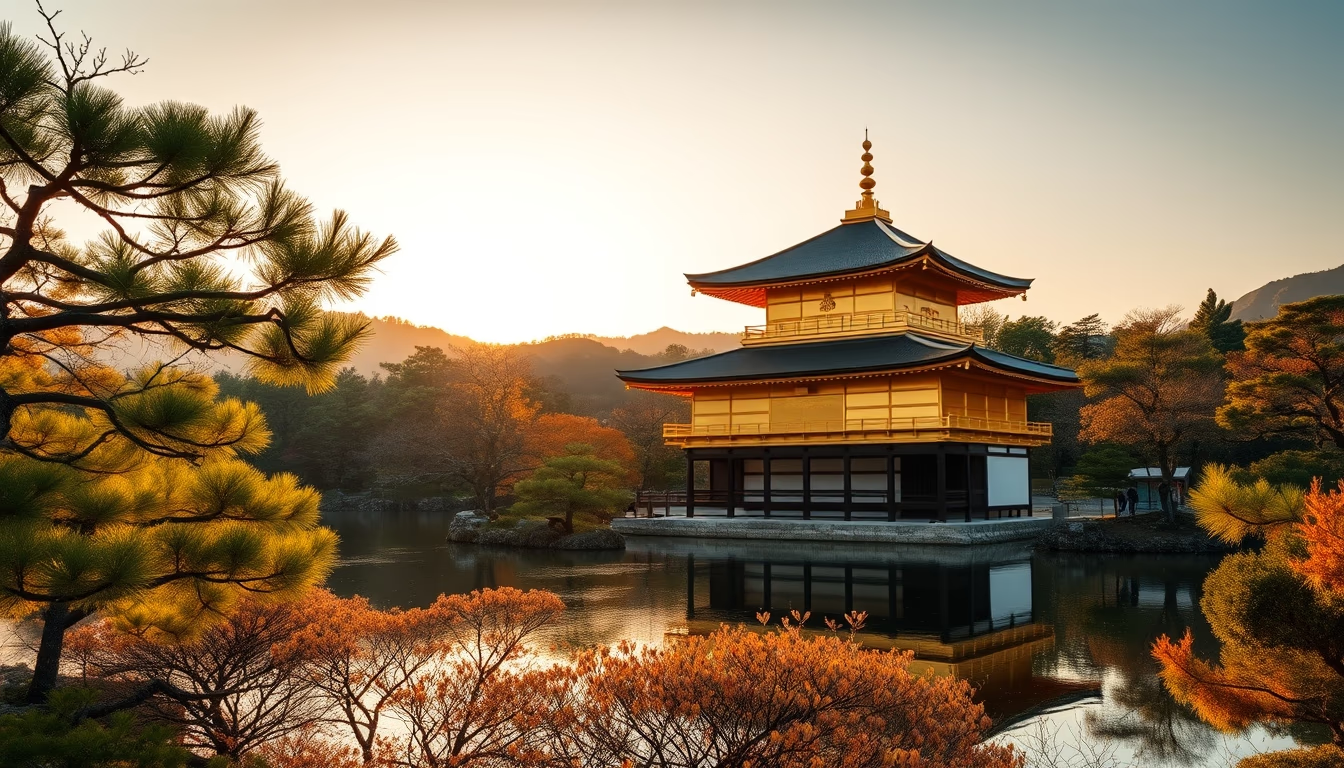
Kinkaku-ji, the Golden Pavilion of Kyoto, is a Zen temple covered in gold leaf, a symbol of Japanese culture and a UNESCO World Heritage site.
About this subject
Kinkaku-ji, officially named Rokuon-ji, is a Zen Buddhist temple located in Kyoto, Japan. Its original construction dates back to 1397, when Shogun Ashikaga Yoshimitsu built it as a retirement villa after his abdication. Upon his death, the villa was converted into a temple according to his will. The main building, known as the Golden Pavilion, is the only remaining structure from the original complex, which was destroyed by fires over the centuries.
The three-story pavilion is entirely covered in pure gold leaf, except for the first floor, which retains its lacquered wood structure. Each floor represents a different architectural style: the first is Shinden style (palace), the second Bukke style (samurai), and the third Zen style (Chinese temple). At the top, a golden phoenix statue symbolizes immortality. The temple is surrounded by a landscape garden and a pond called Kyōko-chi (Mirror Pond), which reflects the pavilion's image, creating an iconic view.
Kinkaku-ji suffered an arson fire in 1950 when a novice monk set the pavilion ablaze. This event inspired Yukio Mishima's novel 'The Temple of the Golden Pavilion', which explores themes of beauty and destruction. The building was completely reconstructed in 1955, maintaining its original appearance. In 1994, it was designated a UNESCO World Heritage Site as part of the 'Historic Monuments of Ancient Kyoto'. Today, it is one of Japan's most visited tourist destinations, attracting millions of visitors annually to admire its gleaming beauty and the serene garden setting.
Frequently Asked Questions
What is the best time to visit Kinkaku-ji?
Kinkaku-ji is beautiful in all seasons, but spring (March to April) offers cherry blossoms, and autumn (November) brings red and golden foliage. Winter, with snow, creates a unique contrast with the gold.
Can you enter the Golden Pavilion?
No, visitors cannot enter the pavilion. The visit is from the outside, walking around the pond and admiring the view from different angles. The structure is very fragile and preserved as a heritage site.
What does the phoenix on top of the pavilion symbolize?
The golden phoenix at the top symbolizes immortality and renewal, central themes in Buddhism. It also represents the continuation of life after destruction, echoing the temple's history.
Direct URL
https://pub-c7d6a6ea828543ac903a74a341ccb2e1.r2.dev/imagens/kinkaku-ji-golden-pavilion-travel-photography-p2.avifHow to credit
Include a visible link back to UtilizAí. Copy one of the snippets below:
<a href="https://xn--utiliza-eza.com/en/midia/imagens/kinkaku-ji-golden-pavilion-travel-photography-p2">Kinkaku-ji golden pavilion</a> by <a href="https://xn--utiliza-eza.com">UtilizAí</a>, licensed under <a href="https://creativecommons.org/licenses/by/4.0/">CC BY 4.0</a>.
[Kinkaku-ji golden pavilion](https://xn--utiliza-eza.com/en/midia/imagens/kinkaku-ji-golden-pavilion-travel-photography-p2) by [UtilizAí](https://xn--utiliza-eza.com), CC BY 4.0
License: CC-BY-4.0