Kinkaku-ji golden pavilion
1344×768 · AVIF · CC BY 4.0
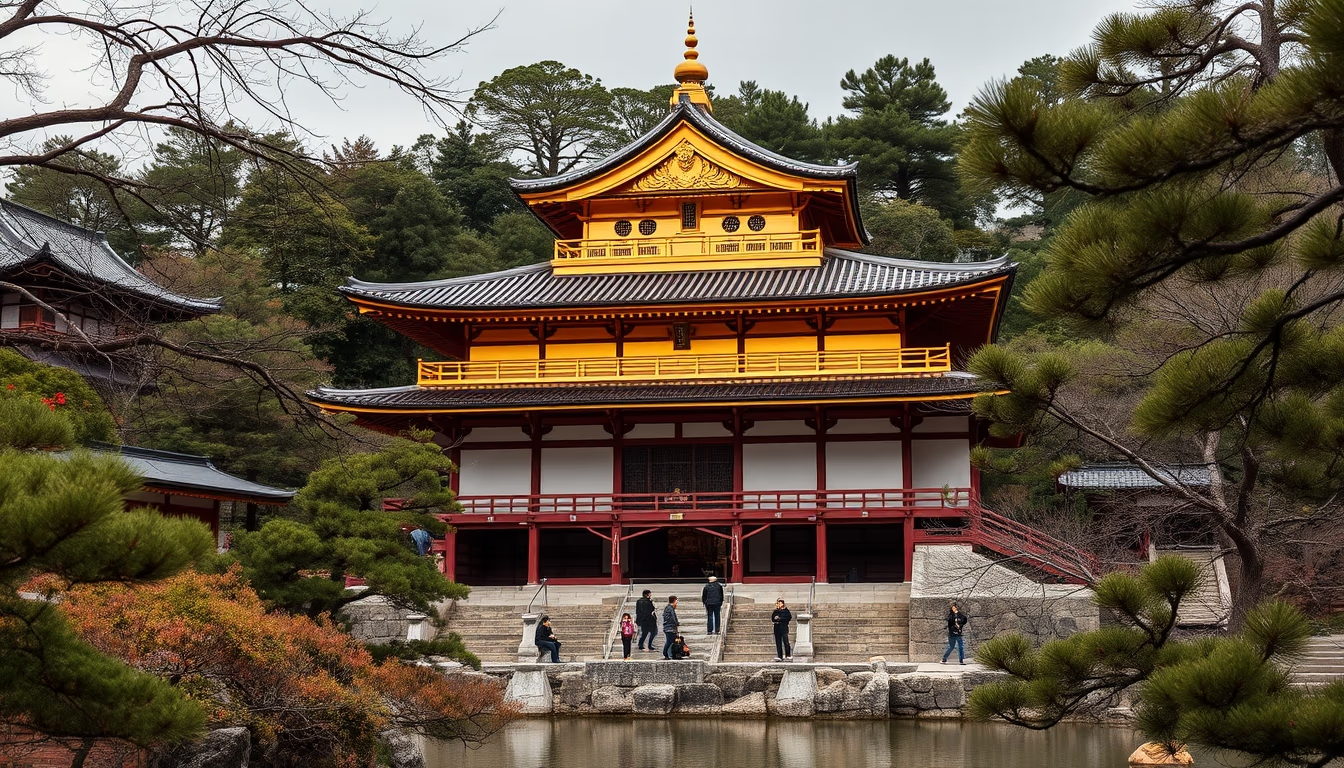
Kinkaku-ji, the Golden Pavilion of Kyoto, is a zen Buddhist temple covered in gold leaf, a UNESCO World Heritage Site.
About this subject
Kinkaku-ji, formally known as Rokuon-ji, is one of Japan's most iconic temples, located in Kyoto. Its history dates back to 1397 when shogun Ashikaga Yoshimitsu built a retirement villa on the site, which was converted into a Zen temple of the Rinzai school after his death. The most striking feature is the three-story pavilion, whose top two floors are entirely covered in pure gold leaf, gleaming in the sunlight and reflecting in Kyōko-chi pond. This design symbolizes the pure land of Buddha and the transience of life, central concepts in Buddhism.
The temple has been destroyed several times over the centuries. During the Ōnin War (1467-1477), much of the original complex burned down, but the pavilion survived. The most famous tragedy occurred in 1950 when a young novice monk set the building on fire, resulting in its complete destruction. This incident inspired author Yukio Mishima to write the novel "The Temple of the Golden Pavilion," exploring themes of beauty and obsession. The current pavilion is a faithful reconstruction from 1955, and the entire property was designated a UNESCO World Heritage Site in 1994.
Beyond the main pavilion, the surrounding garden is a prime example of Muromachi period landscape design. Winding paths, stone bridges, and meticulously pruned pines invite contemplation. Highlights include the tortoise and crane islands in the pond, representing longevity and purity. The temple also houses cultural relics, including Buddha statues and paintings on sliding doors. A visit to Kinkaku-ji offers an immersion in Japanese aesthetics, combining architecture, nature, and spirituality.
Frequently Asked Questions
Has Kinkaku-ji ever been completely destroyed?
Yes. The original building burned down during the Ōnin War in the 15th century but was rebuilt. In 1950, a novice monk set the pavilion on fire, destroying it entirely. The current pavilion is a 1955 reconstruction.
Why is the Golden Pavilion covered in gold?
The gold symbolizes the pure land of Buddha in Buddhism, and also reflects the wealth and power of shogun Ashikaga Yoshimitsu. It also serves to purify and protect the building.
Is Kinkaku-ji a UNESCO World Heritage Site?
Yes. In 1994, the temple was inscribed as part of the 'Historic Monuments of Ancient Kyoto' on the UNESCO list, recognizing its outstanding cultural and architectural value.
Direct URL
https://pub-c7d6a6ea828543ac903a74a341ccb2e1.r2.dev/imagens/kinkaku-ji-golden-pavilion-national-geographic-style-p3.avifHow to credit
Include a visible link back to UtilizAí. Copy one of the snippets below:
<a href="https://xn--utiliza-eza.com/en/midia/imagens/kinkaku-ji-golden-pavilion-national-geographic-style-p3">Kinkaku-ji golden pavilion</a> by <a href="https://xn--utiliza-eza.com">UtilizAí</a>, licensed under <a href="https://creativecommons.org/licenses/by/4.0/">CC BY 4.0</a>.
[Kinkaku-ji golden pavilion](https://xn--utiliza-eza.com/en/midia/imagens/kinkaku-ji-golden-pavilion-national-geographic-style-p3) by [UtilizAí](https://xn--utiliza-eza.com), CC BY 4.0
License: CC-BY-4.0