Kinkaku-ji golden pavilion
1344×768 · AVIF · CC BY 4.0
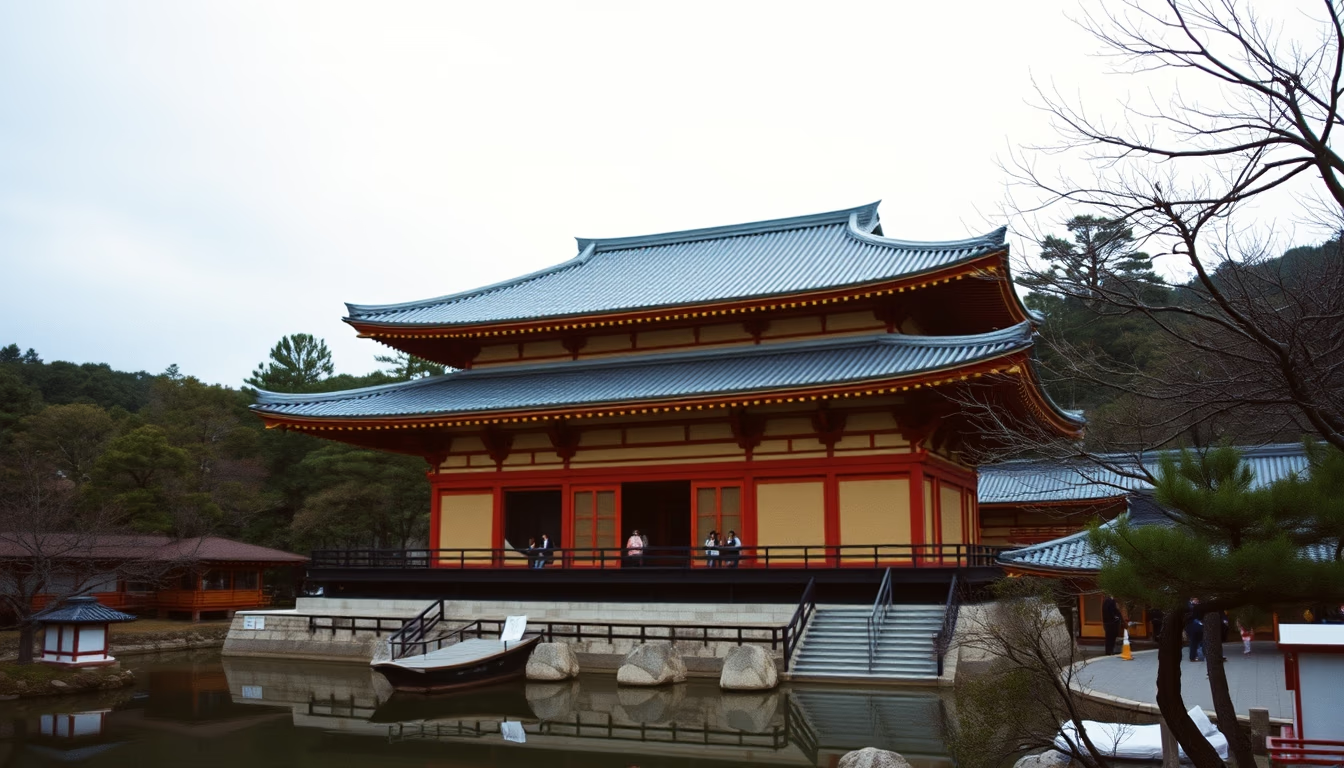
Kinkaku-ji (Golden Pavilion) is a Zen Buddhist temple in Kyoto covered in gold leaf, a UNESCO World Heritage site.
About this subject
Kinkaku-ji, officially named Rokuon-ji, is one of Japan's most iconic temples, located in Kyoto. It was built in 1397 as a retirement villa for Shogun Ashikaga Yoshimitsu and converted into a Zen temple after his death according to his will. The main pavilion is entirely covered in pure gold leaf, except for the first floor, which retains natural wood. The structure reflects three distinct architectural styles: the first floor in Shinden style (Heian palace), the second in Bukke style (samurai residence), and the third in Chinese Zen style. The roof is adorned with a golden phoenix.
The temple sits on the edge of Kyoko-chi Pond (Mirror Pond), designed to reflect the pavilion's beauty. The landscape was created to represent the Buddhist Pure Land paradise. In 1950, the pavilion was set on fire by a novice monk, an event that inspired Yukio Mishima's novel "The Temple of the Golden Pavilion." Reconstruction was completed in 1955, and the gold leaf was restored in 1987. Since 1994, Kinkaku-ji has been a UNESCO World Heritage site as part of the Historic Monuments of Ancient Kyoto.
The garden surrounding the pavilion is a classic example of the Muromachi period, with winding paths, arranged stones, and sculpted pines. The temple attracts millions of visitors each year, especially during autumn leaves and cherry blossom seasons. Admission requires a fee, and the ticket is an omamori (charm) that brings good luck and protection, a unique tradition among Japanese temples. The reflection of Kinkaku-ji in the pond is one of the most photographed views in Japan.
Frequently Asked Questions
What is the history of the Kinkaku-ji fire?
In 1950, a novice monk named Hayashi Yoken set the pavilion on fire, completely destroying it. He attempted suicide after the act. This event inspired Yukio Mishima's novel "The Temple of the Golden Pavilion," which explores themes of obsession and beauty.
Is Kinkaku-ji really covered in gold?
Yes, except for the first floor which is natural wood, the upper floors are coated with pure gold leaf applied over lacquer. The gold was restored in 1987 to ensure preservation.
What is the significance of Kyoko-chi Pond?
Kyoko-chi Pond (Mirror Pond) was designed to reflect the Golden Pavilion, symbolizing the Buddhist Pure Land paradise. The stones and islands in the pond represent elements of Buddhist mythology, such as the island of eternity.
Direct URL
https://pub-c7d6a6ea828543ac903a74a341ccb2e1.r2.dev/imagens/kinkaku-ji-golden-pavilion-lo-fi-disposable-camera-p7.avifHow to credit
Include a visible link back to UtilizAí. Copy one of the snippets below:
<a href="https://xn--utiliza-eza.com/en/midia/imagens/kinkaku-ji-golden-pavilion-lo-fi-disposable-camera-p7">Kinkaku-ji golden pavilion</a> by <a href="https://xn--utiliza-eza.com">UtilizAí</a>, licensed under <a href="https://creativecommons.org/licenses/by/4.0/">CC BY 4.0</a>.
[Kinkaku-ji golden pavilion](https://xn--utiliza-eza.com/en/midia/imagens/kinkaku-ji-golden-pavilion-lo-fi-disposable-camera-p7) by [UtilizAí](https://xn--utiliza-eza.com), CC BY 4.0
License: CC-BY-4.0