Kinkaku-ji golden pavilion
1344×768 · AVIF · CC BY 4.0
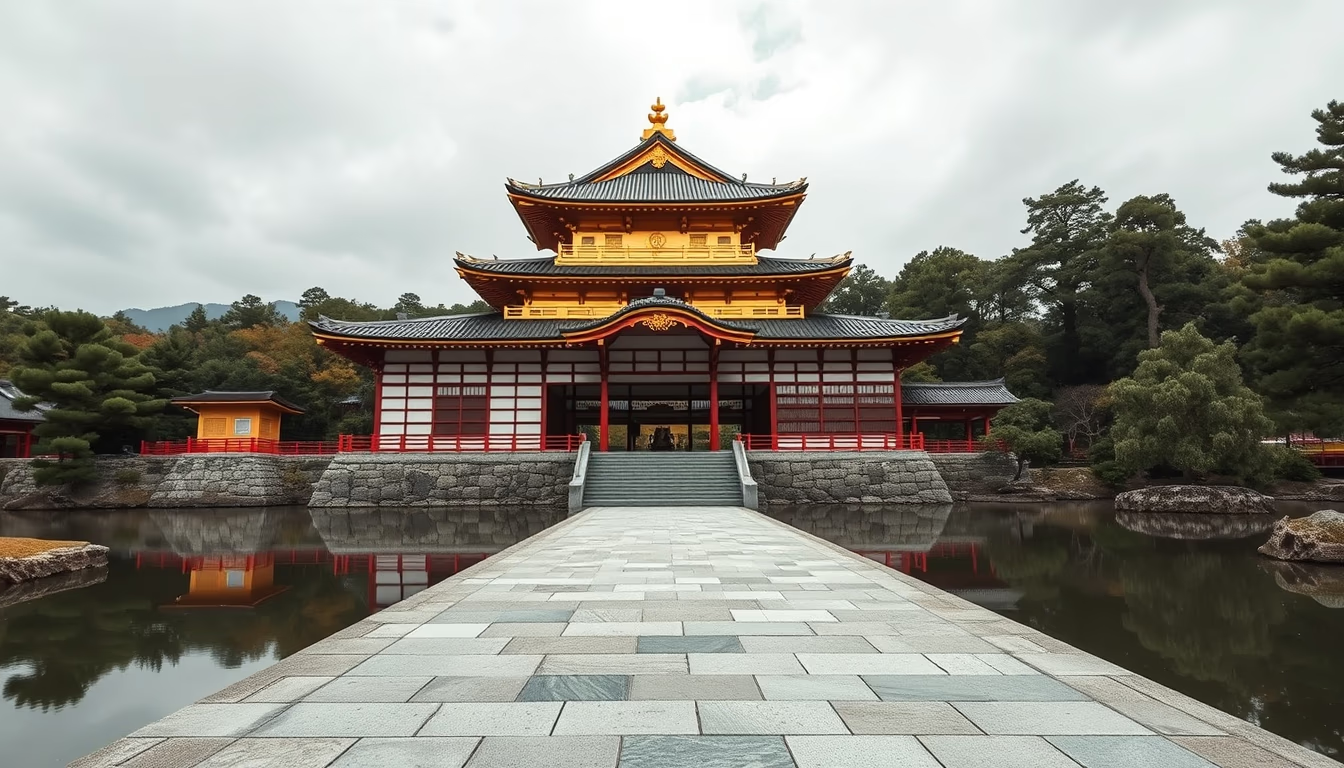
Kinkaku-ji, the Golden Pavilion in Kyoto, is a Zen temple covered in gold leaf, a symbol of Japanese culture and a UNESCO World Heritage site.
About this subject
Kinkaku-ji, officially known as Rokuon-ji, is one of Japan's most iconic temples. Located in Kyoto, it was originally built in 1397 as a retirement villa for shogun Ashikaga Yoshimitsu. After his death, the site was converted into a Buddhist temple of the Rinzai school of Zen. The main pavilion, entirely covered in pure gold leaf, reflects in Kyōko-chi (Mirror Pond), creating a landscape that harmoniously blends architecture with nature.
The structure has three stories, each with a different architectural style: the first is shinden style (Heian aristocracy palace), the second is buke style (samurai warrior style), and the third is zen style (Chinese temple). At the top, a golden phoenix statue crowns the roof. The temple was burned down in 1950 by a fanatic monk, an event that inspired Yukio Mishima's novel "The Temple of the Golden Pavilion." The current structure dates to 1955, a faithful reconstruction of the original.
Kinkaku-ji has been a UNESCO World Heritage site since 1994, as part of the Historic Monuments of Ancient Kyoto. It receives millions of visitors each year, who come to admire not only the pavilion but also the carefully designed gardens, with pruned pines and stone paths. The contrast between the shining gold and the green trees is especially striking in autumn, when maple leaves turn red. The temple entrance ticket is curiously shaped like a paper amulet, a unique souvenir.
The influence of Kinkaku-ji transcends religion: it appears in films, literature, and visual arts as a symbol of Japanese aesthetics. The gold leaf technique, requiring centuries-old craftsmanship, is kept alive by local artisans. Visiting the site is to immerse oneself in feudal Japanese history and Zen philosophy, where impermanence and beauty meet.
Frequently Asked Questions
What is the best time to visit Kinkaku-ji?
The best time is autumn (November) for the red maple leaves, or spring (April) for cherry blossoms. The temple is open year-round from 9:00 to 17:00.
Is the Golden Pavilion really covered in gold?
Yes, the exterior walls are entirely covered in pure gold leaf, applied by skilled artisans. The gold symbolizes purity and enlightenment in Buddhism.
Was the original Kinkaku-ji destroyed?
Yes, the original pavilion was burned down in 1950 by a monk. It was rebuilt in 1955, identical to the original, and has since undergone periodic restorations to maintain its luster.
Direct URL
https://pub-c7d6a6ea828543ac903a74a341ccb2e1.r2.dev/imagens/kinkaku-ji-golden-pavilion-architectural-photography-p5.avifHow to credit
Include a visible link back to UtilizAí. Copy one of the snippets below:
<a href="https://xn--utiliza-eza.com/en/midia/imagens/kinkaku-ji-golden-pavilion-architectural-photography-p5">Kinkaku-ji golden pavilion</a> by <a href="https://xn--utiliza-eza.com">UtilizAí</a>, licensed under <a href="https://creativecommons.org/licenses/by/4.0/">CC BY 4.0</a>.
[Kinkaku-ji golden pavilion](https://xn--utiliza-eza.com/en/midia/imagens/kinkaku-ji-golden-pavilion-architectural-photography-p5) by [UtilizAí](https://xn--utiliza-eza.com), CC BY 4.0
License: CC-BY-4.0