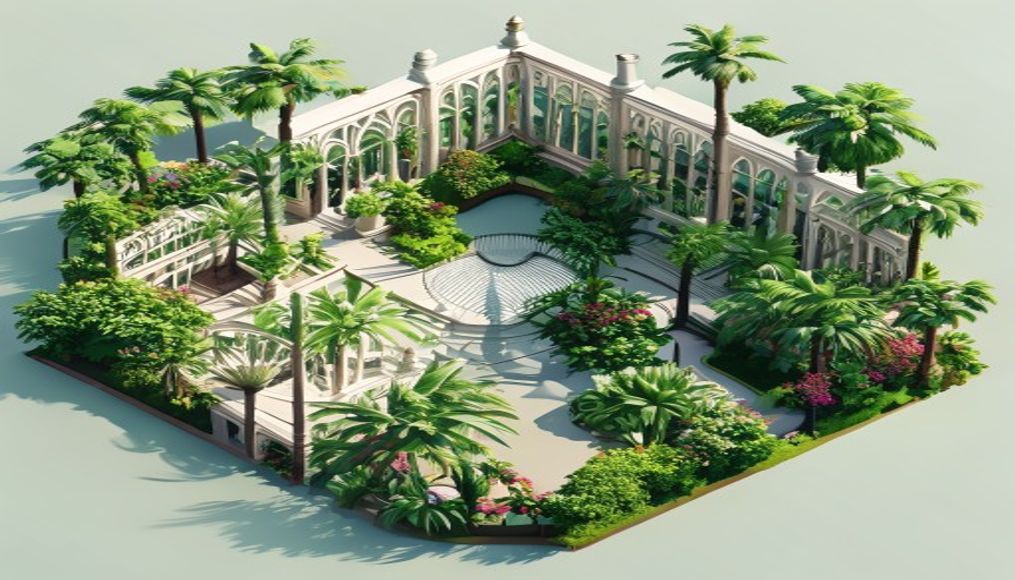
Kew gardens london palmhouse
1344×768 · AVIF · CC BY 4.0
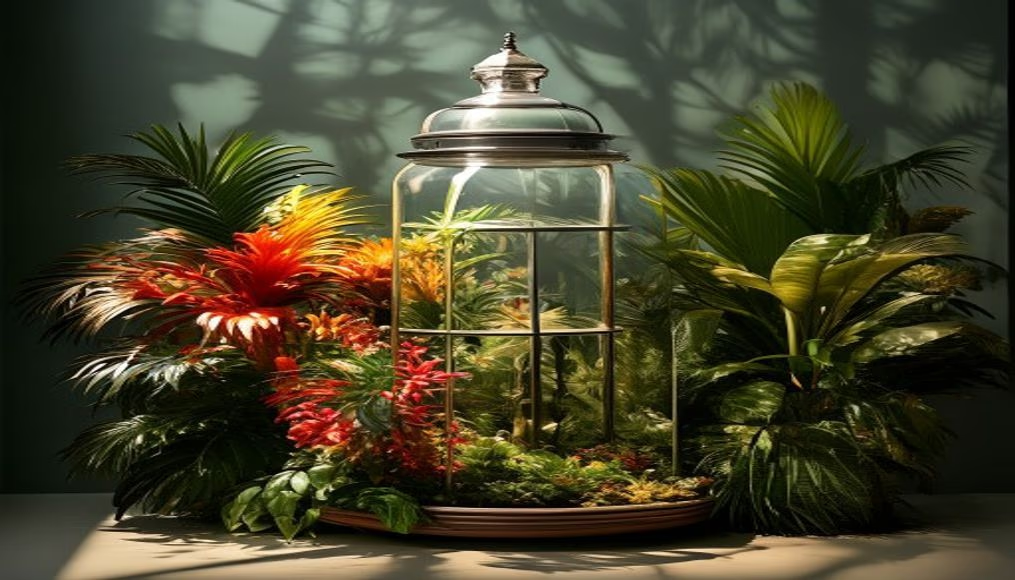
The Palm House at Kew Gardens in London is an iconic Victorian glass and iron greenhouse housing a vast collection of palms and tropical plants.
About this subject
The Palm House is one of the most iconic structures at the Royal Botanic Gardens, Kew, London. Opened in 1848, it was designed by architect Decimus Burton and engineer Richard Turner, inspired by the Crystal Palace of the Great Exhibition of 1851. The structure combines wrought iron and glass, forming an elongated vault that allows natural light to enter. At the time, it was the largest greenhouse in the world, measuring 110 meters in length and 20 meters in height, setting a new standard for botanical architecture.
The interior of the Palm House maintains a controlled tropical climate, essential for cultivating palms and other exotic species brought from different parts of the world. The collection includes rare specimens such as the traveler's palm (Ravenala madagascariensis) and the carnauba palm (Copernicia prunifera). Beyond botanical value, the greenhouse plays a crucial role in conserving endangered species, especially from oceanic islands like São Paulo (Fernando de Noronha archipelago).
A historical curiosity: the Palm House was built to house plants collected by British explorers during the Victorian era, when the British Empire sought useful species for agriculture and medicine. In 1980, it underwent a complete restoration, replacing glass and reinforcing the iron structure. Today, it is one of the most visited attractions at Kew Gardens, a UNESCO World Heritage Site since 2003.
The Palm House design influenced the construction of greenhouses worldwide, such as the Crystal Conservatory at the New York Botanical Garden. Its curved and elegant silhouette became a symbol of Victorian architecture and botanical history. Visitors can walk along an elevated pathway offering panoramic views of the palm canopy, as well as explore the underground aquarium housing tropical fish.
Frequently Asked Questions
How old is the Palm House?
The Palm House opened in 1848, making it over 175 years old. It is one of the oldest Victorian greenhouses still in continuous operation.
What kind of plants are grown in the Palm House?
The greenhouse mainly houses palms and tropical plants, including rare species such as the traveler's palm and the carnauba palm. The collection is maintained under controlled tropical conditions.
Why is the Palm House famous?
It is famous for its innovative iron and glass architecture, for being the largest greenhouse in the world at the time of its construction, and for its role in conserving endangered plants. It is also a symbol of Kew Gardens, a UNESCO World Heritage Site.
Direct URL
https://pub-c7d6a6ea828543ac903a74a341ccb2e1.r2.dev/imagens/kew-gardens-london-palmhouse-studio-still-life-p2.avifHow to credit
Include a visible link back to UtilizAí. Copy one of the snippets below:
<a href="https://xn--utiliza-eza.com/en/midia/imagens/kew-gardens-london-palmhouse-studio-still-life-p2">Kew gardens london palmhouse</a> by <a href="https://xn--utiliza-eza.com">UtilizAí</a>, licensed under <a href="https://creativecommons.org/licenses/by/4.0/">CC BY 4.0</a>.
[Kew gardens london palmhouse](https://xn--utiliza-eza.com/en/midia/imagens/kew-gardens-london-palmhouse-studio-still-life-p2) by [UtilizAí](https://xn--utiliza-eza.com), CC BY 4.0
License: CC-BY-4.0