Kew gardens london palmhouse
1344×768 · JPG · CC BY 4.0
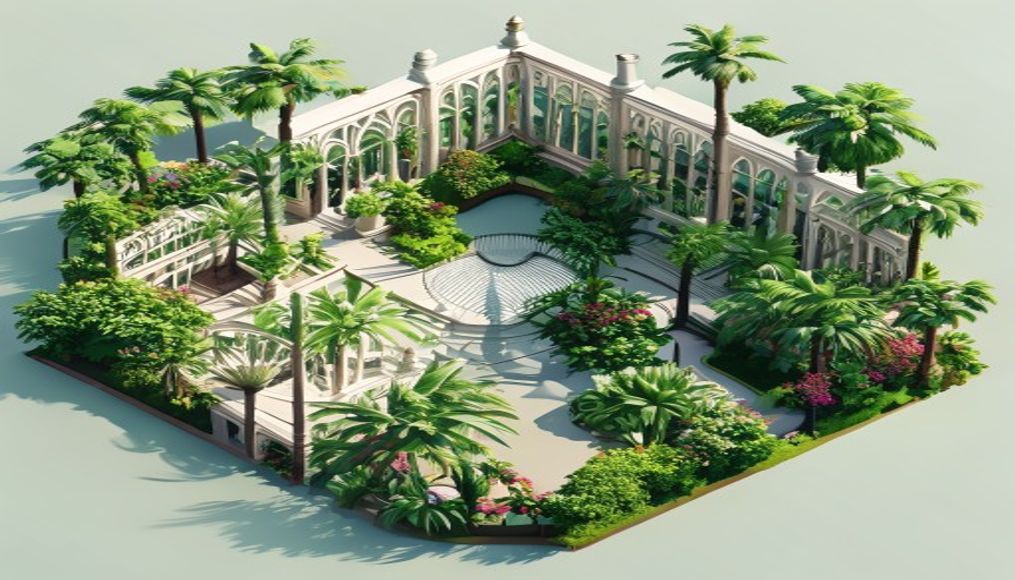
The Palm House at the Royal Botanic Gardens, Kew, in London is a Victorian glass and iron architectural icon that houses a vast collection of palms and tropical plants.
About this subject
The Palm House is one of the most iconic glasshouses at the Royal Botanic Gardens, Kew, in London, United Kingdom. Designed by architect Decimus Burton and engineer Richard Turner, it was built between 1844 and 1848 during the height of the Industrial Revolution. Its curved glass and wrought iron structure, resembling an inverted ship, allowed for a controlled tropical environment, which was revolutionary at the time.
The building is 110 meters long, 30 meters wide, and 19 meters high at its center, making it the largest surviving Victorian glasshouse in the world. The Palm House was designed to accommodate the growing collection of palms brought by British botanical explorers from various colonies. Today, its collection includes not only palms but also cycads, ferns, and other tropical species, many of which are threatened in the wild.
The glasshouse played a crucial role in botanical research and the acclimatization of exotic plants for Europe. Its innovative coal-fired boilers and hot air ducts maintained the ideal temperature for plant growth. The Palm House also symbolized the power and expansion of the British Empire, reflecting scientific and commercial interest in global flora. Now a UNESCO World Heritage site, it attracts millions of visitors each year.
Notably, the Palm House underwent a major restoration between 1984 and 1988, which included reglazing, repainting, and modernization of environmental control systems. The building continues to serve as a center for research and conservation, with programs for propagating rare species. The blend of architectural beauty and scientific importance makes the Palm House one of Kew's most iconic landmarks.
Frequently Asked Questions
When was the Palm House at Kew built?
The Palm House was built between 1844 and 1848 during the Victorian era, designed by Decimus Burton and Richard Turner.
What plants are grown in the Palm House?
The glasshouse houses a vast collection of palms, cycads, ferns, and other tropical plants, many of which are endangered.
What is the historical significance of the Palm House?
The Palm House is a landmark of Victorian glass-and-iron architecture, a symbol of the British Empire, and crucial for botany and acclimatization of exotic plants in Europe.
Direct URL
https://pub-c7d6a6ea828543ac903a74a341ccb2e1.r2.dev/imagens/kew-gardens-london-palmhouse-isometric-flat-lay-p4.jpgHow to credit
Include a visible link back to UtilizAí. Copy one of the snippets below:
<a href="https://xn--utiliza-eza.com/en/midia/imagens/kew-gardens-london-palmhouse-isometric-flat-lay-p4">Kew gardens london palmhouse</a> by <a href="https://xn--utiliza-eza.com">UtilizAí</a>, licensed under <a href="https://creativecommons.org/licenses/by/4.0/">CC BY 4.0</a>.
[Kew gardens london palmhouse](https://xn--utiliza-eza.com/en/midia/imagens/kew-gardens-london-palmhouse-isometric-flat-lay-p4) by [UtilizAí](https://xn--utiliza-eza.com), CC BY 4.0
License: CC-BY-4.0