Katana japanese curved
1344×768 · AVIF · CC BY 4.0
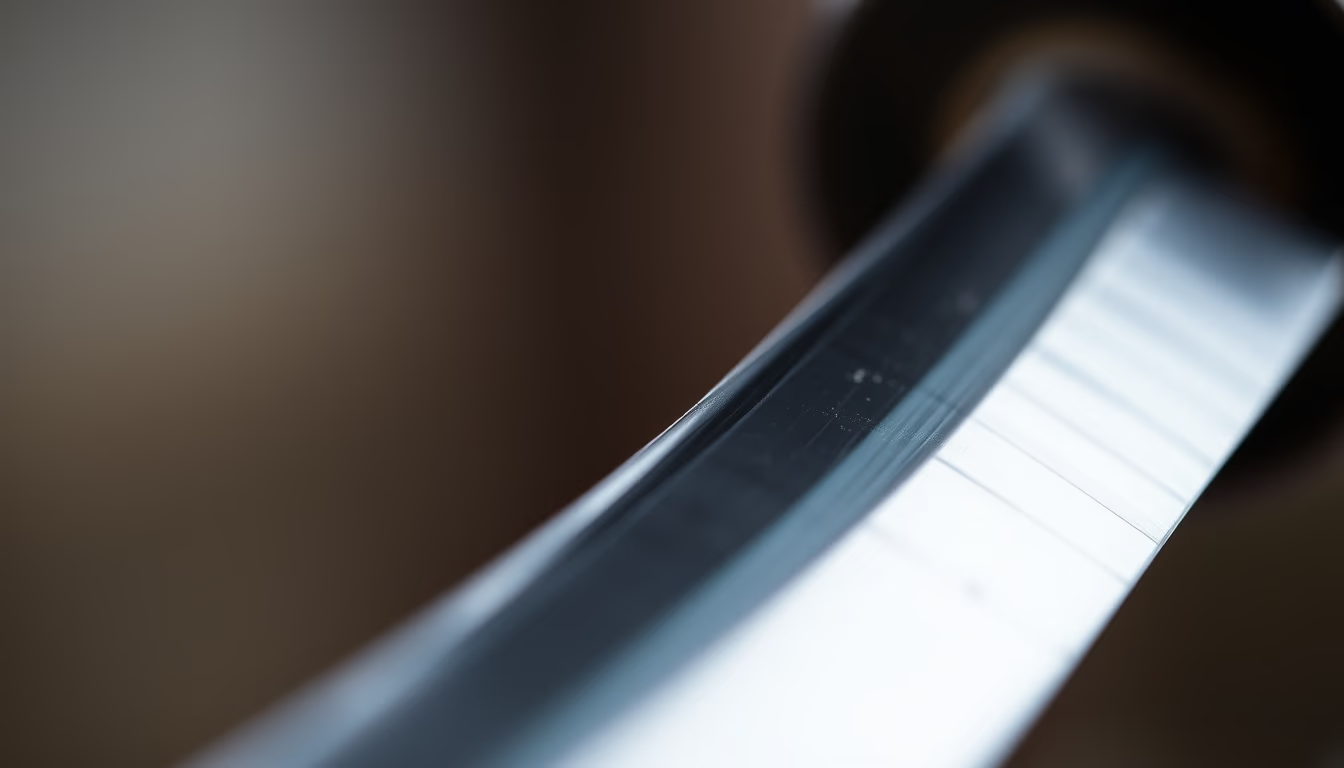
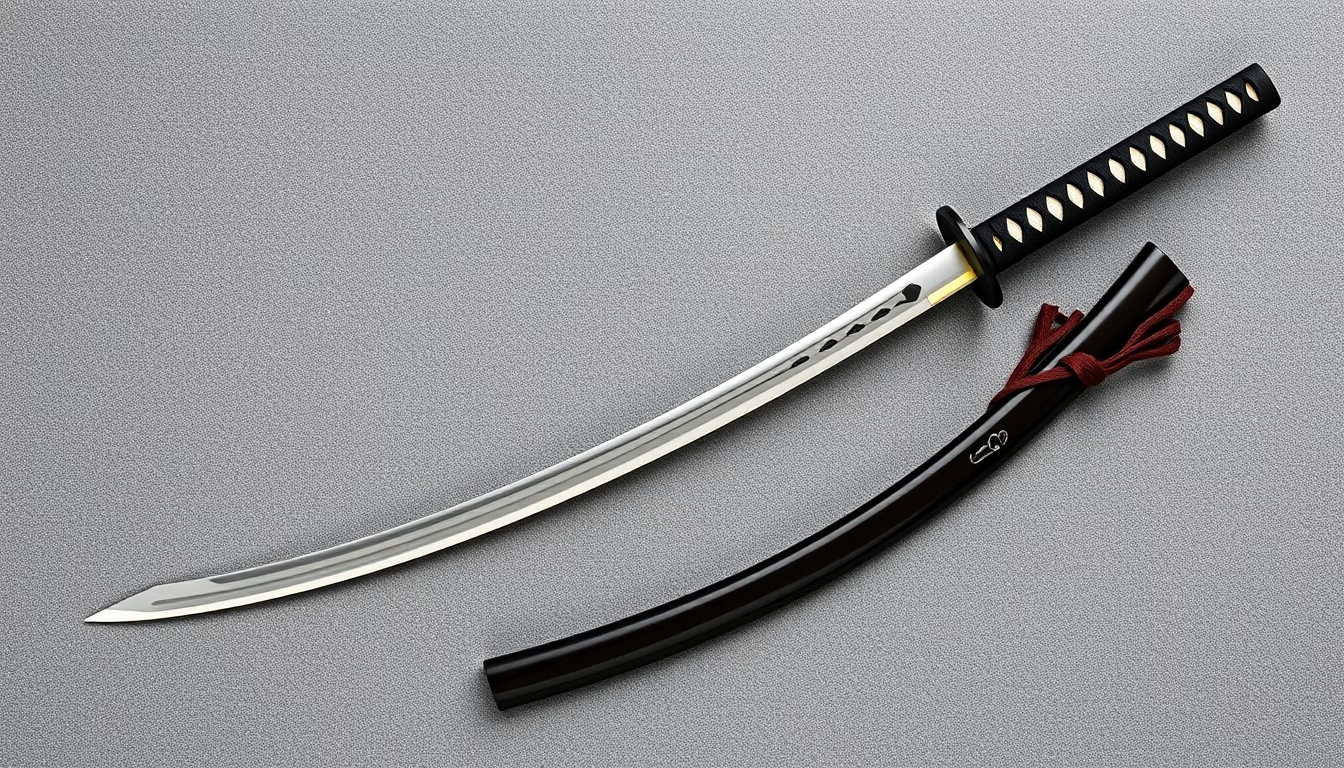
The katana is a curved Japanese single-edged sword, symbol of the samurai class and traditional forging art.
About this subject
The katana is a Japanese long sword with a curved, single-edged blade, historically wielded by samurai in feudal Japan. Its distinctive curve, known as sori, enables faster and more efficient cutting. The crafting of a katana involves a complex traditional process: tamahagane steel is repeatedly folded and forged to remove impurities and create layers that provide both hardness and flexibility. The blade is clay-tempered and quenched in water to form the hamon, an undulating pattern along the edge indicating the hardened zone.
More than a weapon, the katana was a spiritual object and status symbol. Each sword was customized with details like the tsuka (handle) wrapped in ray skin and silk cord, and the tsuba (guard) often adorned with nature or mythological motifs. Blades forged by masters such as Masamune and Muramasa are considered national treasures. During the Edo period, katana use was regulated, and after the Meiji Restoration, production for combat declined, but the art of swordsmithing (katanakaji) continued as a cultural tradition.
The katana's curvature (sori) is measured in centimeters and varies by forging school. Kamakura-period katanas tend to have a more pronounced curve, while Sengoku-period blades are straighter. The blade shape influences cutting style: the katana is designed for horizontal slashes, using a drawing motion (suriage) to cut efficiently. Modern metallurgical studies reveal that the steel's microstructure, containing martensite and pearlite, gives the katana a unique combination of toughness and hardness.
Today, authentic katanas are classified as art objects and historical heritage. Ownership requires registration in Japan, and modern replicas are popular among collectors and martial arts practitioners of iaido and kendo. The katana continues to fascinate globally for its beauty, functionality, and deep connection to Japanese culture.
Frequently Asked Questions
What is the difference between a katana and other Japanese swords?
The katana is a long sword with a curved blade over 60 cm, while the wakizashi is shorter (30-60 cm) and the tanto is a dagger (under 30 cm). The katana was the main weapon of the samurai.
How is a katana forged?
Tamahagane steel is heated, hammered, folded, and welded repeatedly (about 12-16 times) to create thousands of layers. The blade is then shaped, clay-tempered and quenched to harden the edge, and finally polished.
Why does the katana have a curve?
The curve (sori) enables a more efficient cutting motion by aligning the edge with the drawing stroke. It also facilitates a quick draw from the scabbard. The curvature varies by historical period and forging school.
Direct URL
https://pub-c7d6a6ea828543ac903a74a341ccb2e1.r2.dev/imagens/katana-japanese-curved-macro-closeup-fresh5.avifHow to credit
Include a visible link back to UtilizAí. Copy one of the snippets below:
<a href="https://xn--utiliza-eza.com/en/midia/imagens/katana-japanese-curved-macro-closeup-fresh5">Katana japanese curved</a> by <a href="https://xn--utiliza-eza.com">UtilizAí</a>, licensed under <a href="https://creativecommons.org/licenses/by/4.0/">CC BY 4.0</a>.
[Katana japanese curved](https://xn--utiliza-eza.com/en/midia/imagens/katana-japanese-curved-macro-closeup-fresh5) by [UtilizAí](https://xn--utiliza-eza.com), CC BY 4.0
License: CC-BY-4.0