Kaaba mecca aerial
1344×768 · AVIF · CC BY 4.0
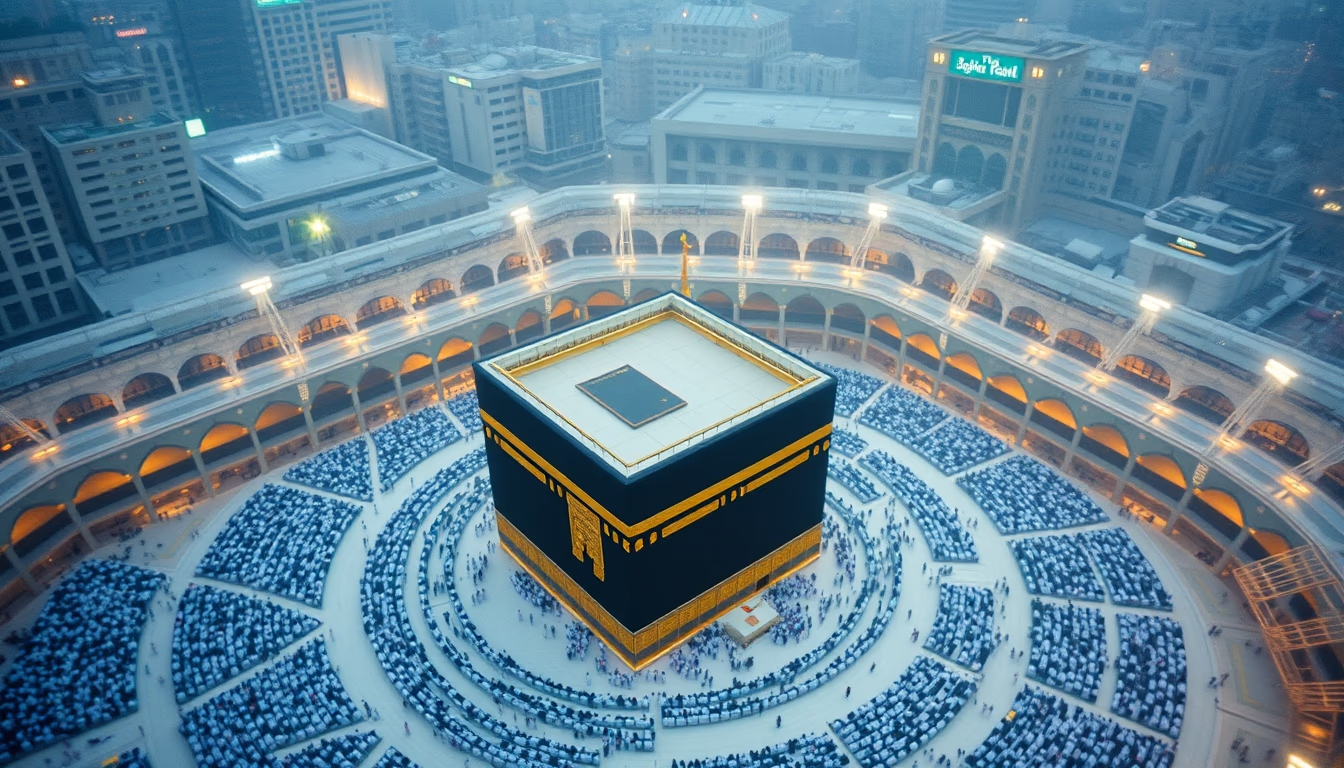
The Kaaba, Islam's holiest shrine, seen from above in Mecca, drawing millions of pilgrims annually.
About this subject
The Kaaba is a cubic structure at the heart of the Grand Mosque (Masjid al-Haram) in Mecca, Saudi Arabia. Considered the House of God (Baitullah) in Islam, it serves as the focal point for Muslim prayer and the destination of the Hajj and Umrah pilgrimages. According to Islamic tradition, the Kaaba was built by Abraham and his son Ishmael as a monotheistic sanctuary. Prior to Islam, the Kaaba was a pagan shrine housing idols, but was purified by the Prophet Muhammad in 630 CE.
The current structure stands about 13.1 meters tall, with sides roughly 11 meters long. It is draped in a black silk cloth called the kiswa, embroidered with Quranic verses in gold. In the eastern corner is the Black Stone (Hajar al-Aswad), a fragment of rock believed to have come from paradise. During the Hajj, pilgrims perform Tawaf, circling the Kaaba seven times counterclockwise.
The Grand Mosque has undergone multiple expansions to accommodate the growing number of pilgrims. The mosque's current capacity exceeds two million worshippers during the Hajj. The area around the Kaaba, known as the Mataf, has been expanded and paved with marble. The site holds immense historical and spiritual significance, mentioned in the Quran as the first place of worship established for humanity.
Frequently Asked Questions
Why is the Kaaba covered with a black cloth?
The black cloth, called the kiswa, is a tradition dating back to ancient times. It symbolizes reverence and unity. It is replaced annually during the Hajj, and the old kiswa is cut into pieces and distributed as souvenirs.
What is inside the Kaaba?
The interior of the Kaaba is empty except for three wooden pillars supporting the roof, some silver and gold lamps, and a marble plaque. There are no objects of worship inside, emphasizing Islamic monotheism.
What is the significance of the Black Stone?
The Black Stone (Hajar al-Aswad) is located in the eastern corner of the Kaaba. According to tradition, it was given by God to Abraham. Pilgrims try to touch or kiss it during Tawaf, following the example of the Prophet Muhammad.
Direct URL
https://pub-c7d6a6ea828543ac903a74a341ccb2e1.r2.dev/imagens/kaaba-mecca-aerial-lo-fi-disposable-camera-p10.avifHow to credit
Include a visible link back to UtilizAí. Copy one of the snippets below:
<a href="https://xn--utiliza-eza.com/en/midia/imagens/kaaba-mecca-aerial-lo-fi-disposable-camera-p10">Kaaba mecca aerial</a> by <a href="https://xn--utiliza-eza.com">UtilizAí</a>, licensed under <a href="https://creativecommons.org/licenses/by/4.0/">CC BY 4.0</a>.
[Kaaba mecca aerial](https://xn--utiliza-eza.com/en/midia/imagens/kaaba-mecca-aerial-lo-fi-disposable-camera-p10) by [UtilizAí](https://xn--utiliza-eza.com), CC BY 4.0
License: CC-BY-4.0