Jellyfish glowing in dark
1344×768 · AVIF · CC BY 4.0
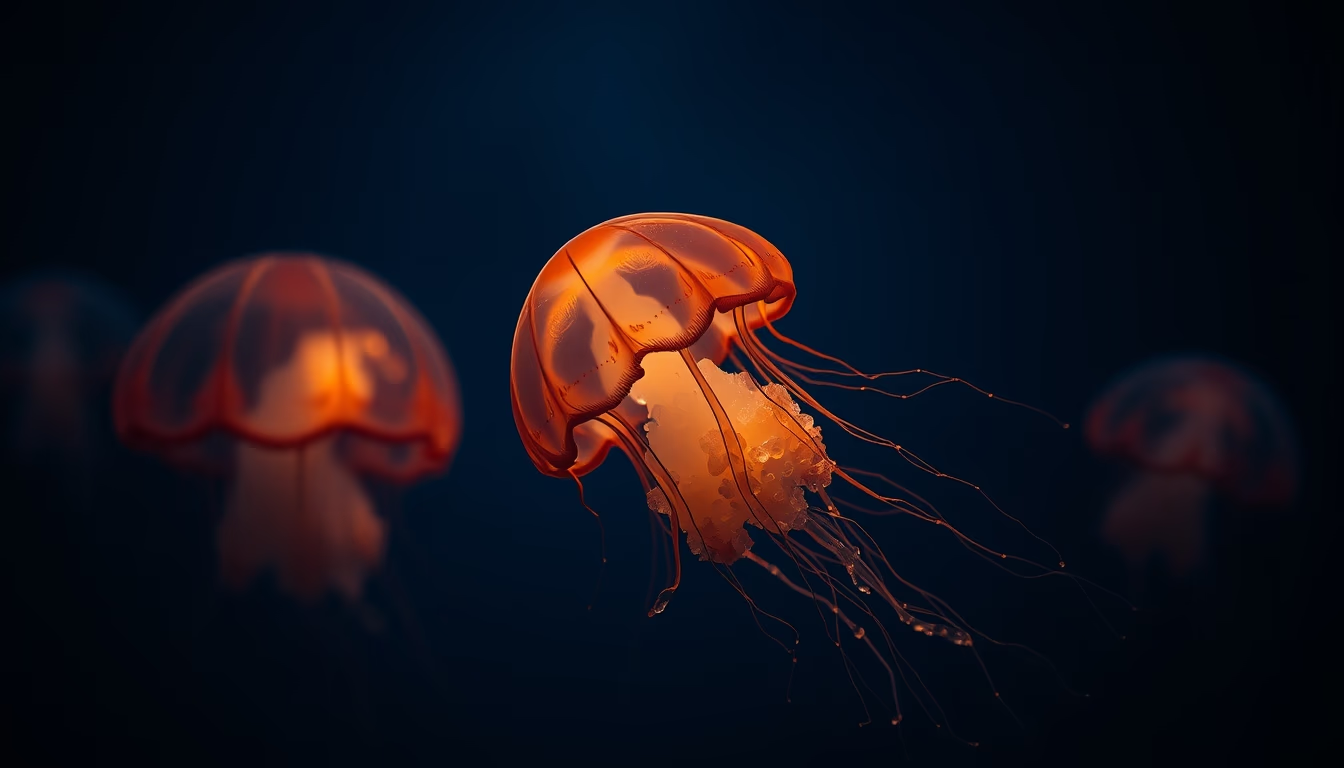
Bioluminescent jellyfish emit their own light in the dark, a fascinating marine natural phenomenon.
About this subject
Bioluminescent jellyfish are marine creatures that produce light through chemical reactions in their bodies. This phenomenon, called bioluminescence, occurs when the protein luciferin reacts with oxygen in the presence of the enzyme luciferase, generating cold light. Most bioluminescent jellyfish live in deep waters where sunlight does not reach, using this ability to attract prey, defend against predators, or communicate. The best-known species is Aequorea victoria, from which the GFP (Green Fluorescent Protein) was isolated, revolutionizing biomedical research as a cellular marker.
In Brazil, bioluminescent jellyfish can be found in coastal regions, especially along the northeastern and southeastern coasts, during certain times of the year. Guanabara Bay in Rio de Janeiro has recorded blooms of luminescent jellyfish, attracting the attention of biologists and tourists. The phenomenon is more common in warm, plankton-rich waters, which serve as food for these cnidarians. Bioluminescence is also observed in other marine organisms, such as dinoflagellates, which can make the sea glow at night, a spectacle known as "milky seas."
Interestingly, the light emitted by jellyfish can range from blue to green, depending on the species and depth. Studies indicate that bioluminescence in jellyfish may have evolved over 500 million years ago, making it one of the oldest forms of communication in the ocean. Furthermore, GFP is widely used in laboratories to tag proteins and study cellular processes, earning its discoverers the Nobel Prize in Chemistry in 2008.
For nature enthusiasts, observing bioluminescent jellyfish is a rare and magical experience. Night dives in places like Ilha Grande (RJ) or Fernando de Noronha can provide unforgettable encounters. However, it is important to keep a safe distance, as some species have stinging tentacles that can cause burns.
Frequently Asked Questions
Why do jellyfish glow in the dark?
Jellyfish glow due to bioluminescence, a chemical reaction that produces light. They use this light to attract prey, defend against predators, or communicate in deep waters.
Where can I see bioluminescent jellyfish in Brazil?
They can be seen in coastal regions like the northeastern and southeastern coasts, especially in places such as Guanabara Bay (RJ) and Fernando de Noronha, during warm, plankton-rich waters.
What is the importance of GFP found in jellyfish?
The GFP protein, isolated from the jellyfish Aequorea victoria, is used in biomedical research as a fluorescent marker to visualize proteins and cellular processes, contributing to advances in genetics and neuroscience.
Direct URL
https://pub-c7d6a6ea828543ac903a74a341ccb2e1.r2.dev/imagens/jellyfish-glowing-in-dark-cinematic-wide-shot-v2.avifHow to credit
Include a visible link back to UtilizAí. Copy one of the snippets below:
<a href="https://xn--utiliza-eza.com/en/midia/imagens/jellyfish-glowing-in-dark-cinematic-wide-shot-v2">Jellyfish glowing in dark</a> by <a href="https://xn--utiliza-eza.com">UtilizAí</a>, licensed under <a href="https://creativecommons.org/licenses/by/4.0/">CC BY 4.0</a>.
[Jellyfish glowing in dark](https://xn--utiliza-eza.com/en/midia/imagens/jellyfish-glowing-in-dark-cinematic-wide-shot-v2) by [UtilizAí](https://xn--utiliza-eza.com), CC BY 4.0
License: CC-BY-4.0