Jellyfish glowing in dark
1344×768 · AVIF · CC BY 4.0
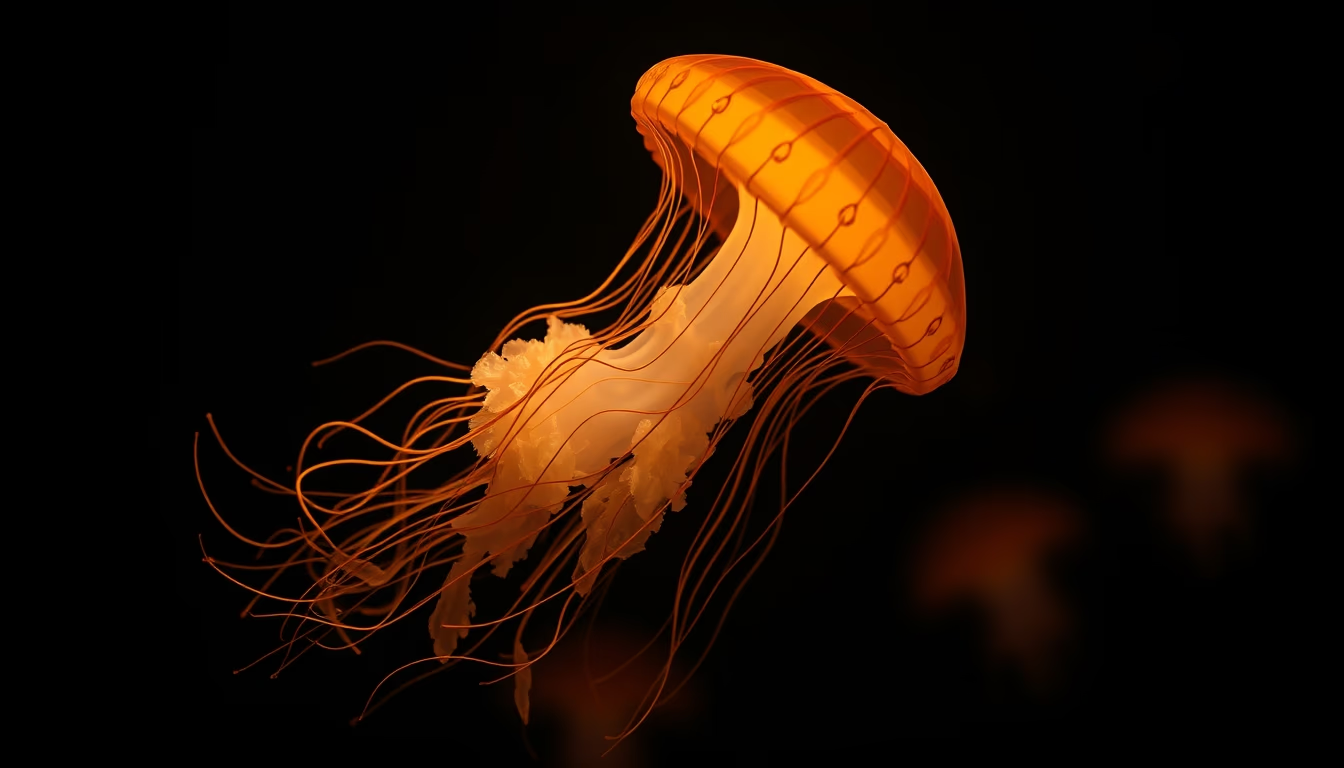
Bioluminescent jellyfish use their own light to camouflage, attract prey, and communicate in the deep ocean.
About this subject
Bioluminescent jellyfish are fascinating creatures found in all oceans worldwide, from the surface to abyssal trenches. Their ability to produce light, called bioluminescence, results from a chemical reaction between luciferin and the enzyme luciferase, usually triggered by a mechanical or electrical stimulus. About 90% of species living in mesopelagic zones (200 to 1000 meters depth) are bioluminescent, and jellyfish are among the most iconic examples.
One of the best-known species is Aequorea victoria, native to the North Pacific, which produces green fluorescent protein (GFP) widely used in biomedical research. Scientists discovered that GFP can be attached to other proteins to track cellular processes, a breakthrough that earned the Nobel Prize in Chemistry in 2008 for Osamu Shimomura, Martin Chalfie, and Roger Tsien. Another notable species is Pelagia noctiluca, which has stinging tentacles and is common in the Mediterranean Sea, where its blooms can bother swimmers.
Bioluminescence in jellyfish serves multiple ecological purposes. The blue or green light can confuse predators, act as a lure to attract smaller prey, or serve as a warning signal. In deep waters, where sunlight does not reach, bioluminescence is the primary form of visual communication. Some jellyfish, such as Atolla wyvillei, produce an intense spiral-shaped glow when attacked, a behavior known as a 'burglar alarm' that attracts larger predators against the attacker.
For humans, the glow of jellyfish has inspired art, literature, and technology. GFP, for example, revolutionized neurobiology by enabling the visualization of living neurons. In public aquariums, tanks with bioluminescent jellyfish are popular attractions, such as at the Monterey Bay Aquarium in California and the Lisbon Oceanarium. In Brazil, the Santos Aquarium displays species like Mastigias papua, which glows under ultraviolet light. Despite their beauty, it is important to remember that many jellyfish have cnidocytes that can release toxins, requiring careful handling.
Frequently Asked Questions
Why do jellyfish glow in the dark?
Jellyfish glow due to bioluminescence, a chemical process that produces light. This ability is used for defense, prey attraction, communication, and camouflage in deep waters.
Are all jellyfish bioluminescent?
No. Bioluminescence is common in deep-sea jellyfish, but many surface species do not produce their own light. It is estimated that about 50% of jellyfish species have this ability.
What is the scientific importance of the GFP protein from jellyfish?
GFP (green fluorescent protein) from Aequorea victoria is used as a fluorescent marker in biological research, enabling visualization of processes such as gene expression and protein movement in living cells.
Direct URL
https://pub-c7d6a6ea828543ac903a74a341ccb2e1.r2.dev/imagens/jellyfish-glowing-in-dark-cinematic-wide-shot.avifHow to credit
Include a visible link back to UtilizAí. Copy one of the snippets below:
<a href="https://xn--utiliza-eza.com/en/midia/imagens/jellyfish-glowing-in-dark-cinematic-wide-shot">Jellyfish glowing in dark</a> by <a href="https://xn--utiliza-eza.com">UtilizAí</a>, licensed under <a href="https://creativecommons.org/licenses/by/4.0/">CC BY 4.0</a>.
[Jellyfish glowing in dark](https://xn--utiliza-eza.com/en/midia/imagens/jellyfish-glowing-in-dark-cinematic-wide-shot) by [UtilizAí](https://xn--utiliza-eza.com), CC BY 4.0
License: CC-BY-4.0