Jazz double bass
1344×768 · AVIF · CC BY 4.0
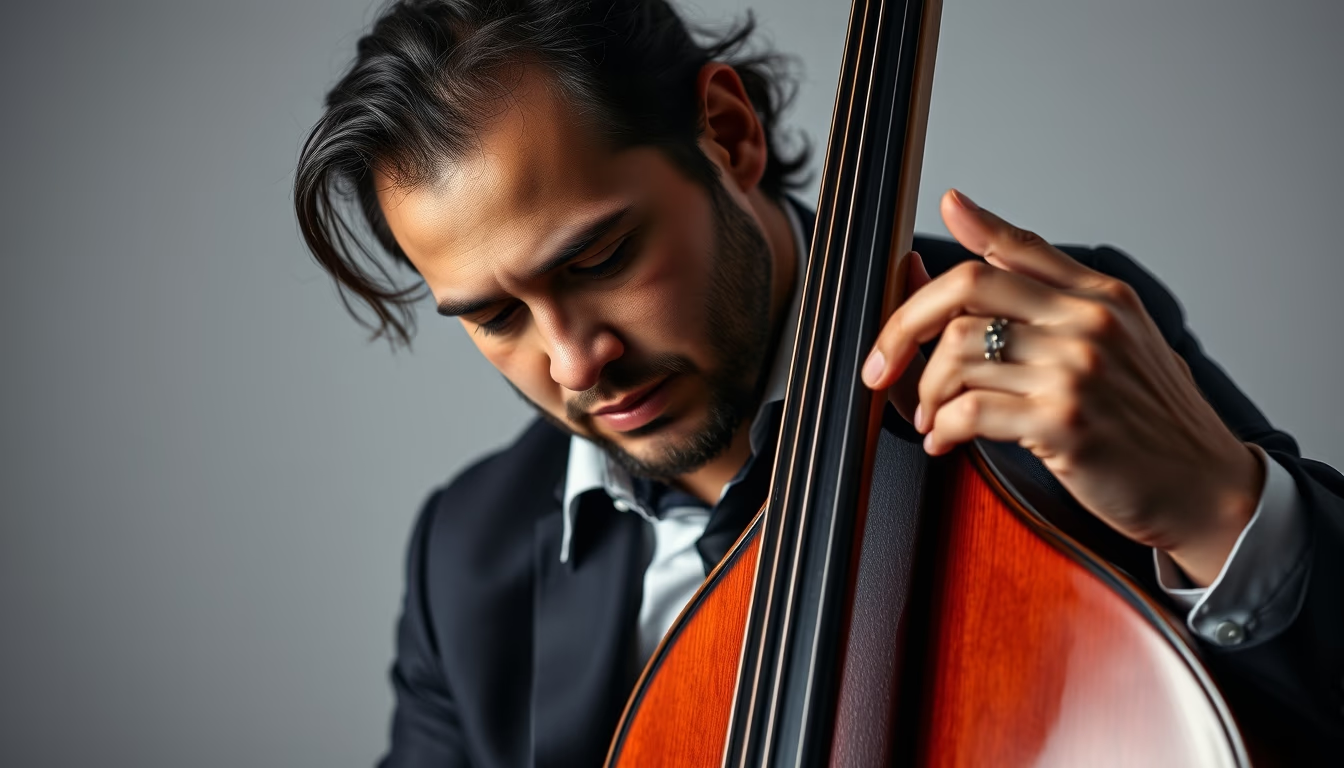
The acoustic double bass is the harmonic and rhythmic backbone of jazz, providing unmatched depth and melodic drive.
About this subject
The acoustic double bass, also called upright bass, plays a central role in jazz since its origins in New Orleans. Its main function is to establish harmonic progression and maintain rhythm through walking bass lines, continuous note patterns that connect chords and guide the tempo. In ensembles like trios, quartets, or big bands, the instrument fills the low frequencies, creating a solid foundation over which soloists improvise.
Historically, figures like Charles Mingus transformed the double bass into a solo and leadership instrument, expanding its technical and expressive vocabulary. Paul Chambers, known for his partnership with Miles Davis, refined the use of the bow in jazz, while Scott LaFaro revolutionized interaction with piano and drums in Bill Evans's trio. These musicians elevated the double bass from mere accompanist to creative protagonist.
Technically, the bassist can play with fingers (pizzicato) or with the bow (arco), each offering distinct timbres. Strings may be gut, steel, or nylon, affecting projection and attack. Amplification, introduced in the 1930s, allowed the instrument to be heard in large venues, but many purists still prefer acoustic sound for greater authenticity.
Culturally, the double bass represents the low voice of jazz, capable of singing melodies or pulsating with rhythmic energy. Its versatility makes it essential in subgenres like bebop, cool jazz, free jazz, and fusion. Italian and French luthiers produce high-quality instruments, but Brazilian handmade basses also gain prominence, adapting tradition to regional woods.
Frequently Asked Questions
What is the difference between acoustic double bass and electric bass in jazz?
The acoustic double bass produces sound through vibrating strings over a wooden resonance chamber, creating a natural, full-bodied timbre. The electric bass relies on electronic amplification and has a more compact construction. In traditional jazz, the acoustic instrument is preferred for its organic projection and dynamic response, while the electric bass is more common in jazz fusion and modern styles.
Who are the greatest double bassists in jazz?
Some of the most influential names are Charles Mingus, Paul Chambers, Ray Brown, Scott LaFaro, and Ron Carter. Each made unique contributions: Mingus as composer and leader, Chambers for virtuosity, Brown for robust sound, LaFaro for melodic approach, and Carter for longevity and versatility.
Why is the double bass important in jazz?
The double bass provides the harmonic and rhythmic foundation that supports the entire ensemble. Its walking bass lines maintain the pulse and indicate chord changes, allowing soloists to improvise freely. Without the double bass, jazz would lose its low-end depth and sense of continuous motion.
Direct URL
https://pub-c7d6a6ea828543ac903a74a341ccb2e1.r2.dev/imagens/jazz-double-bass-studio-editorial-portrait-p4.avifHow to credit
Include a visible link back to UtilizAí. Copy one of the snippets below:
<a href="https://xn--utiliza-eza.com/en/midia/imagens/jazz-double-bass-studio-editorial-portrait-p4">Jazz double bass</a> by <a href="https://xn--utiliza-eza.com">UtilizAí</a>, licensed under <a href="https://creativecommons.org/licenses/by/4.0/">CC BY 4.0</a>.
[Jazz double bass](https://xn--utiliza-eza.com/en/midia/imagens/jazz-double-bass-studio-editorial-portrait-p4) by [UtilizAí](https://xn--utiliza-eza.com), CC BY 4.0
License: CC-BY-4.0