Jazz double bass
1344×768 · AVIF · CC BY 4.0
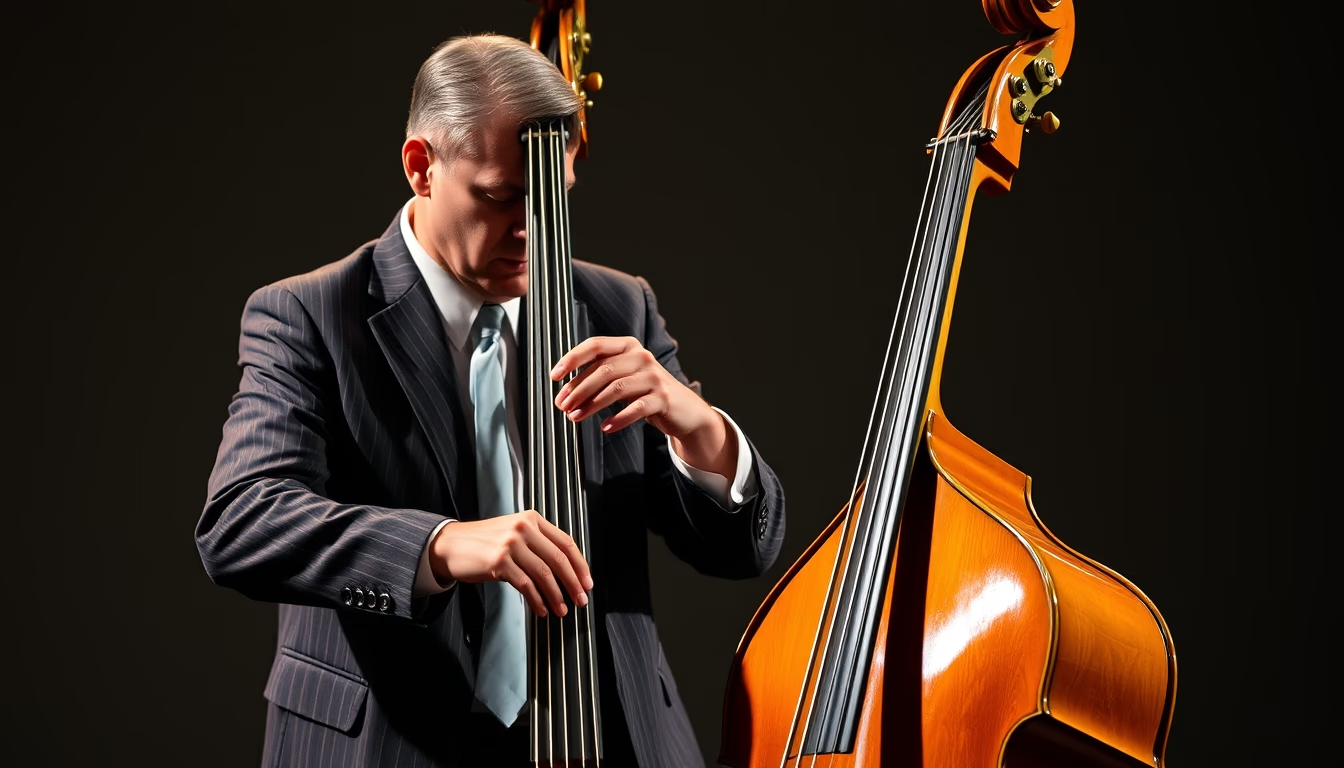
The acoustic double bass is the rhythmic and harmonic backbone of jazz, supporting solos and improvisations with its deep, rich tone.
About this subject
The acoustic double bass, also known as the upright bass or contrabass, is a string instrument played with a bow or plucked fingers. In jazz, it serves as the rhythmic and harmonic foundation, often providing a walking bass line that outlines chord progressions. Its role evolved from early jazz and ragtime, where the slap style (slapping strings against the fingerboard) emphasized rhythm, to more melodic and soloing roles in bebop and modal jazz. Notable bassists like Charles Mingus, Ray Brown, Paul Chambers, and Ron Carter expanded the instrument's capabilities, using arco (bowing) and advanced pizzicato techniques.
The double bass is tuned in fourths (E1, A1, D2, G2) and typically built with a spruce top, maple back and sides, and an ebony fingerboard. The standard size is 3/4, though full-size (4/4) instruments exist. Construction methods follow violin family traditions, with renowned luthiers from Italy and France creating instruments still played today. The double bass's natural acoustic sound projects well in intimate settings, but larger venues often require amplification. Its warm, resonant tone contrasts with the electric bass, which emerged in the 1950s to address volume issues but is less common in traditional jazz.
The double bass gained prominence in jazz orchestras and small combos throughout the 20th century. In the 1940s and 1950s, the walking bass style became standard, with bassists like Jimmy Blanton (Duke Ellington's band) pioneering melodic solo work. Later, players such as Scott LaFaro and Eddie Gomez pushed boundaries of harmonic and technical complexity. The instrument continues to be central in contemporary jazz, from traditional New Orleans groups to avant-garde ensembles. Iconic albums like "Kind of Blue" (Miles Davis) feature Paul Chambers' bass, and Charles Mingus' compositions often feature the double bass as a lead voice.
The double bass's physical demands require strength and stamina, especially for sustaining long walking lines. Bow technique (arco) allows for legato lines and textures not possible with pizzicato. Many jazz bassists also perform classical repertoire, and the double bass is equally at home in symphony orchestras. Despite the rise of electric instruments, the acoustic double bass remains preferred by purists for its organic sound and tactile response. Modern luthiers continue to refine designs, incorporating carbon fiber and other materials, but classic wooden instruments still dominate.
Frequently Asked Questions
Why is the double bass so important in jazz?
It provides the rhythmic and harmonic foundation, typically through a walking bass line that outlines chord changes and maintains the pulse. Without it, jazz loses much of its swing and cohesion.
Who are some famous jazz double bass players?
Charles Mingus, Ray Brown, Paul Chambers, Ron Carter, Scott LaFaro, Jimmy Blanton, and Christian McBride are among the most influential. Each expanded the instrument's role in jazz.
What is the difference between an acoustic double bass and an electric bass in jazz?
The acoustic double bass has a natural, resonant sound suitable for acoustic settings. The electric bass is more compact, amplified, and used in jazz fusion and modern styles, but many jazz purists prefer the acoustic for its tone and tactile response.
Direct URL
https://pub-c7d6a6ea828543ac903a74a341ccb2e1.r2.dev/imagens/jazz-double-bass-national-geographic-style-p12.avifHow to credit
Include a visible link back to UtilizAí. Copy one of the snippets below:
<a href="https://xn--utiliza-eza.com/en/midia/imagens/jazz-double-bass-national-geographic-style-p12">Jazz double bass</a> by <a href="https://xn--utiliza-eza.com">UtilizAí</a>, licensed under <a href="https://creativecommons.org/licenses/by/4.0/">CC BY 4.0</a>.
[Jazz double bass](https://xn--utiliza-eza.com/en/midia/imagens/jazz-double-bass-national-geographic-style-p12) by [UtilizAí](https://xn--utiliza-eza.com), CC BY 4.0
License: CC-BY-4.0