Jaeger lecoultre reverso
1344×768 · AVIF · CC BY 4.0
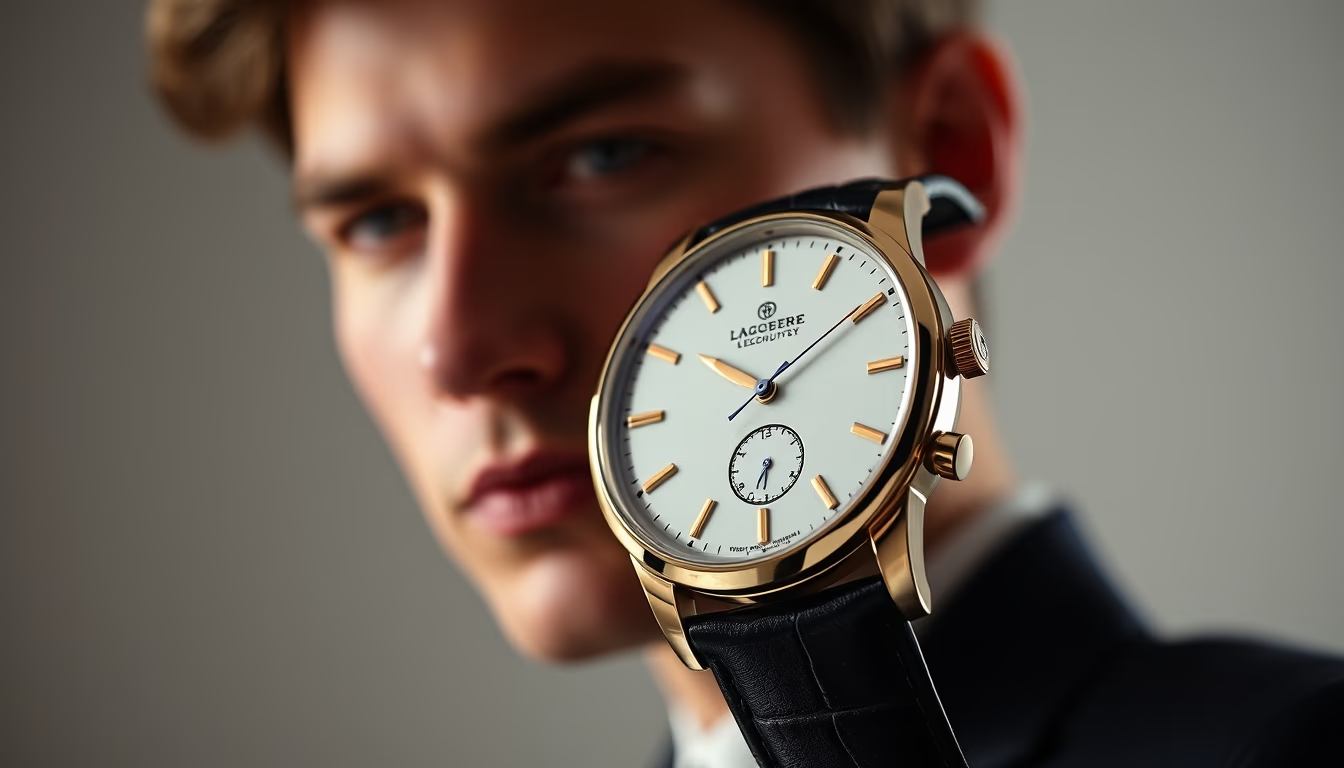
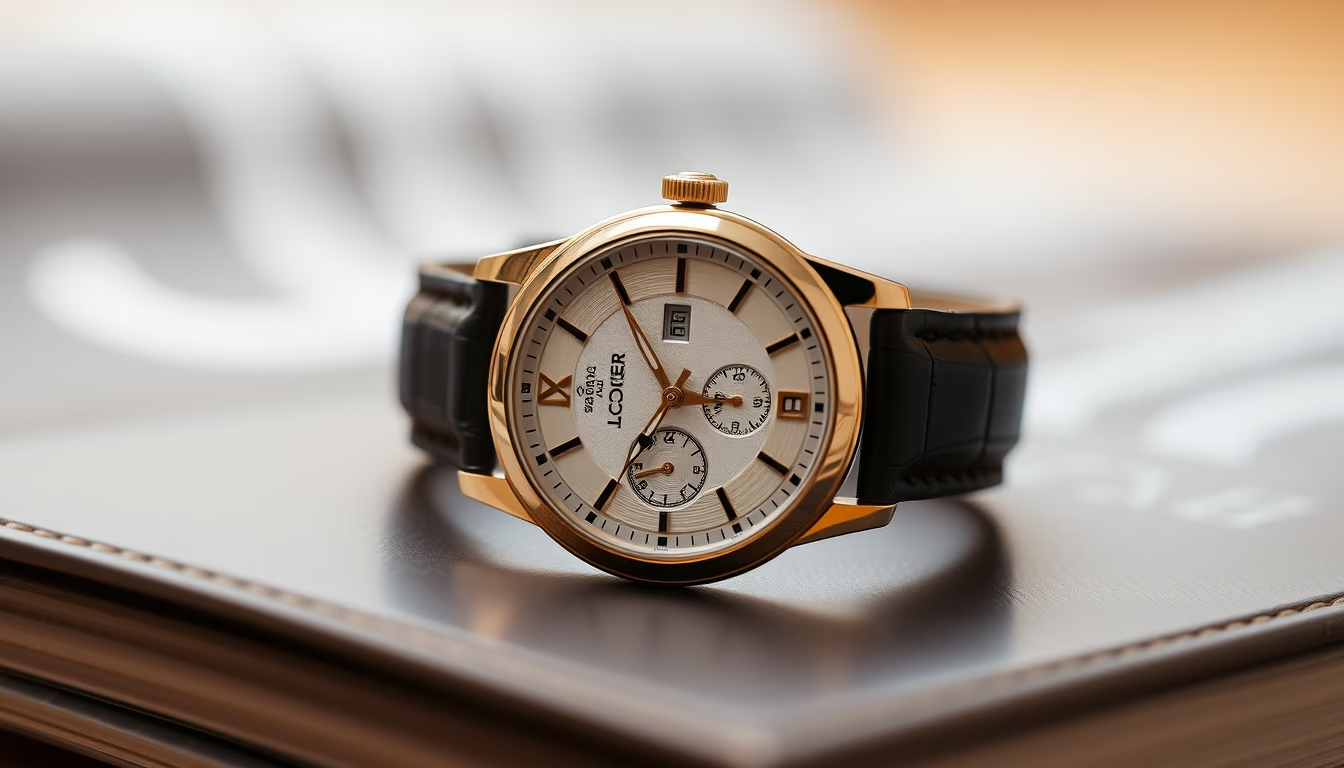
The Jaeger-LeCoultre Reverso is an iconic watch launched in 1931, designed to protect the crystal during polo matches, featuring an Art Deco design and a reversible case mechanism.
About this subject
The Jaeger-LeCoultre Reverso was born from a challenge: in 1930, engineer César de Trey proposed creating a watch that could withstand impacts during polo matches. The solution came from Jacques-David LeCoultre's workshop, developing a sliding case that rotates on itself, revealing a metal back. Launched in 1931, the Reverso became an Art Deco icon, with straight lines, a minimalist dial, and integrated lugs. Its rectangular case, inspired by the architecture of the era, measured 26mm wide by 38mm long, housing a manual-wind mechanical movement.
The reversal mechanism is ingenious: the central block slides out, rotates 180 degrees, and locks back into place. Originally, the smooth back allowed personal engravings or coats of arms, making each piece unique. Over time, Jaeger-LeCoultre introduced dual-sided dials (Duoface), with a second time zone on the reverse. The caliber 822 is one of the most famous movements, with 21 jewels, 40 hours of power reserve, and small seconds at 6 o'clock.
The Reverso transcended sport to become a cultural icon. It was worn by figures like actor Steve McQueen and the Duke of Windsor. In the 1990s, the collection gained complicated versions such as the Reverso Tourbillon and Reverso Grande Taille. Today, it is one of the most recognizable watches in haute horlogerie, celebrating over 90 years of history. Its continuous production includes models from classic steel to limited editions in gold, platinum, and even jade.
Frequently Asked Questions
Why was the Jaeger-LeCoultre Reverso created?
It was created to protect the crystal and dial during polo matches, a sport rough on watches. The reversible case, patented in 1931, allows the watch to be rotated to show the metal back, preventing damage.
How does the Reverso's reversal mechanism work?
The mechanism allows the central block of the watch to slide out, rotate 180 degrees, and lock back into place in the inverted position. Initially manual, today some models have more elaborate systems, but the essence remains the same.
What are the main variations of the Reverso?
The main ones are the Reverso Classic (monoface), the Reverso Duoface (with two dials and time zones), and complicated models like the Reverso Tourbillon and Reverso Grande Taille. There are also special editions using materials such as gold, platinum, and precious stones.
Direct URL
https://pub-c7d6a6ea828543ac903a74a341ccb2e1.r2.dev/imagens/jaeger-lecoultre-reverso-fine-art-photography-fresh5.avifHow to credit
Include a visible link back to UtilizAí. Copy one of the snippets below:
<a href="https://xn--utiliza-eza.com/en/midia/imagens/jaeger-lecoultre-reverso-fine-art-photography-fresh5">Jaeger lecoultre reverso</a> by <a href="https://xn--utiliza-eza.com">UtilizAí</a>, licensed under <a href="https://creativecommons.org/licenses/by/4.0/">CC BY 4.0</a>.
[Jaeger lecoultre reverso](https://xn--utiliza-eza.com/en/midia/imagens/jaeger-lecoultre-reverso-fine-art-photography-fresh5) by [UtilizAí](https://xn--utiliza-eza.com), CC BY 4.0
License: CC-BY-4.0