Jaeger lecoultre reverso
1344×768 · AVIF · CC BY 4.0
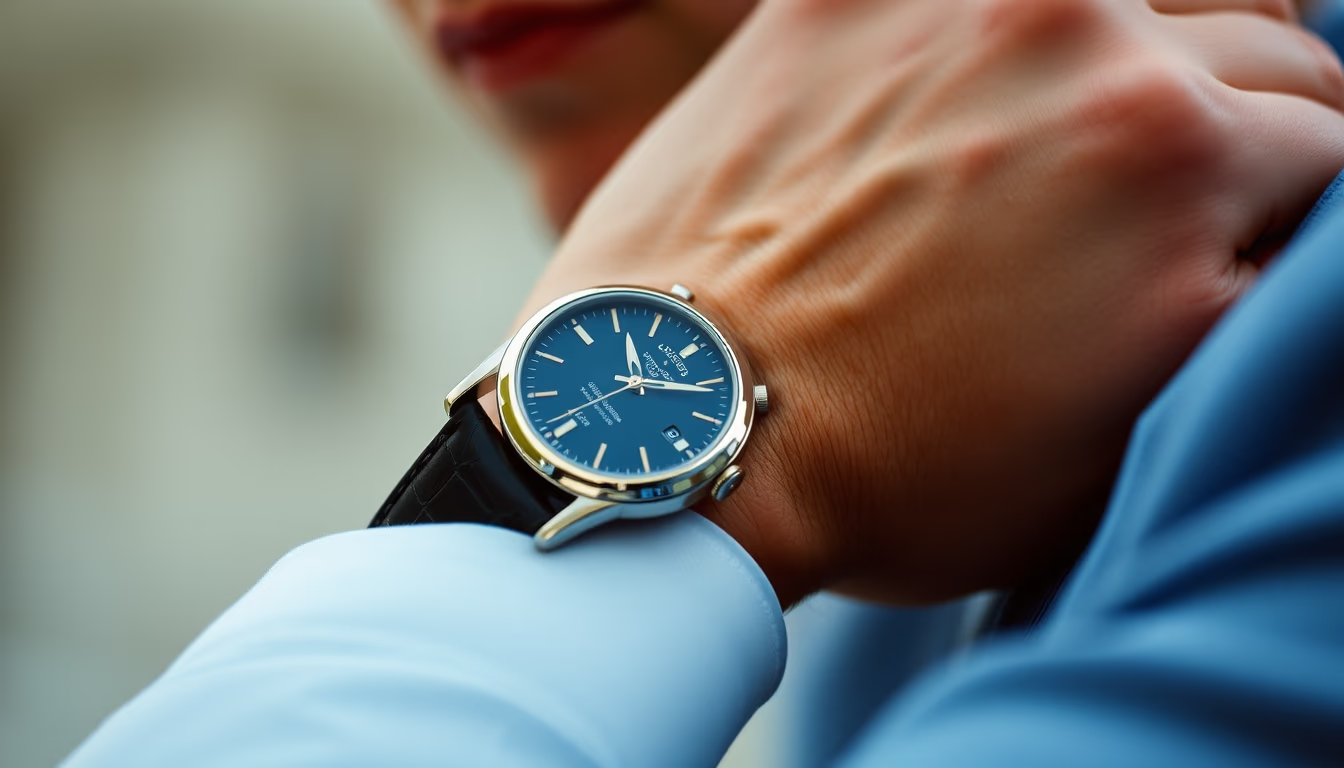
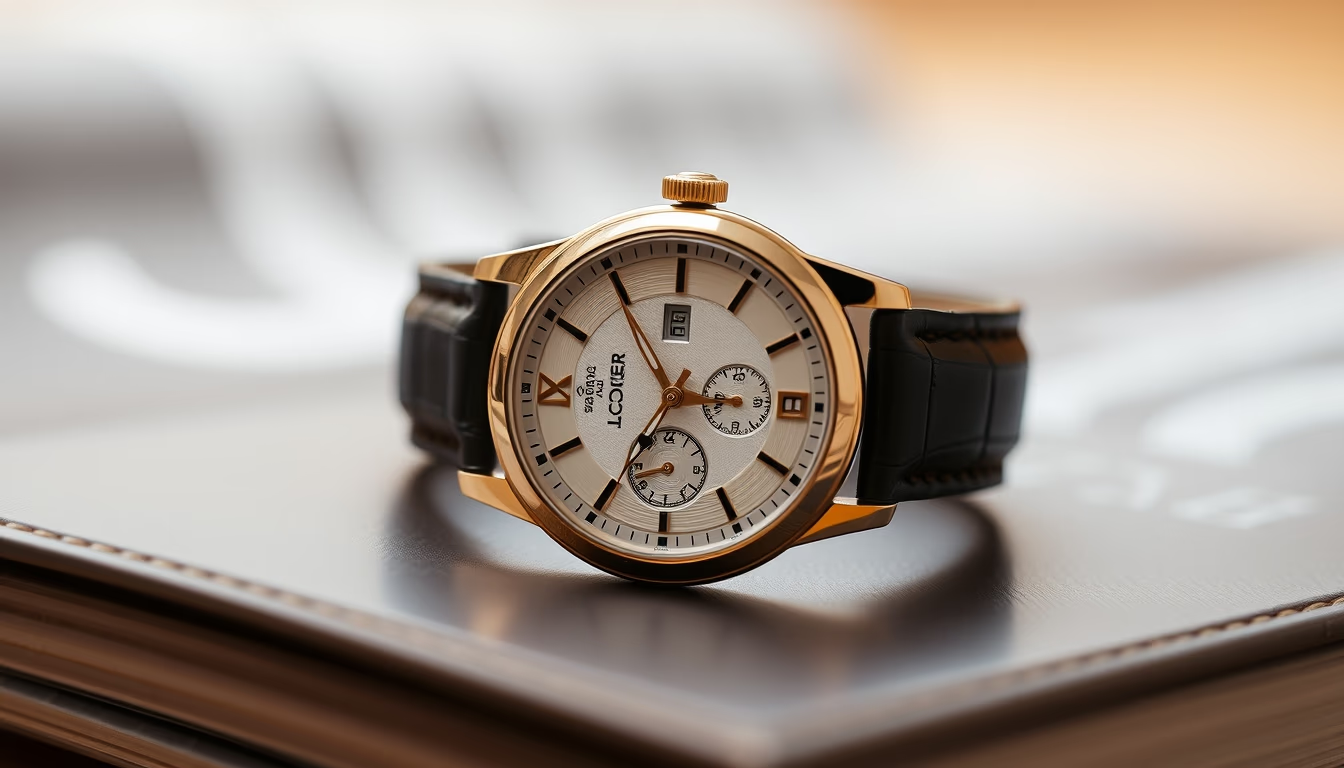
The Jaeger-LeCoultre Reverso is an iconic watch with a swiveling case, created in 1931 for polo players and a symbol of timeless elegance.
About this subject
The Jaeger-LeCoultre Reverso was born in 1931, during the Golden Age of wristwatches. César de Trey, a Swiss businessman, and engineer Jacques-David LeCoultre conceived a watch that could withstand the impacts of polo matches. The solution was a case that slid over itself, protecting the crystal. The Art Deco design, with straight lines and a rectangular dial, became an instant classic. The Reverso is not just a sports watch; it is a landmark of watchmaking engineering.
The swiveling case allows customization: many models feature engravings or enamels on the reverse, making each piece unique. The collection ranges from the Reverso Classic, with a manual-winding movement, to the Reverso Tribute, with a calendar and moon phases. The internal movement is often the Jaeger-LeCoultre caliber 822, with a 45-hour power reserve. The case is made of steel or 18K gold, with dimensions varying from 40.1 x 24.4 mm to 45.5 x 27.4 mm. The strap can be alligator leather or metal.
Beyond sports use, the Reverso gained cultural prominence. It was worn by figures such as the Duke of Windsor, Steve McQueen, and more recently, actor Benedict Cumberbatch. In 2011, Jaeger-LeCoultre launched the Reverso Gyrotourbillon to celebrate the model's 80th anniversary. Another curiosity: during World War II, the British government ordered military versions with black dials and luminous numerals. The Reverso also inspired a women's line, the Reverso One, with a more delicate design.
Manufacturing the Reverso is a meticulous process that takes months. Each component is polished and assembled by hand. The watches undergo rigorous tests for precision and durability. The swiveling case comprises more than 50 parts. The mechanical movement is visible through a sapphire caseback in some models. The Reverso is more than a watch: it is a functional art object, celebrating the balance between form and function.
Frequently Asked Questions
Why was the Reverso created with a swiveling case?
It was developed in 1931 to protect the watch crystal during polo matches. The player could flip the case and show the solid metal back, avoiding damage to the dial.
What materials are used in the Jaeger-LeCoultre Reverso?
The case is typically stainless steel or 18K gold. Straps can be alligator leather, rubber, or metal. The crystal is sapphire, resistant to scratches.
Are there women's versions of the Reverso?
Yes, the Reverso One line was launched in 2015 with a smaller size (34.2 x 20 mm) and a more delicate design, ideal for female wrists.
Direct URL
https://pub-c7d6a6ea828543ac903a74a341ccb2e1.r2.dev/imagens/jaeger-lecoultre-reverso-film-grain-authentic-fresh11.avifHow to credit
Include a visible link back to UtilizAí. Copy one of the snippets below:
<a href="https://xn--utiliza-eza.com/en/midia/imagens/jaeger-lecoultre-reverso-film-grain-authentic-fresh11">Jaeger lecoultre reverso</a> by <a href="https://xn--utiliza-eza.com">UtilizAí</a>, licensed under <a href="https://creativecommons.org/licenses/by/4.0/">CC BY 4.0</a>.
[Jaeger lecoultre reverso](https://xn--utiliza-eza.com/en/midia/imagens/jaeger-lecoultre-reverso-film-grain-authentic-fresh11) by [UtilizAí](https://xn--utiliza-eza.com), CC BY 4.0
License: CC-BY-4.0