Incense sticks burning
1344×768 · AVIF · CC BY 4.0
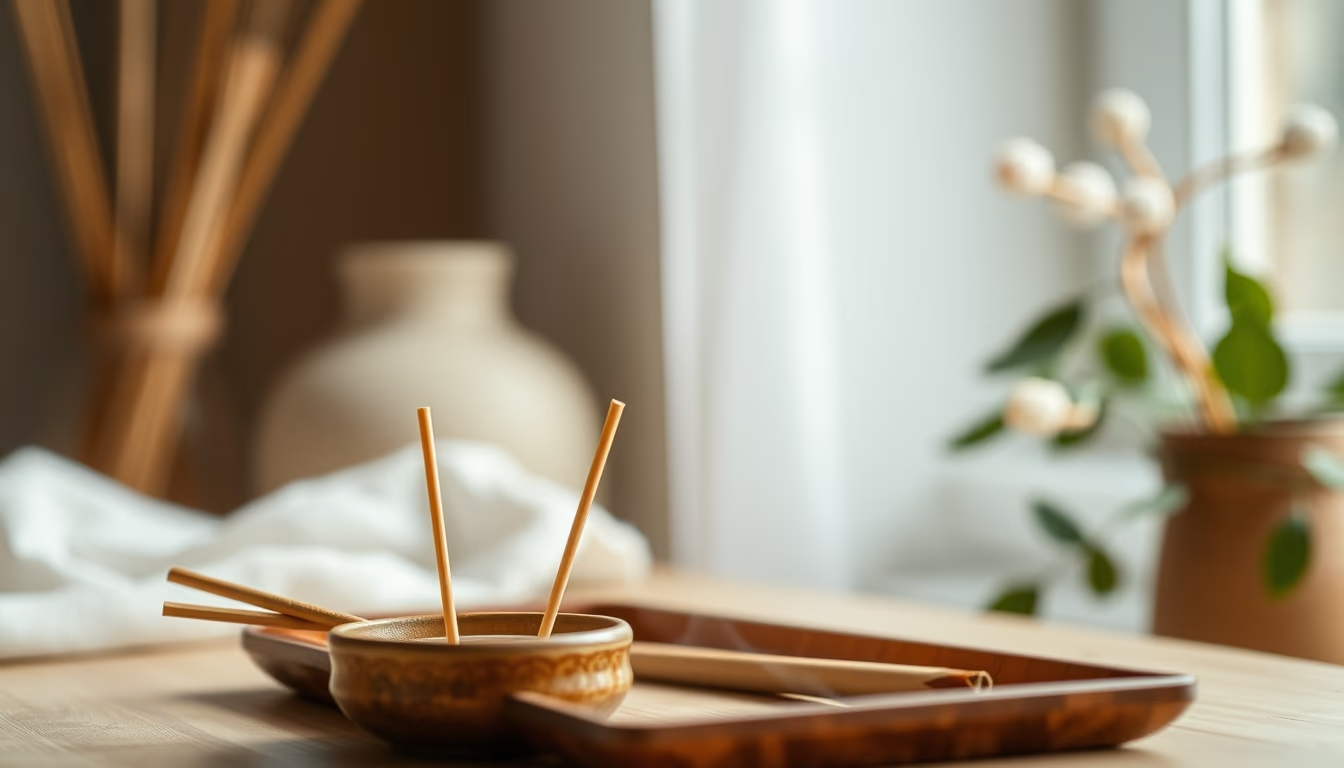
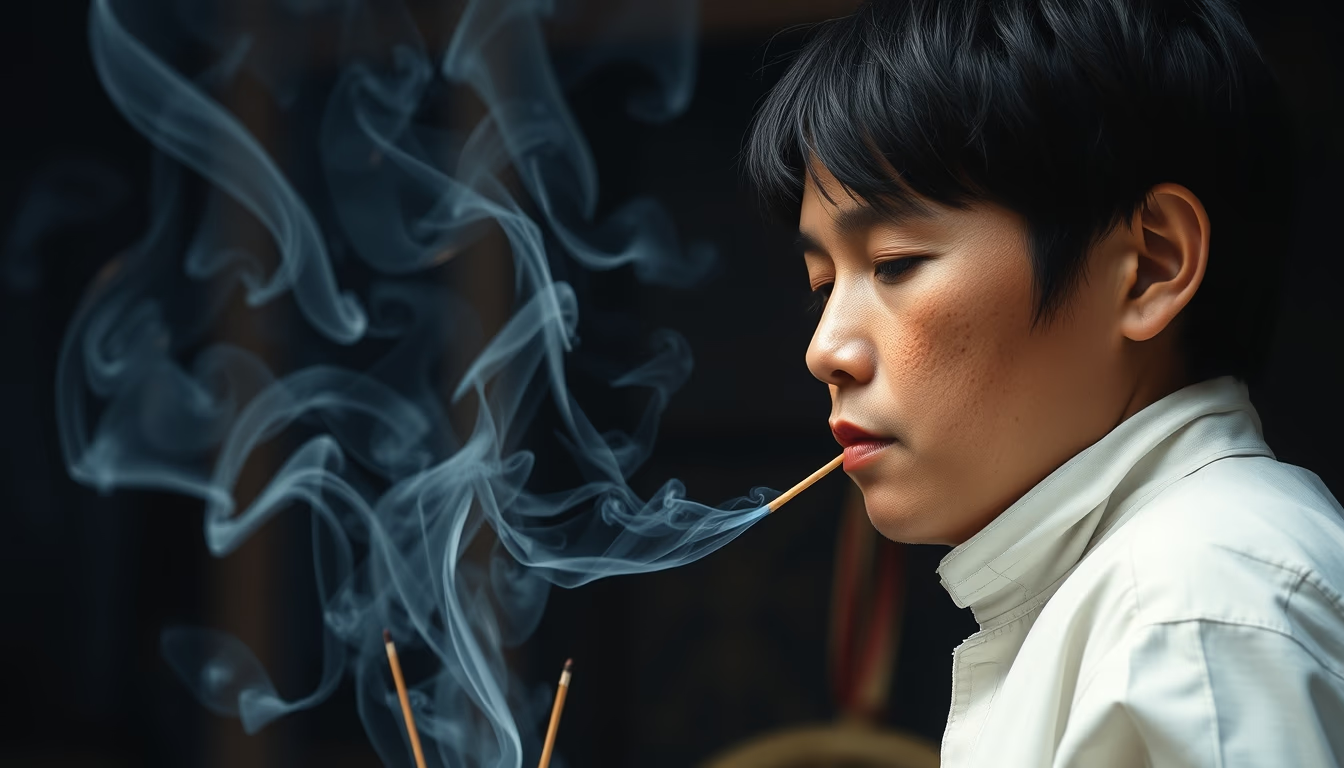
Burning incense sticks release fragrances that have accompanied religious rituals, meditation, and aromatherapy across cultures for millennia.
About this subject
Incense is an aromatic material that releases fragrant smoke when burned. Its origins date back over 4,000 years in India and China, where it played a central role in religious and medicinal practices. In India, incense sticks (agarbatti) are burned in temples and homes to purify the space and foster spiritual connection. In Japan, the kōdō ceremony elevates incense appreciation to a refined art form.
Incense sticks are made from wood powder (such as sandalwood) or charcoal, mixed with resins, essential oils, and herbs. The paste is rolled around a thin bamboo stick. Slow, flameless combustion gradually releases the aromas. Different blends target various effects: lavender for relaxation, eucalyptus for mental clarity, sandalwood for deep meditation.
Globally, incense is a significant trade good. Major producers include India, China, Thailand, and Vietnam. In Brazil, incense use increased with the influence of Afro-Brazilian and Eastern religions, plus the popularity of yoga and wellness. The market ranges from handmade sticks to imported blends, with prices reflecting ingredient rarity.
Fun facts: incense smoke has antiseptic properties per some studies, but indoor burning can release fine particles harmful to health; proper ventilation is advised. The word 'incense' comes from Latin 'incendere' (to burn). In Christianity, its smoke symbolizes prayers rising to God.
Frequently Asked Questions
Does incense have any health benefits?
Some studies show that certain resins and essential oils in incense have antiseptic and calming properties. However, inhaling smoke indoors can release fine particles and volatile organic compounds that irritate the respiratory tract. Use in moderation and ventilated areas.
What is the difference between stick and cone incense?
Stick incense has a bamboo core and burns longer (30-60 minutes), while cones are made of compressed powder and burn faster (15-30 minutes). The aroma intensity may vary, but both work similarly.
How to choose good quality incense?
Choose brands that list ingredients, with natural components and no synthetic fragrances. Artisanal Indian or Japanese incense often has less charcoal and more natural resins, offering a purer aroma.
Direct URL
https://pub-c7d6a6ea828543ac903a74a341ccb2e1.r2.dev/imagens/incense-sticks-burning-minimalist-composition-fresh10.avifHow to credit
Include a visible link back to UtilizAí. Copy one of the snippets below:
<a href="https://xn--utiliza-eza.com/en/midia/imagens/incense-sticks-burning-minimalist-composition-fresh10">Incense sticks burning</a> by <a href="https://xn--utiliza-eza.com">UtilizAí</a>, licensed under <a href="https://creativecommons.org/licenses/by/4.0/">CC BY 4.0</a>.
[Incense sticks burning](https://xn--utiliza-eza.com/en/midia/imagens/incense-sticks-burning-minimalist-composition-fresh10) by [UtilizAí](https://xn--utiliza-eza.com), CC BY 4.0
License: CC-BY-4.0