Iceland glacier ice cave blue
1344×768 · AVIF · CC BY 4.0
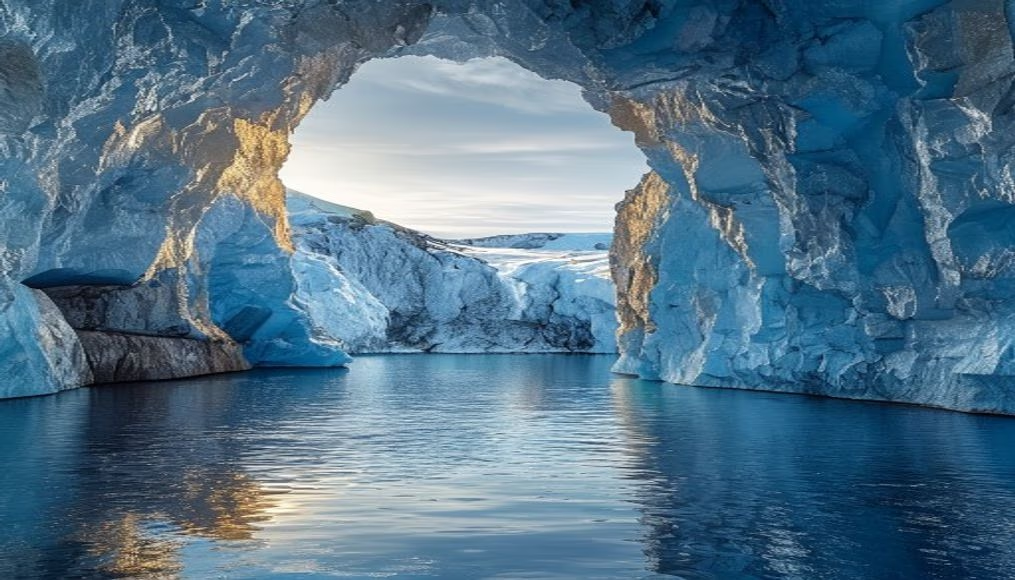
Blue ice caves in Iceland's glaciers are ephemeral natural formations that attract visitors from around the world.
About this subject
Iceland's blue ice caves form inside glaciers like Vatnajökull, Europe's largest ice cap covering over 8,000 km². Each winter, meltwater from summer flows beneath the glacier and refreezes, creating tunnels and chambers. Centuries-old compressed ice expels air bubbles, causing short-wavelength blue light to be reflected while other colors are absorbed, producing the vivid blue hue. These caves are seasonal and can collapse or disappear entirely each spring.
Besides Vatnajökull, other glaciers such as Langjökull and Mýrdalsjökull also host ice caves, but those in Vatnajökull are the most accessible and famous. Most tours operate between November and March when the ice is most stable. Experienced guides lead small groups, providing helmets and crampons for safety. The caves vary in size: some are just a few meters high, while others form vast chambers.
Interestingly, the blue color is not uniform. Where ice contains volcanic ash or sediments, darker or black tones appear. Iceland, as an active volcanic island, has glaciers covering volcanoes; for instance, Eyjafjallajökull erupted in 2010 under its ice. Ice caves offer a rare opportunity to see internal glacial structures like crevasses and compressed snow layers up close. Photography is popular but requires proper gear for low temperatures and dim light.
Ice cave tourism has grown exponentially in the last decade, driven by Instagram and documentaries. However, global warming threatens these formations: Icelandic glaciers have lost about 10% of their volume in the last 20 years. Visiting an ice cave is a unique experience but also a reminder of the fragility of these ecosystems. Winter storms and accelerated melting can make caves unstable, so safety is paramount. Tour operators monitor conditions daily and close access when there is risk of collapse.
Frequently Asked Questions
What is the best time to visit ice caves in Iceland?
The best time is between November and March, during winter, when the ice is most stable and caves are formed. Tours only operate during this period.
Is it safe to enter an ice cave?
Yes, as long as you are accompanied by an experienced guide and use safety gear. Companies monitor conditions daily and close unstable caves.
Why is the ice in the caves blue?
Compressed ice over centuries expels air bubbles, causing blue light to be reflected while other colors are absorbed. The purer and denser the ice, the more intense the blue.
Direct URL
https://pub-c7d6a6ea828543ac903a74a341ccb2e1.r2.dev/imagens/iceland-glacier-ice-cave-blue-travel-photography-v10.avifHow to credit
Include a visible link back to UtilizAí. Copy one of the snippets below:
<a href="https://xn--utiliza-eza.com/en/midia/imagens/iceland-glacier-ice-cave-blue-travel-photography-v10">Iceland glacier ice cave blue</a> by <a href="https://xn--utiliza-eza.com">UtilizAí</a>, licensed under <a href="https://creativecommons.org/licenses/by/4.0/">CC BY 4.0</a>.
[Iceland glacier ice cave blue](https://xn--utiliza-eza.com/en/midia/imagens/iceland-glacier-ice-cave-blue-travel-photography-v10) by [UtilizAí](https://xn--utiliza-eza.com), CC BY 4.0
License: CC-BY-4.0