Iceland glacier ice cave blue
1344×768 · AVIF · CC BY 4.0
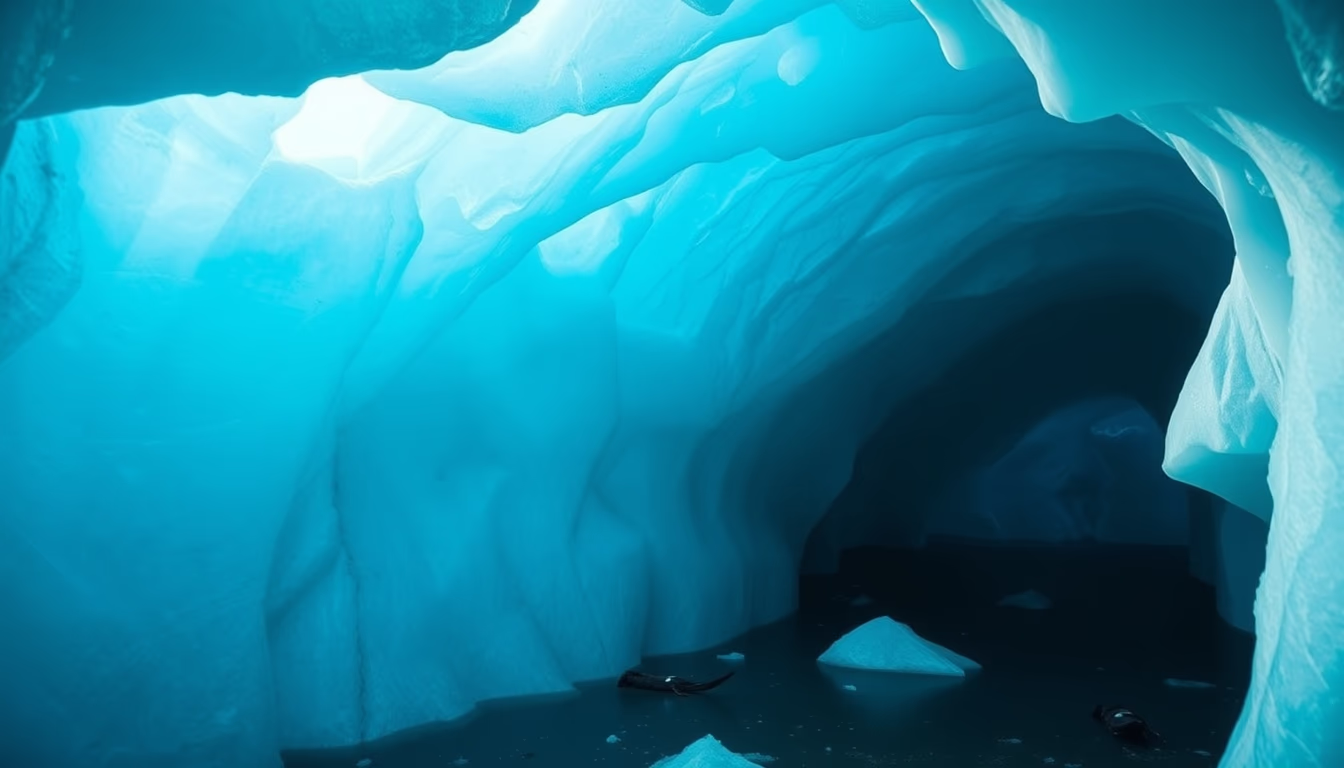
Discovering Iceland's blue ice caves, a rare fusion of volcanic activity and glacial ice creating luminous tunnels beneath Vatnajökull.
About this subject
Iceland's blue ice caves form within glaciers like Vatnajökull, the largest in Europe, where volcanic and glacial forces collide. The intense blue hue arises from pressure within the ice, which compresses air bubbles and scatters light, creating a vivid sapphire effect. These formations are seasonal, appearing between November and March when thermal stability allows safe exploration. The caves emerge from ancient lava flows that hollow out glacial structures, a process unique to Iceland's volcanic glacial regions.
Approximately 90% of the world's blue ice glaciers are found in Iceland, concentrated in the southern and southwestern volcanic zones. Popular caves like those near Gerðuberg require permits for access due to ecological fragility and landslide risks. For Icelanders, these formations symbolize resilience, embodying the ongoing balance between fire and ice that defines their landscape.
Regulation of tourism and research is critical to minimize environmental impact. Scientific studies reveal that blue ice contains trapped air bubbles and sediment layers that offer climate records spanning millennia. However, rapid glacial melting poses a threat to these structures, with some experts estimating that 90% of Iceland's glaciers could disappear by 2200 if current warming trends continue.
Frequently Asked Questions
Why is the ice in Iceland's caves blue?
The intense blue color results from centuries of pressure compressing air bubbles within the ice, which refracts light to emphasize the blue wavelengths.
When are these caves safe to visit?
Visits are only permitted between November and March when thermal stability exists. Permits are mandatory due to landslide risks and the fragility of the ice structures.
Are these formations sustainable for tourism?
No, tourism is restricted to protect the ecosystem. Accelerated glacial melting threatens the structural integrity of these formations, making them increasingly vulnerable to human and environmental stress.
Direct URL
https://pub-c7d6a6ea828543ac903a74a341ccb2e1.r2.dev/imagens/iceland-glacier-ice-cave-blue-magazine-editorial-v8.avifHow to credit
Include a visible link back to UtilizAí. Copy one of the snippets below:
<a href="https://xn--utiliza-eza.com/en/midia/imagens/iceland-glacier-ice-cave-blue-magazine-editorial-v8">Iceland glacier ice cave blue</a> by <a href="https://xn--utiliza-eza.com">UtilizAí</a>, licensed under <a href="https://creativecommons.org/licenses/by/4.0/">CC BY 4.0</a>.
[Iceland glacier ice cave blue](https://xn--utiliza-eza.com/en/midia/imagens/iceland-glacier-ice-cave-blue-magazine-editorial-v8) by [UtilizAí](https://xn--utiliza-eza.com), CC BY 4.0
License: CC-BY-4.0