Iceland glacier ice cave blue
1344×768 · AVIF · CC BY 4.0
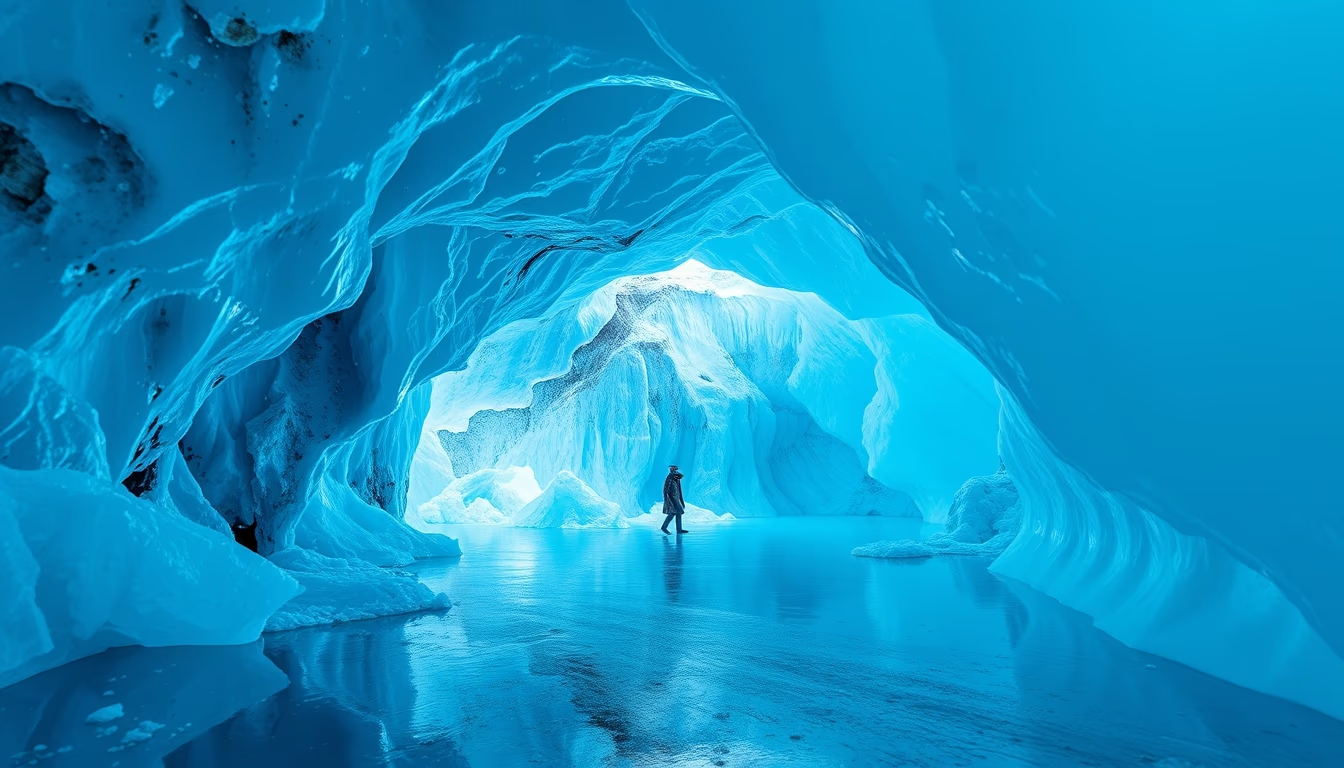
The blue ice caves in Iceland's glaciers are ephemeral natural formations that reveal the extreme beauty of ancient ice.
About this subject
Blue ice caves form inside glaciers when meltwater carves tunnels and chambers into the ice. The ancient ice, compressed over centuries, has lost most of its air bubbles, allowing light to penetrate and refract, resulting in the intense blue hue. These caves are primarily found in Vatnajökull, Europe's largest glacier, as well as in Langjökull and Mýrdalsjökull. Every winter, new caves are created and old ones may collapse, making each visit a unique experience.
The visiting season runs from November to March, when temperatures are low enough to keep the structures stable. Guided tours ensure safety and access to remote locations. Inside, the caves offer a natural light show, with colors ranging from deep blue to turquoise, depending on ice thickness and sunlight angle. Late afternoon light often produces the most dramatic effects.
Beyond tourism, these caves are important for scientific research. Scientists analyze ice layers to reconstruct past climates and monitor climate change impacts. The accelerated melting of Icelandic glaciers has altered cave formation dynamics, making them more unpredictable. Responsible tourism helps fund the preservation of these fragile environments.
Interestingly, Iceland has many legends about trolls and magical beings inhabiting ice caves. In Norse mythology, ice and fire are the world's creating elements, and these caves represent a link between primordial forces. Today, combining adventure and science, they attract travelers from around the world seeking otherworldly landscapes.
Frequently Asked Questions
What is the best time to visit ice caves in Iceland?
The best time is from November to March, during winter, when temperatures are low and the caves are more stable. Guided tours are essential for safety.
Are ice caves safe to visit?
Yes, when visited with experienced guides who monitor ice conditions. Natural caves can collapse, so it is prohibited to go without professional accompaniment.
Why is the ice in the caves blue?
Ancient ice is extremely dense and compressed, with few air bubbles. White sunlight penetrates, red wavelengths are absorbed, and blue wavelengths are reflected, creating the intense blue color.
Direct URL
https://pub-c7d6a6ea828543ac903a74a341ccb2e1.r2.dev/imagens/iceland-glacier-ice-cave-blue-commercial-product-photography-v9.avifHow to credit
Include a visible link back to UtilizAí. Copy one of the snippets below:
<a href="https://xn--utiliza-eza.com/en/midia/imagens/iceland-glacier-ice-cave-blue-commercial-product-photography-v9">Iceland glacier ice cave blue</a> by <a href="https://xn--utiliza-eza.com">UtilizAí</a>, licensed under <a href="https://creativecommons.org/licenses/by/4.0/">CC BY 4.0</a>.
[Iceland glacier ice cave blue](https://xn--utiliza-eza.com/en/midia/imagens/iceland-glacier-ice-cave-blue-commercial-product-photography-v9) by [UtilizAí](https://xn--utiliza-eza.com), CC BY 4.0
License: CC-BY-4.0