Ice cream scoop melting
1344×768 · AVIF · CC BY 4.0
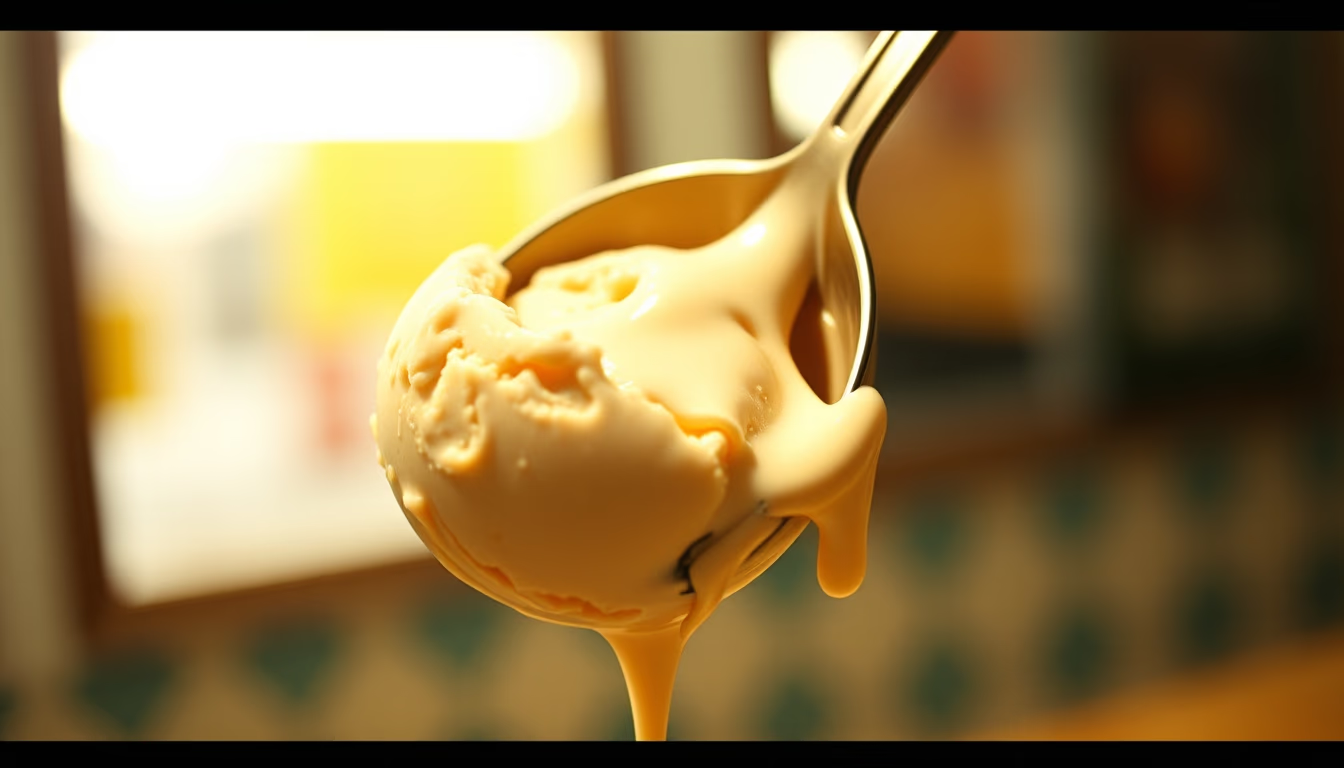
A melting scoop of ice cream reveals principles of thermodynamics and food chemistry: understand why ice cream melts and how to slow the process.
About this subject
Ice cream, a globally beloved dessert, is a complex emulsion of fat, sugar, air, and water. When exposed to ambient heat, thermal energy breaks the bonds between water and fat molecules, causing the solid structure to transition into liquid. The melting point varies by composition: higher fat and sugar content lowers the freezing point and slows melting.
Environmental factors like temperature, humidity, and movement accelerate the process. On hot days, heat transfer is faster, while agitation (e.g., walking with a cone) introduces air bubbles that increase the surface area exposed to heat. Stabilizers such as guar gum or carrageenan are commonly added in manufacturing to control melting rate and improve texture.
Historically, ice cream gained widespread popularity in the 19th century with artificial refrigeration. In Brazil, consumption peaks during summer, especially at beaches and parks. A curious fact: melted ice cream is not just water and fat, it becomes an aerated syrup that, if refrozen, loses its original creaminess due to larger ice crystal formation.
To slow melting, home techniques include using pre-chilled containers, avoiding direct sunlight, and adding ingredients like chocolate or dried fruit, which act as thermal insulators. Scientists are also exploring natural proteins that can stabilize the emulsion longer, a promising field for the food industry.
Frequently Asked Questions
Why does ice cream melt faster on hot days?
High temperatures transfer thermal energy more rapidly to the ice cream, increasing molecular vibration and breaking the bonds that maintain its solid structure. Humidity can also accelerate the process.
How can I prevent ice cream from melting too quickly?
Serve ice cream in pre-chilled bowls or cones, keep it out of direct sunlight, and eat it promptly. Adding toppings like chocolate or dried fruit creates a barrier that slows warming.
What determines the texture of melted ice cream?
Texture depends on the ratio of fat, sugar, air, and stabilizers. Higher fat content yields a creamier liquid, while more incorporated air (overrun) makes the melt more aerated and less dense.
Direct URL
https://pub-c7d6a6ea828543ac903a74a341ccb2e1.r2.dev/imagens/ice-cream-scoop-melting-lo-fi-disposable-camera-p4.avifHow to credit
Include a visible link back to UtilizAí. Copy one of the snippets below:
<a href="https://xn--utiliza-eza.com/en/midia/imagens/ice-cream-scoop-melting-lo-fi-disposable-camera-p4">Ice cream scoop melting</a> by <a href="https://xn--utiliza-eza.com">UtilizAí</a>, licensed under <a href="https://creativecommons.org/licenses/by/4.0/">CC BY 4.0</a>.
[Ice cream scoop melting](https://xn--utiliza-eza.com/en/midia/imagens/ice-cream-scoop-melting-lo-fi-disposable-camera-p4) by [UtilizAí](https://xn--utiliza-eza.com), CC BY 4.0
License: CC-BY-4.0