Ice cream scoop melting
1344×768 · AVIF · CC BY 4.0
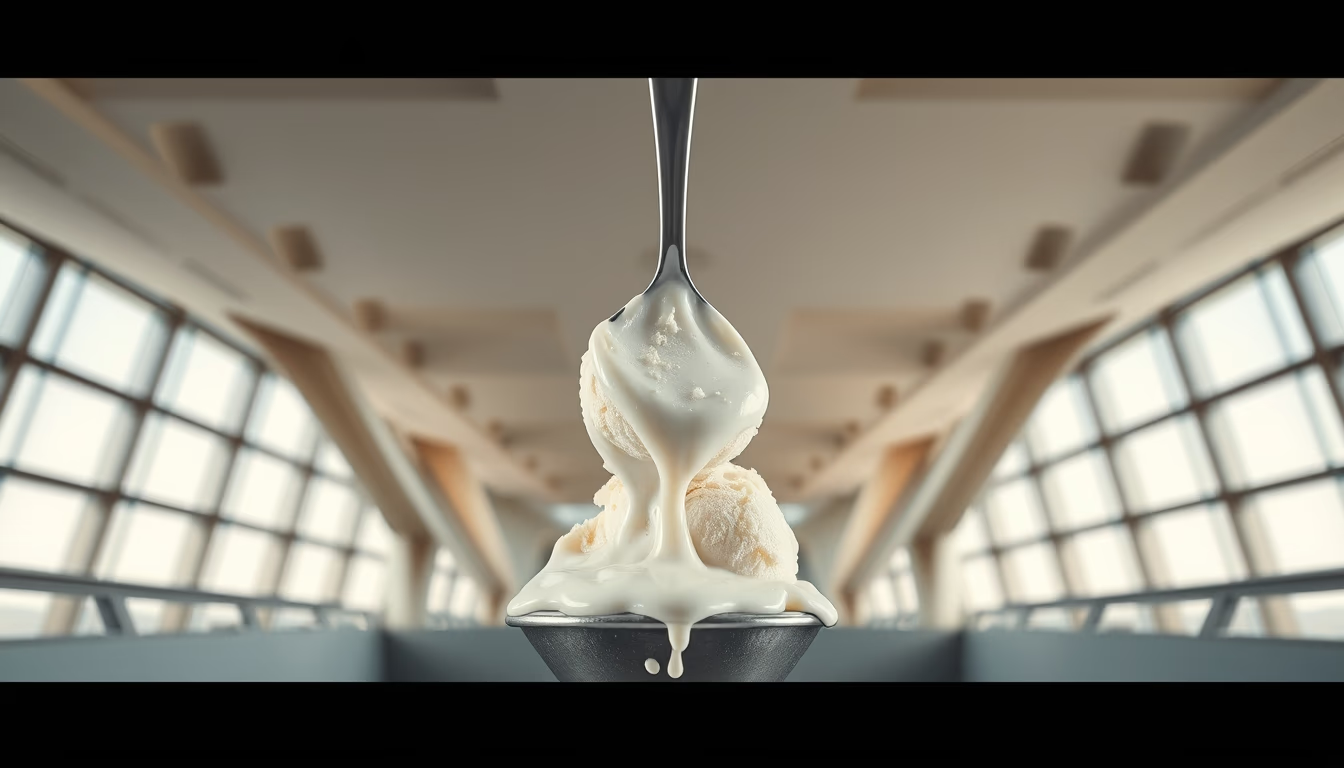
The melting of an ice cream scoop reveals the thermodynamic and sensory complexity of this global culinary classic, with roots in antiquity.
About this subject
Ice cream is a dessert that combines dairy, sugar, fat, and air into a frozen emulsion. Its creamy texture depends on the balance between ice crystals, air bubbles, and fat globules, controlled by processes like pasteurization and churning during production. The melting of an ice cream scoop occurs when ambient temperature exceeds its freezing point, typically between -5°C and -10°C, initiating a physical transformation that gradually releases flavors.
The history of ice cream dates back to ancient China, where milk and rice mixtures were frozen in snow. In the West, the dessert gained popularity in Catherine de Medici's court in the 16th century and spread across Europe with salt-and-ice freezing techniques. Today, ice cream is a global phenomenon, with variations such as Italian gelato, French sorbet, and Indian kulfi. The industry moves billions of dollars annually, and melting texture is a crucial sensory attribute for consumer experience.
Factors like the type of stabilizer used, overrun rate (air incorporation), and fat content directly influence melting speed and uniformity. Artisanal ice creams, with less air and natural ingredients, tend to melt faster, while industrial ones with gums and emulsifiers resist longer. The thermodynamics of melting also involve latent heat absorption, explaining why ice cream feels colder as it melts in the mouth.
Architectural photography, mentioned in the image tags, can explore the aesthetics of melting as a temporal and sculptural phenomenon, comparing the fluidity of ice cream to organic forms in modern buildings. This approach connects the ephemerality of food to the permanence of architecture, creating a visual contrast that sparks curiosity about the science and art behind eating ice cream.
Frequently Asked Questions
Why does ice cream melt faster in some places?
Melting speed depends on ambient temperature, humidity, and ice cream composition. Hot, dry locations accelerate heat transfer. Ice creams with higher fat content and less air tend to melt more slowly.
What is the difference between ice cream and gelato?
Italian gelato has less fat (4-8% vs. 10-16% for ice cream) and less incorporated air (overrun of 25-30% vs. 50-100%), resulting in a denser texture and faster melting in the mouth.
How to prevent ice cream from melting during photography?
Use cool lights (LEDs) and reduce exposure time. Keep the ice cream in a chilled container and work in an air-conditioned environment. Add stabilizers like guar gum to slow melting during the session.
Direct URL
https://pub-c7d6a6ea828543ac903a74a341ccb2e1.r2.dev/imagens/ice-cream-scoop-melting-architectural-photography-p2.avifHow to credit
Include a visible link back to UtilizAí. Copy one of the snippets below:
<a href="https://xn--utiliza-eza.com/en/midia/imagens/ice-cream-scoop-melting-architectural-photography-p2">Ice cream scoop melting</a> by <a href="https://xn--utiliza-eza.com">UtilizAí</a>, licensed under <a href="https://creativecommons.org/licenses/by/4.0/">CC BY 4.0</a>.
[Ice cream scoop melting](https://xn--utiliza-eza.com/en/midia/imagens/ice-cream-scoop-melting-architectural-photography-p2) by [UtilizAí](https://xn--utiliza-eza.com), CC BY 4.0
License: CC-BY-4.0