Humanoid robot in clean white lab
1344×768 · AVIF · CC BY 4.0
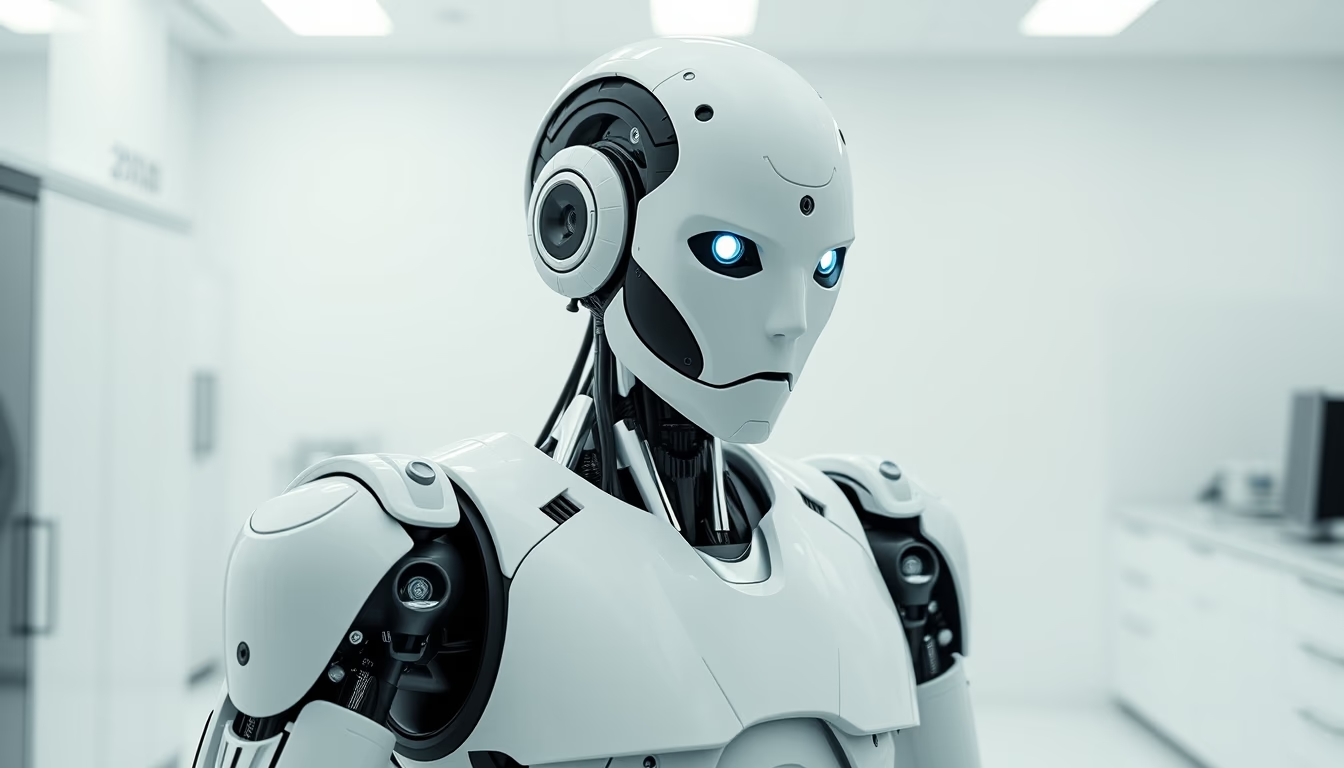
Humanoid robots in minimalist labs represent cutting-edge advancements in automation and AI.
About this subject
Humanoid robots are machines designed to mimic human form and function, integrating sensors, motors, and AI algorithms. Their development is driven by applications in industries, healthcare, and even domestic environments. Minimalist labs, like the one in the image, eliminate visual distractions to focus on the robot's technical complexity and organic movements. This type of environment allows engineers and scientists to analyze the robot's interactions with greater precision, free from external interferences.
The minimalist composition highlighted in the image is common in cutting-edge research, where visual simplicity reinforces technological innovation. Robots like Honda's ASIMO or Tesla's Optimus demonstrate how reducing non-essential elements prioritizes mechanical functionality and energy efficiency. Additionally, white labs are used to avoid unwanted reflections in cameras or augmented reality systems tracking the robot's movements.
Progress in this technology faces challenges such as energy autonomy, movement precision, and decision-making in dynamic environments. Projects like the EU's Horizon 2020 fund developments aiming to humanize robot-human interaction, such as hospital assistants or smart city construction. The white walls and empty space in the image are intentional: they represent the ideal of clean, efficient, user-centered technology.
Frequently Asked Questions
What are the main applications of humanoid robots?
Humanoid robots are used in industries for repetitive tasks, in healthcare as surgical assistants, and in domestic environments for cleaning or security. Projects like the EU's Horizon 2020 explore applications in smart cities.
How does a minimalist environment benefit robotics research?
Visual simplicity eliminates distractions, allowing focus on the robot's movements and interactions. White labs also reduce reflections in augmented reality systems and high-precision cameras.
What technical challenges exist in creating humanoid robots?
Challenges include energy autonomy, precision of complex movements, and decision-making in dynamic environments. Projects like Tesla's Optimus aim to overcome these with advancements in AI and mechanical design.
Direct URL
https://pub-c7d6a6ea828543ac903a74a341ccb2e1.r2.dev/imagens/humanoid-robot-in-clean-white-lab-minimalist-composition-v6.avifHow to credit
Include a visible link back to UtilizAí. Copy one of the snippets below:
<a href="https://xn--utiliza-eza.com/en/midia/imagens/humanoid-robot-in-clean-white-lab-minimalist-composition-v6">Humanoid robot in clean white lab</a> by <a href="https://xn--utiliza-eza.com">UtilizAí</a>, licensed under <a href="https://creativecommons.org/licenses/by/4.0/">CC BY 4.0</a>.
[Humanoid robot in clean white lab](https://xn--utiliza-eza.com/en/midia/imagens/humanoid-robot-in-clean-white-lab-minimalist-composition-v6) by [UtilizAí](https://xn--utiliza-eza.com), CC BY 4.0
License: CC-BY-4.0