Helicopter heliport rooftop
1344×768 · AVIF · CC BY 4.0
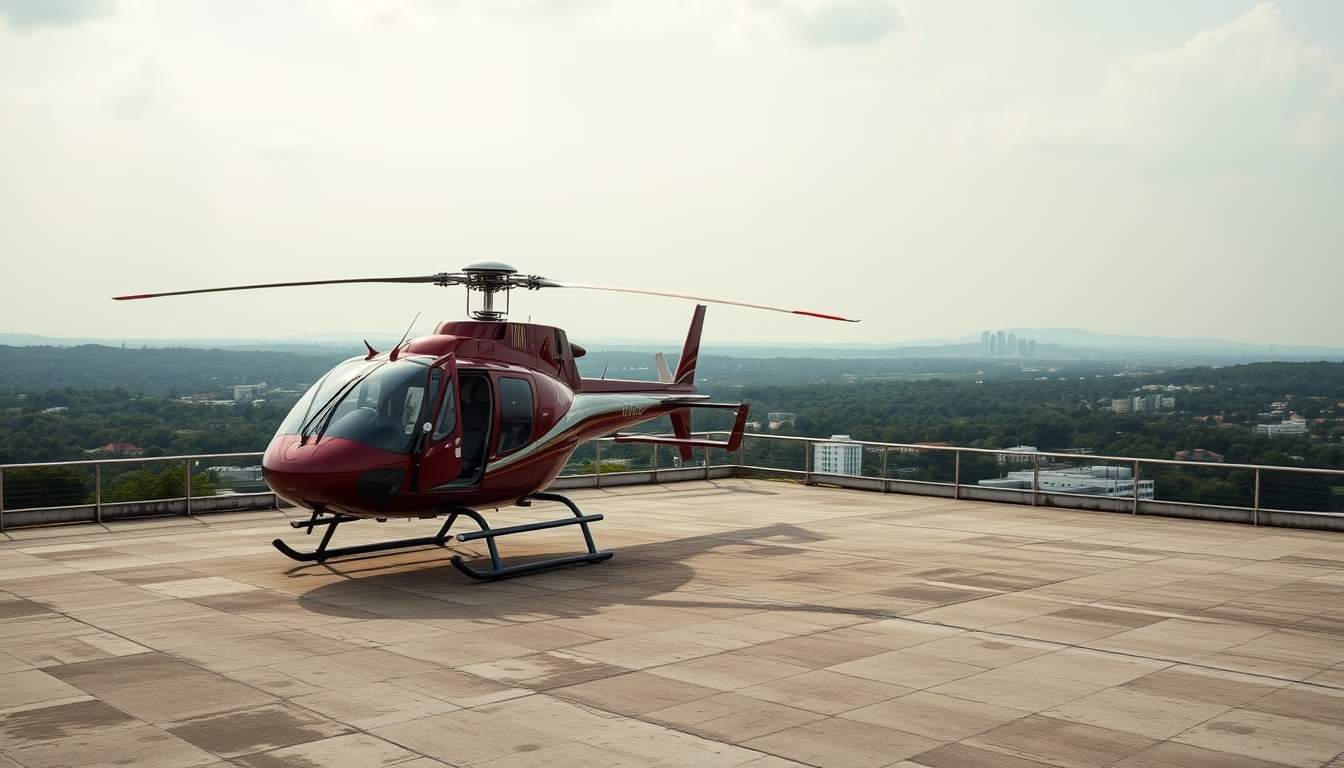
Rooftop heliport: an urban air mobility solution combining engineering, safety, and logistics in densely populated areas.
About this subject
Rooftop heliports are specialized infrastructures for helicopter takeoff and landing atop buildings, common in financial centers, hospitals, and luxury hotels. In Brazil, São Paulo has the largest helicopter fleet in the country, with over 400 registered heliports, many on rooftops. These structures follow strict regulations from ANAC (Brazil's National Civil Aviation Agency) and ICAO, defining minimum dimensions, load capacity, signage, and safety procedures.
Building a rooftop heliport requires detailed structural analysis to support the aircraft weight and dynamic forces during landing and takeoff. Additionally, firefighting systems, night lighting, and perimeter protection barriers are mandatory. In commercial buildings, the heliport streamlines executive travel and reduces commute time across congested metropolitan regions. Certified heliport models range from simple platforms to elevated structures, such as a 12-meter diameter platform for single-engine helicopters.
Interestingly, Brazil's first rooftop heliport was installed at the São Vito building in São Paulo in the 1960s. Today, the city has the largest number of rooftop heliports in Latin America, especially along Faria Lima Avenue and Marginal Pinheiros. However, operations require specific pilot training due to urban turbulence and obstacles like antennas and other buildings. Maintenance is also challenging, as heavy equipment access to the roof demands special logistical planning.
In terms of sustainability, rooftop heliports reduce the need for large ground-level landing areas, freeing space for parks or parking lots. Nevertheless, noise and safety are points of debate with neighboring communities. New technologies, such as eVTOLs (electric vertical takeoff and landing aircraft), could boost the expansion of these heliports, requiring adaptations in electrical infrastructure and recharging.
Frequently Asked Questions
What are the safety requirements for rooftop heliports?
Rooftop heliports require a landing area sized for the helicopter type, firefighting systems, night lighting, visual markings, and perimeter barriers. ANAC and ICAO regulations set minimum standards for safe operation.
How much does it cost to build a heliport on a building?
Costs vary by size and certification, typically ranging from R$300,000 to R$2 million. This includes structural design, platform, safety systems, and permits. Annual maintenance is also significant.
Are rooftop heliports common in other Brazilian capitals?
Yes, cities like Rio de Janeiro, Brasília, and Belo Horizonte also have rooftop heliports, but São Paulo has the most due to intense air traffic and urban verticalization.
Direct URL
https://pub-c7d6a6ea828543ac903a74a341ccb2e1.r2.dev/imagens/helicopter-heliport-rooftop-documentary-nature-style-fresh3.avifHow to credit
Include a visible link back to UtilizAí. Copy one of the snippets below:
<a href="https://xn--utiliza-eza.com/en/midia/imagens/helicopter-heliport-rooftop-documentary-nature-style-fresh3">Helicopter heliport rooftop</a> by <a href="https://xn--utiliza-eza.com">UtilizAí</a>, licensed under <a href="https://creativecommons.org/licenses/by/4.0/">CC BY 4.0</a>.
[Helicopter heliport rooftop](https://xn--utiliza-eza.com/en/midia/imagens/helicopter-heliport-rooftop-documentary-nature-style-fresh3) by [UtilizAí](https://xn--utiliza-eza.com), CC BY 4.0
License: CC-BY-4.0