Helicopter heliport rooftop
1344×768 · AVIF · CC BY 4.0
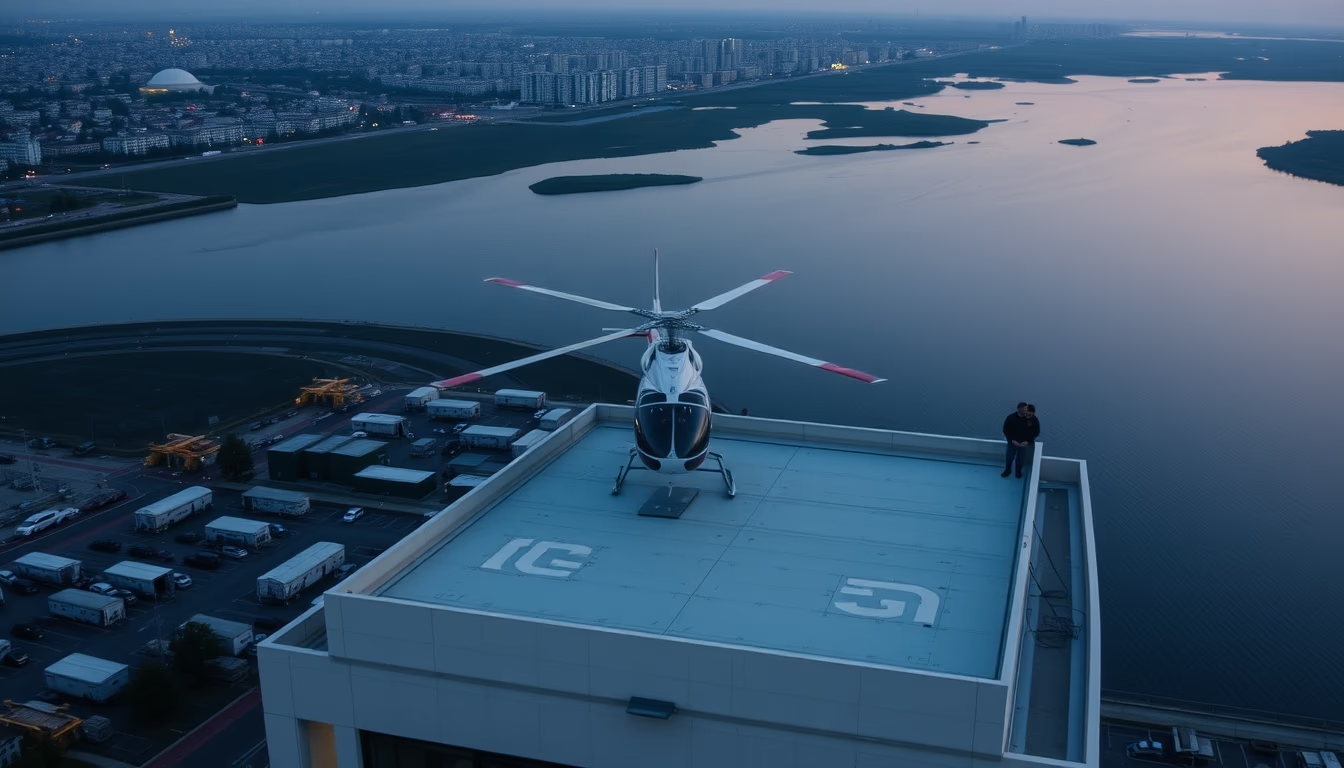
Rooftop heliports are landing and takeoff platforms for helicopters in urban areas, essential for rescue, corporate transport, and security.
About this subject
Rooftop heliports emerged in the 1940s as helicopter use in urban centers grew. They allow helicopters to land directly on tall buildings, saving time and avoiding traffic congestion. These structures are common in hospitals, luxury hotels, corporate buildings, and military bases. An iconic example is the heliport atop the Pan Am Building (now MetLife Building) in New York City, inaugurated in 1963 to connect passengers to JFK Airport. In Brazil, hospitals like Hospital Albert Einstein in São Paulo have heliports for urgent transfers.
Building a rooftop heliport requires rigorous engineering standards. The platform must support dynamic loads of up to 15 tons, depending on the aircraft. Additionally, it needs visible markings, fire suppression systems, and safety nets to prevent falls. Regulations from agencies like ANAC in Brazil or the FAA in the US set minimum obstacle distances, signage, and lighting. The turbulence generated by rotors is also critical, requiring wind studies and acoustic protections.
Noise and safety management are additional challenges. In densely populated areas, heliports can generate complaints, so many have restricted operating hours. Measures such as acoustic barriers and approach routes over water help mitigate impacts. Interestingly, some heliports are designed for multiple helicopters simultaneously, like those on oil platforms, but these are on solid ground. On rooftops, space constraints usually allow only one landing pad.
Despite challenges, rooftop heliports remain vital for urban air mobility. With the rise of eVTOLs (electric vertical takeoff and landing vehicles), these structures are expected to multiply, adapting to new technologies. Cities like São Paulo, Tokyo, and London are already evaluating regulations to integrate drones and air taxis, making heliports even more relevant.
Frequently Asked Questions
What are the basic requirements for building a rooftop heliport?
The roof must support loads up to 15 tons, have visible landing markings, fire suppression systems, safety nets, and proper lighting. It also needs to comply with regulations from ANAC or local authorities.
Are rooftop heliports safe in dense urban areas?
Yes, if designed with turbulence studies, safe approach routes, and acoustic protections. Measures like wind barriers and restricted hours reduce risks.
Where can I find rooftop heliports in Brazil?
Primarily in hospitals like Albert Einstein and Sírio-Libanês in São Paulo, and luxury hotels such as Copacabana Palace in Rio de Janeiro.
Direct URL
https://pub-c7d6a6ea828543ac903a74a341ccb2e1.r2.dev/imagens/helicopter-heliport-rooftop-aerial-drone-shot-fresh17.avifHow to credit
Include a visible link back to UtilizAí. Copy one of the snippets below:
<a href="https://xn--utiliza-eza.com/en/midia/imagens/helicopter-heliport-rooftop-aerial-drone-shot-fresh17">Helicopter heliport rooftop</a> by <a href="https://xn--utiliza-eza.com">UtilizAí</a>, licensed under <a href="https://creativecommons.org/licenses/by/4.0/">CC BY 4.0</a>.
[Helicopter heliport rooftop](https://xn--utiliza-eza.com/en/midia/imagens/helicopter-heliport-rooftop-aerial-drone-shot-fresh17) by [UtilizAí](https://xn--utiliza-eza.com), CC BY 4.0
License: CC-BY-4.0