Harpsichord baroque
1344×768 · AVIF · CC BY 4.0
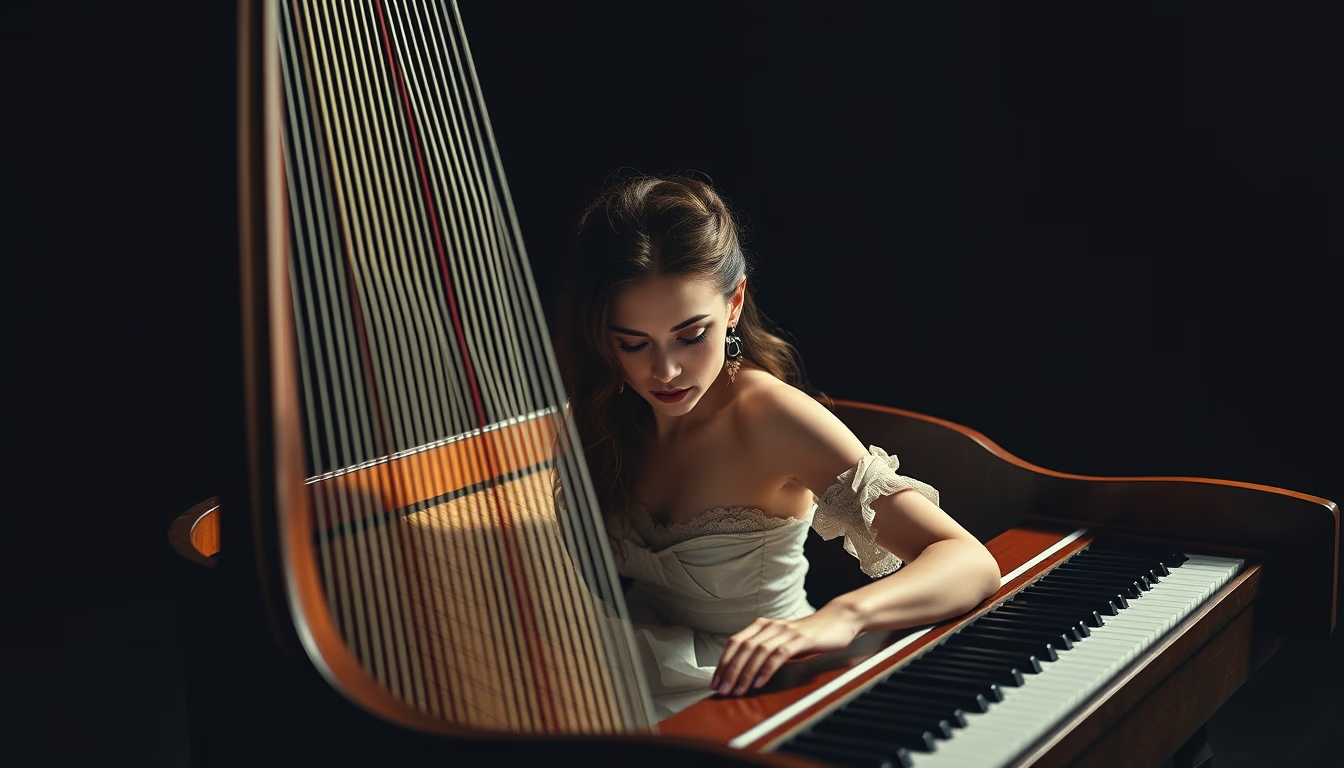
The baroque harpsichord, a keyboard instrument with plucked strings, was the dominant sound of classical music from the 16th to the 18th century, preceding the modern piano.
About this subject
The harpsichord, or baroque harpsichord, is a musical instrument with strings plucked by a keyboard mechanism. Unlike the piano, where hammers strike the strings, the harpsichord uses plectra (traditionally made from quill or plastic) to pluck them, producing a bright, metallic timbre with no dynamic variation based on touch. This made it ideal for Baroque music (1600, 1750), a period that prized ornamentation, counterpoint, and the basso continuo.
The harpsichord flourished across Europe, with distinct national schools. In France, builders like the Ruckers family (in Flanders) and later French makers Taskin and Blanchet produced double-manual harpsichords, used to perform suites by François Couperin and Jean-Philippe Rameau. In Italy, single-manual, lighter harpsichords with a more immediate sound served composers such as Frescobaldi and Domenico Scarlatti. Johann Sebastian Bach composed much of his keyboard music for the harpsichord, including The Well-Tempered Clavier and the Goldberg Variations.
Harpsichord construction involves a thin wooden soundboard, with multiple registers that change the combination of strings engaged. The 8-foot (unison) and 4-foot (octave higher) registers, plus a lute stop with plectra near the bridge, allow tonal variations. The instrument usually has one or two manuals, and its range extends from four to five octaves.
From the late 18th century, the harpsichord was gradually replaced by the piano, which offered expressive dynamics. However, the 20th century saw a revival of the harpsichord, driven by performers like Wanda Landowska and Gustav Leonhardt, and by the early music movement using period instruments. Today, the harpsichord is a staple in Baroque concerts, historical recordings, and music schools, symbolizing the sonic elegance of the era.
Frequently Asked Questions
What is the difference between a harpsichord and a piano?
In the harpsichord, strings are plucked by plectra, producing a fixed volume. In the piano, strings are struck by hammers, allowing dynamic variation. The harpsichord has a brighter timbre and does not sustain notes for long.
Why was the harpsichord important in Baroque music?
The harpsichord was the primary instrument for basso continuo and solo works. Its clear, articulate sound suited Baroque counterpoint and ornamentation. Composers like Bach, Handel, and Scarlatti wrote seminal pieces for it.
Is the harpsichord still used in contemporary music?
Yes, especially in historically informed performances of Baroque music. It also appears in pop, rock, and film scores, such as the Beatles' 'In My Life' and the movie 'Amélie'.
Direct URL
https://pub-c7d6a6ea828543ac903a74a341ccb2e1.r2.dev/imagens/harpsichord-baroque-high-fashion-editorial-p1.avifHow to credit
Include a visible link back to UtilizAí. Copy one of the snippets below:
<a href="https://xn--utiliza-eza.com/en/midia/imagens/harpsichord-baroque-high-fashion-editorial-p1">Harpsichord baroque</a> by <a href="https://xn--utiliza-eza.com">UtilizAí</a>, licensed under <a href="https://creativecommons.org/licenses/by/4.0/">CC BY 4.0</a>.
[Harpsichord baroque](https://xn--utiliza-eza.com/en/midia/imagens/harpsichord-baroque-high-fashion-editorial-p1) by [UtilizAí](https://xn--utiliza-eza.com), CC BY 4.0
License: CC-BY-4.0