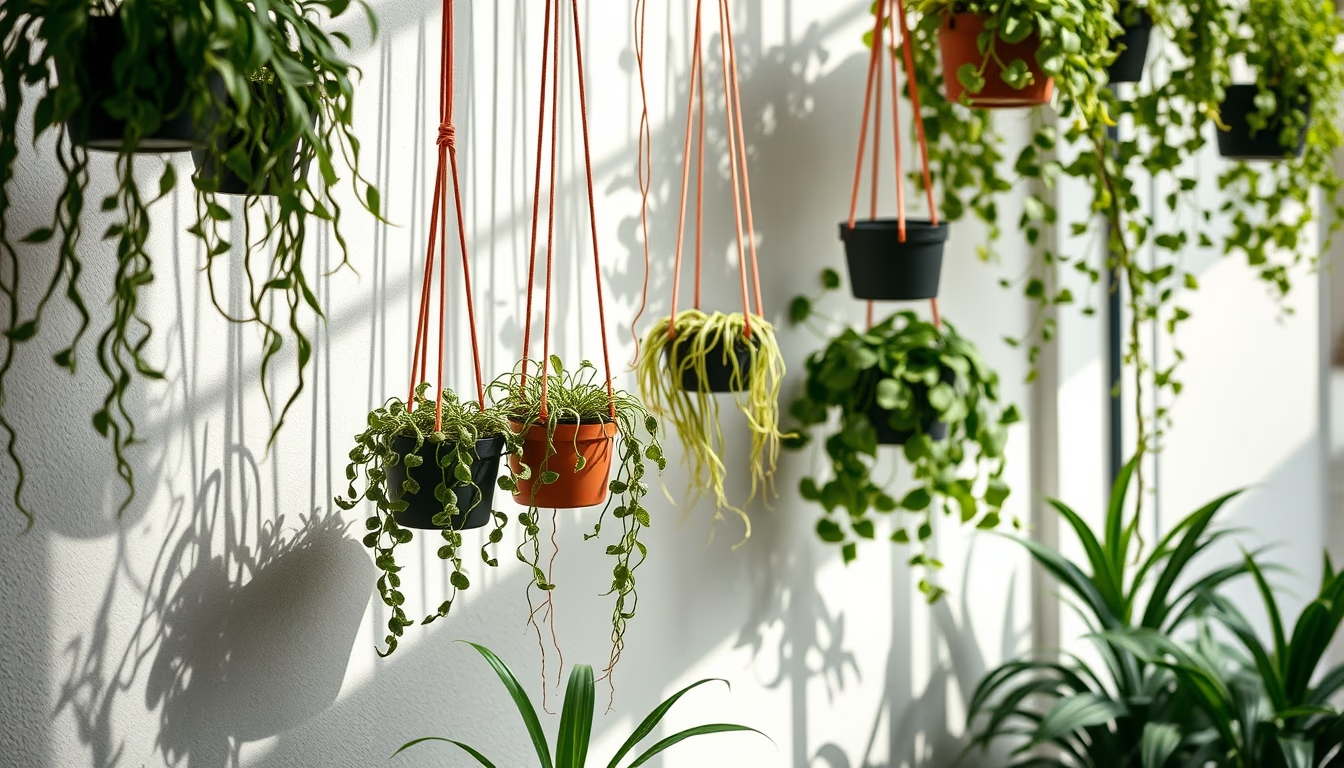
Hanging plants vertical garden
1344×768 · AVIF · CC BY 4.0
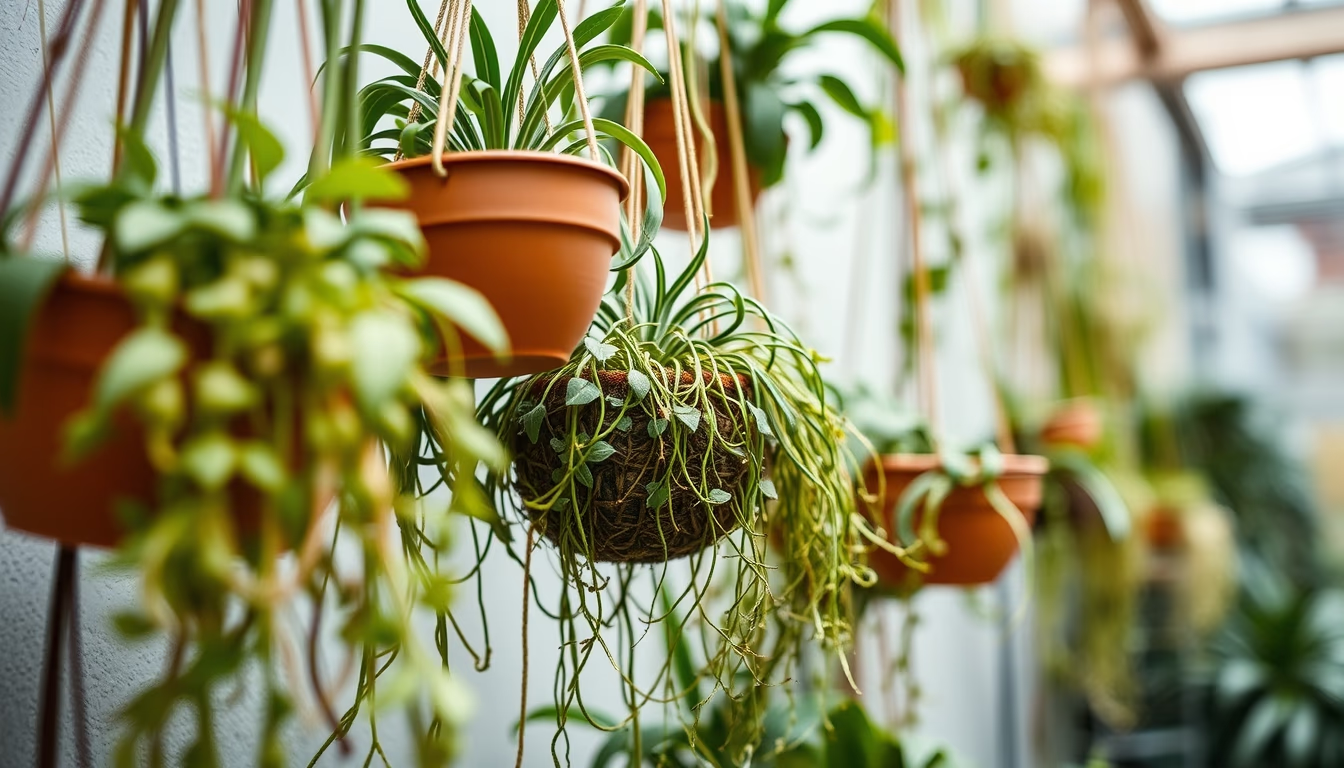
Vertical gardens with hanging plants turn walls into living ecosystems, combining aesthetics and environmental benefits in urban spaces.
About this subject
Vertical gardens are structures that allow plants to grow on vertical surfaces, optimizing space in urban environments. Hanging plants such as ferns, pothos, peperomias, and philodendrons are often chosen for their cascading growth, creating a lush green curtain effect. These systems can be installed both indoors and outdoors, adapting to balconies, living rooms, and building facades.
Beyond aesthetics, vertical gardens offer proven benefits: they improve air quality by filtering pollutants like benzene and formaldehyde, as shown in NASA studies on air-purifying plants. They also act as acoustic insulators, absorbing urban noise, and help regulate indoor temperature, reducing energy consumption for heating and cooling. In densely built areas, they help mitigate the heat island effect.
Historically, the concept of hanging gardens dates back to the Hanging Gardens of Babylon, one of the Seven Wonders of the Ancient World. In modern times, French botanist Patrick Blanc popularized green walls (mur végétal) in the 1980s, with notable projects like the Musée du Quai Branly in Paris. In Brazil, the vertical garden at the FIESP building on Paulista Avenue features 6,000 seedlings of 40 species.
Maintenance of vertical gardens with hanging plants typically involves automated drip irrigation systems and periodic pruning to control growth. Many species are epiphytic or adapted to poor soils, such as bromeliads and orchids. Interestingly, these gardens can host beneficial microfauna like ladybugs and solitary bees, promoting urban biodiversity.
Frequently Asked Questions
What are the best hanging plants for a vertical garden?
Species like ferns, pothos, peperomia, philodendron, spleenwort, and some bromeliads are ideal due to their trailing growth and low maintenance. They prefer indirect light and moderate humidity.
How to install a vertical garden with hanging plants at home?
Use modular systems with felt, PVC panels, or wooden frames. Ensure wall waterproofing and install a drip irrigation system. Use lightweight, organic-rich substrate.
Can a vertical garden help reduce room temperature?
Yes. Plants provide shade and cool the air through evapotranspiration, potentially lowering ambient temperature by up to 4°C in hot climates and reducing air conditioning needs.
Direct URL
https://pub-c7d6a6ea828543ac903a74a341ccb2e1.r2.dev/imagens/hanging-plants-vertical-garden-macro-closeup-fresh15.avifHow to credit
Include a visible link back to UtilizAí. Copy one of the snippets below:
<a href="https://xn--utiliza-eza.com/en/midia/imagens/hanging-plants-vertical-garden-macro-closeup-fresh15">Hanging plants vertical garden</a> by <a href="https://xn--utiliza-eza.com">UtilizAí</a>, licensed under <a href="https://creativecommons.org/licenses/by/4.0/">CC BY 4.0</a>.
[Hanging plants vertical garden](https://xn--utiliza-eza.com/en/midia/imagens/hanging-plants-vertical-garden-macro-closeup-fresh15) by [UtilizAí](https://xn--utiliza-eza.com), CC BY 4.0
License: CC-BY-4.0