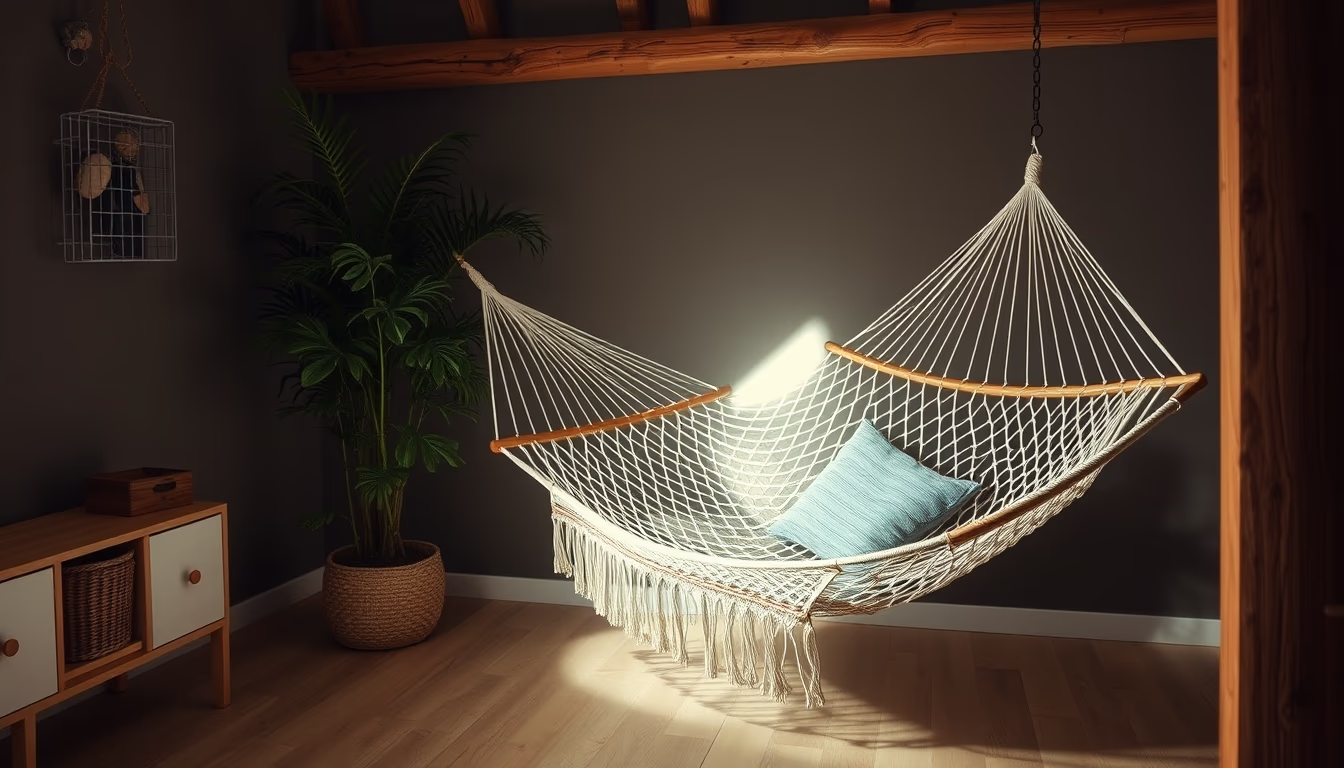
Hammock indoor cozy
1344×768 · AVIF · CC BY 4.0

The hammock is a symbol of Brazilian comfort, but its indoor use has become popular as an alternative to the sofa.
About this subject
The hammock has ancient origins, used by indigenous peoples of Central and South America long before European arrival. In Brazil, especially in the Northeast region, the hammock became an indispensable cultural element, used both for sleeping and for daytime relaxation. Traditionally made from cotton or natural fibers, it offers a gentle rocking motion that induces sleep and relieves muscle tension.
In recent years, indoor hammock use has gained popularity worldwide. In small apartments, hammocks replace armchairs and sofas, freeing up space and adding a relaxed touch to decoration. Unlike traditional porch models, indoor hammocks are often hung on metal or wooden stands, allowing installation without wall hooks. Some versions incorporate cushions or thicker fabrics for added comfort.
The isometric and flat-lay design in modern illustrations highlights the versatility of this object. Hammocks can be found in different materials, such as crochet, organic cotton, or polyester, each with its own durability and texture characteristics. Studies indicate that sleeping in a hammock can improve sleep quality due to the rhythmic motion and even weight distribution, though experts recommend attention to posture to avoid lower back pain.
Beyond comfort, the hammock carries strong cultural meaning. In Brazil, it is associated with rest, hospitality, and the simple life of the countryside. Popular festivals like São João often decorate environments with colorful hammocks. Globally, the hammock is seen as an icon of leisure and well-being, appearing in resorts, beaches, and even creative offices. Its adaptation to indoor spaces reflects the search for cozier and more functional environments.
Frequently Asked Questions
What is the origin of the hammock?
The hammock was created by indigenous peoples of Central and South America, such as the Taíno and Tupi, who used it for sleeping and protection from damp ground. It arrived in Brazil with Portuguese colonizers and became part of the culture in the Northeast region.
Is it healthy to sleep in a hammock every night?
Sleeping in a hammock can be healthy because the gentle rocking motion helps relaxation and may improve sleep quality. However, it is important to use a properly sized hammock and sleep on your side or in a fetal position to avoid back pain. Consulting a doctor is recommended for people with orthopedic issues.
How to hang a hammock indoors?
To hang a hammock indoors, you can use specific hammock stands (steel or wood frames) that require no holes in the wall. Alternatively, install hooks on sturdy beams or walls, ensuring correct distance and height for safety and comfort.
Direct URL
https://pub-c7d6a6ea828543ac903a74a341ccb2e1.r2.dev/imagens/hammock-indoor-cozy-isometric-flat-lay-fresh0.avifHow to credit
Include a visible link back to UtilizAí. Copy one of the snippets below:
<a href="https://xn--utiliza-eza.com/en/midia/imagens/hammock-indoor-cozy-isometric-flat-lay-fresh0">Hammock indoor cozy</a> by <a href="https://xn--utiliza-eza.com">UtilizAí</a>, licensed under <a href="https://creativecommons.org/licenses/by/4.0/">CC BY 4.0</a>.
[Hammock indoor cozy](https://xn--utiliza-eza.com/en/midia/imagens/hammock-indoor-cozy-isometric-flat-lay-fresh0) by [UtilizAí](https://xn--utiliza-eza.com), CC BY 4.0
License: CC-BY-4.0