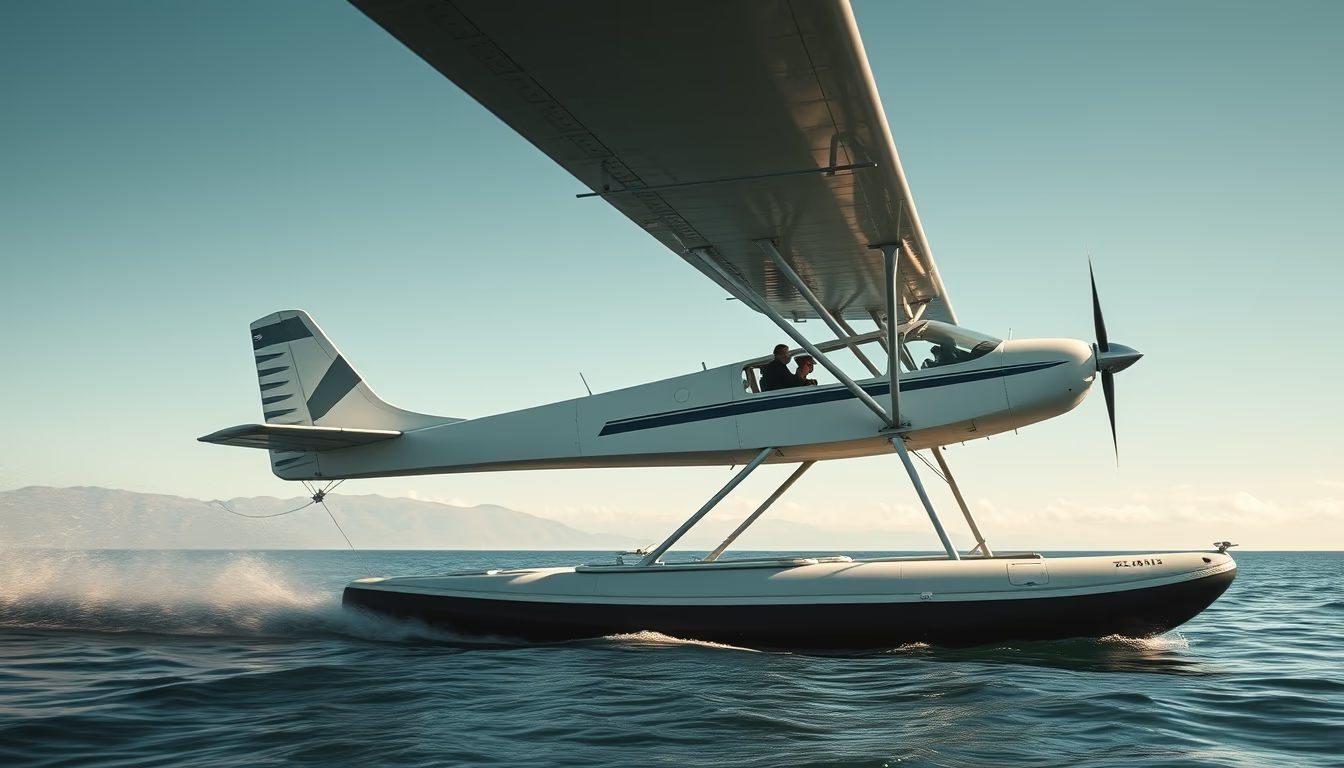
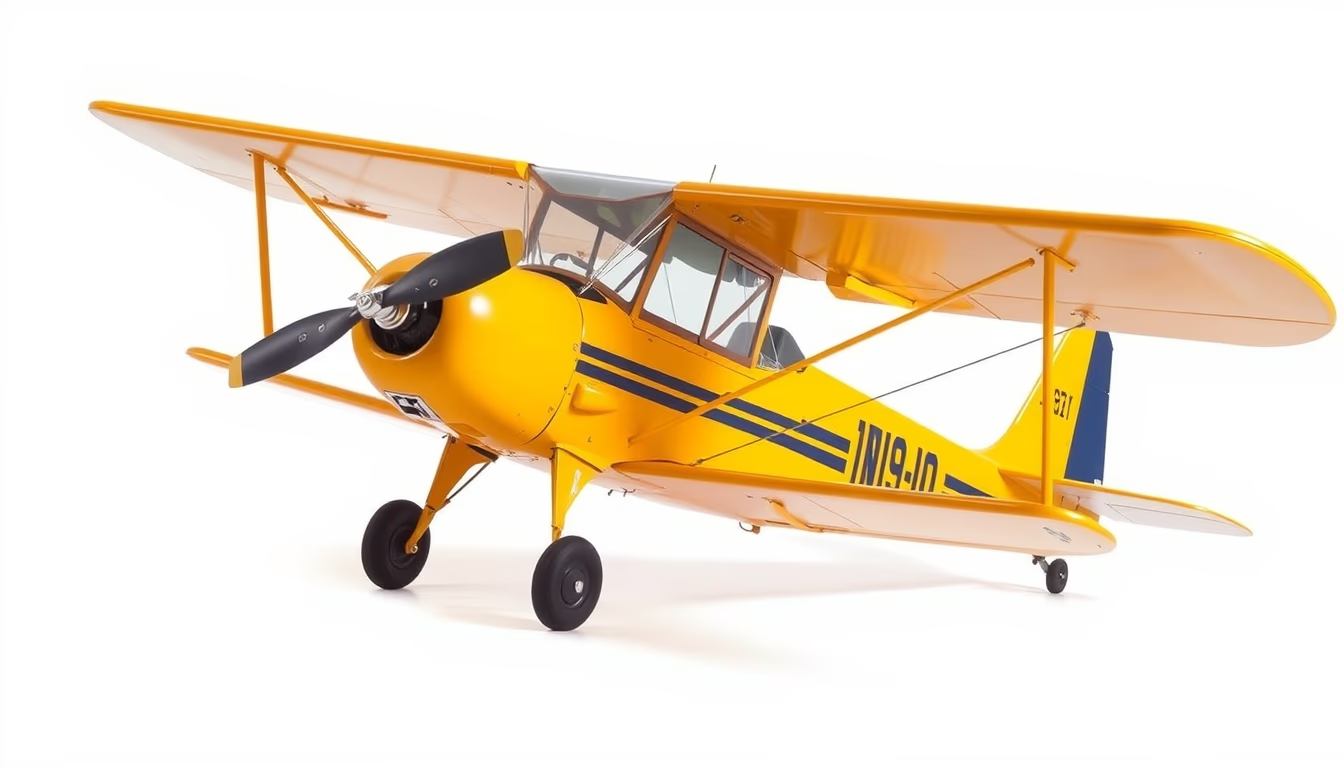
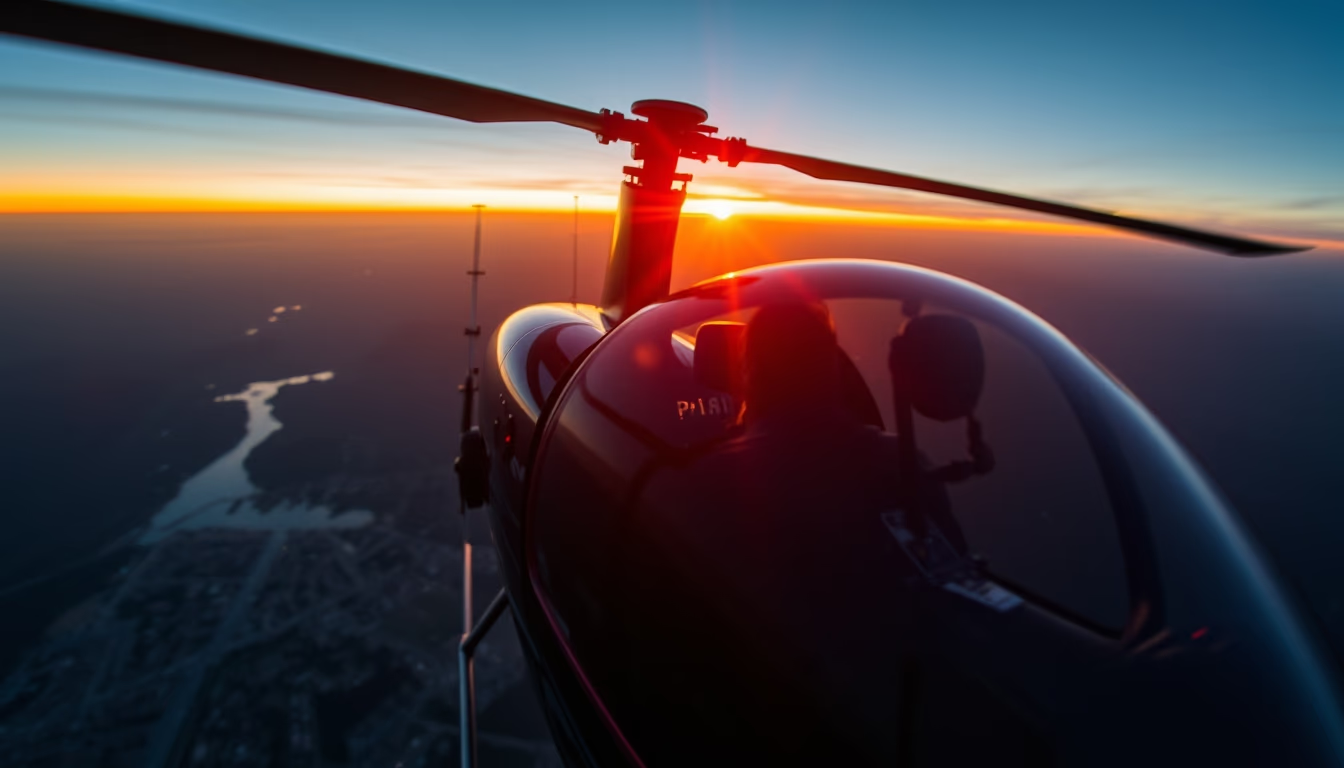
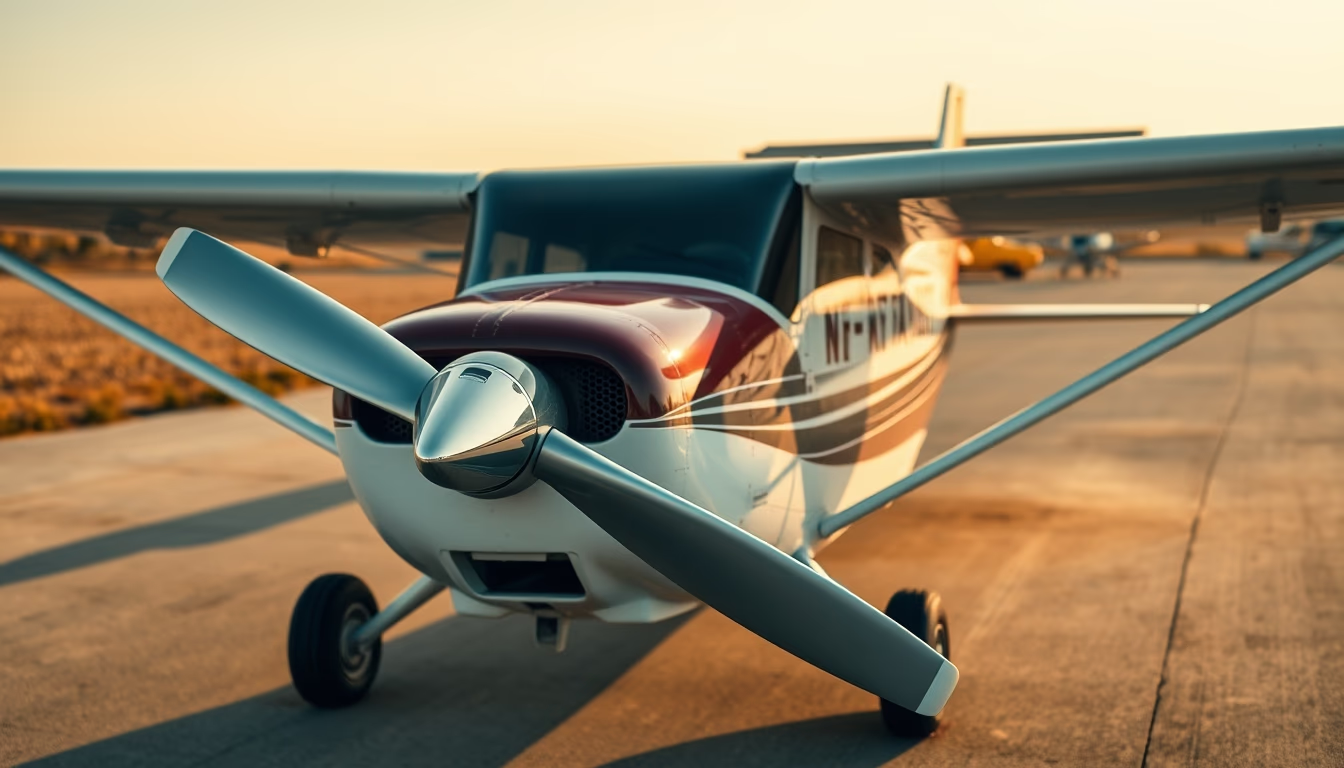
Gyrocopter autogyro
1344×768 · AVIF · CC BY 4.0
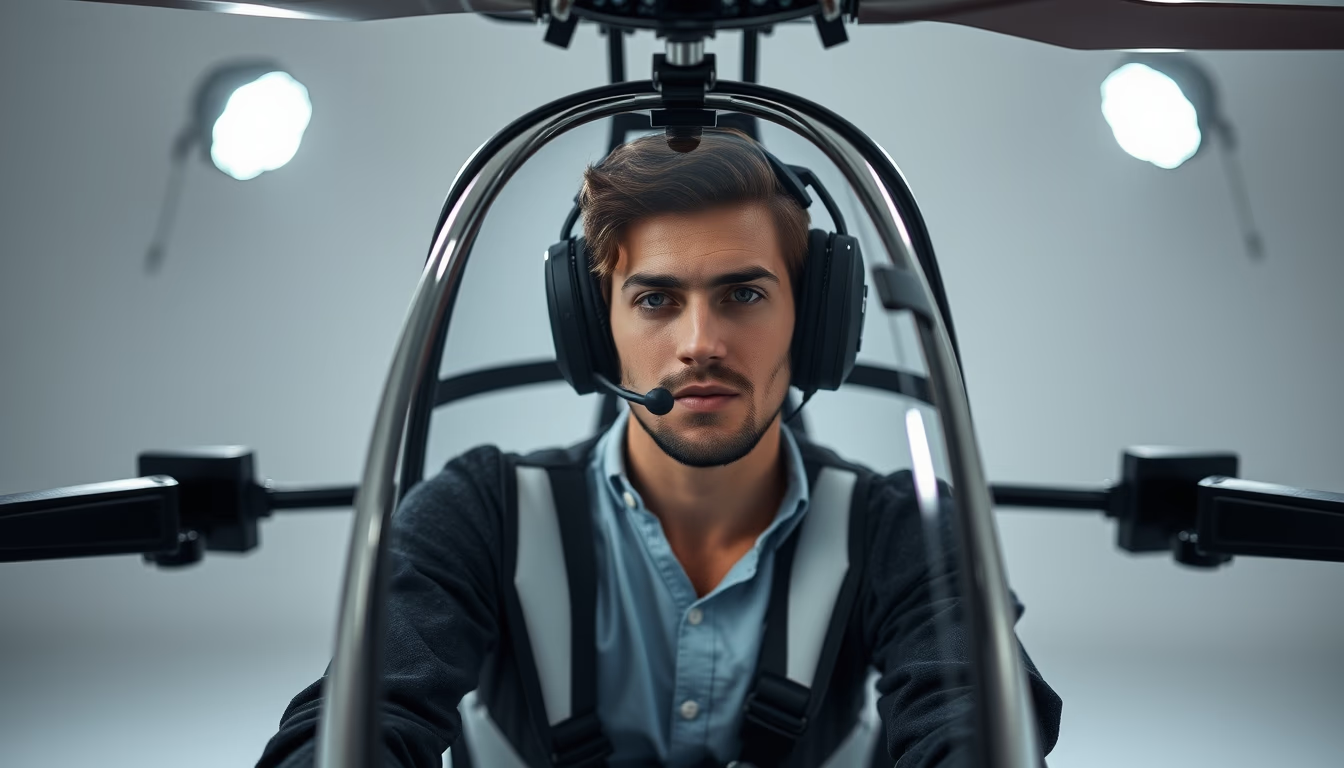
The autogyro, also known as a gyrocopter, is a rotary-wing aircraft that combines a free-spinning rotor in autorotation with a conventional pusher engine, providing stable and safe flight since the 1920s.
About this subject
The autogyro, also called a gyrocopter, is an aircraft that uses an unpowered rotor in autorotation to generate lift, while a conventional propeller provides forward thrust. Unlike a helicopter, the rotor is not driven by the engine; it spins freely due to the airflow, making the flight inherently stable and resistant to stalls. This characteristic makes the autogyro a safe choice for recreational flights and observation missions.
Spanish engineer Juan de la Cierva invented the autogyro in the 1920s, achieving the first successful flight in 1923. His invention solved the stall problem of fixed-wing aircraft by using a rotor that continues to spin even at low speeds. The Cierva C.4 was the first to demonstrate controlled flight, and later both military and civilian users adopted the technology for reconnaissance and training.
Unlike helicopters, autogyros cannot hover, but they offer advantages such as lower construction and maintenance costs, as well as simpler piloting. During World War II, autogyros were used for artillery observation and as radar platforms. Today, they are popular among amateur pilots and in air sports, especially modern models like the AutoGyro MTOsport.
An interesting fact: the autogyro can take off in very short distances (STOL) and land almost vertically, making it ideal for operations on farms or remote areas. Additionally, many enthusiasts highlight the open-cockpit feeling, as most designs are exposed. Although less known than the helicopter, the autogyro remains a fascinating and reliable option for those seeking a unique flying experience.
Frequently Asked Questions
How does an autogyro work?
An autogyro has a free-spinning rotor that turns due to airflow as the aircraft moves forward, generating lift. The engine powers a conventional propeller that pushes the aircraft forward, keeping the rotor in autorotation.
What is the difference between an autogyro and a helicopter?
The main difference is that in a helicopter, the engine directly drives the rotor, allowing hovering. In an autogyro, the rotor spins freely, so it cannot hover, but it offers greater safety and mechanical simplicity.
Who invented the autogyro?
The autogyro was invented by Spanish engineer Juan de la Cierva, who achieved the first controlled flight in 1923 with the Cierva C.4 model.
Direct URL
https://pub-c7d6a6ea828543ac903a74a341ccb2e1.r2.dev/imagens/gyrocopter-autogyro-studio-editorial-portrait-fresh10.avifHow to credit
Include a visible link back to UtilizAí. Copy one of the snippets below:
<a href="https://xn--utiliza-eza.com/en/midia/imagens/gyrocopter-autogyro-studio-editorial-portrait-fresh10">Gyrocopter autogyro</a> by <a href="https://xn--utiliza-eza.com">UtilizAí</a>, licensed under <a href="https://creativecommons.org/licenses/by/4.0/">CC BY 4.0</a>.
[Gyrocopter autogyro](https://xn--utiliza-eza.com/en/midia/imagens/gyrocopter-autogyro-studio-editorial-portrait-fresh10) by [UtilizAí](https://xn--utiliza-eza.com), CC BY 4.0
License: CC-BY-4.0