Guzheng chinese
1344×768 · AVIF · CC BY 4.0
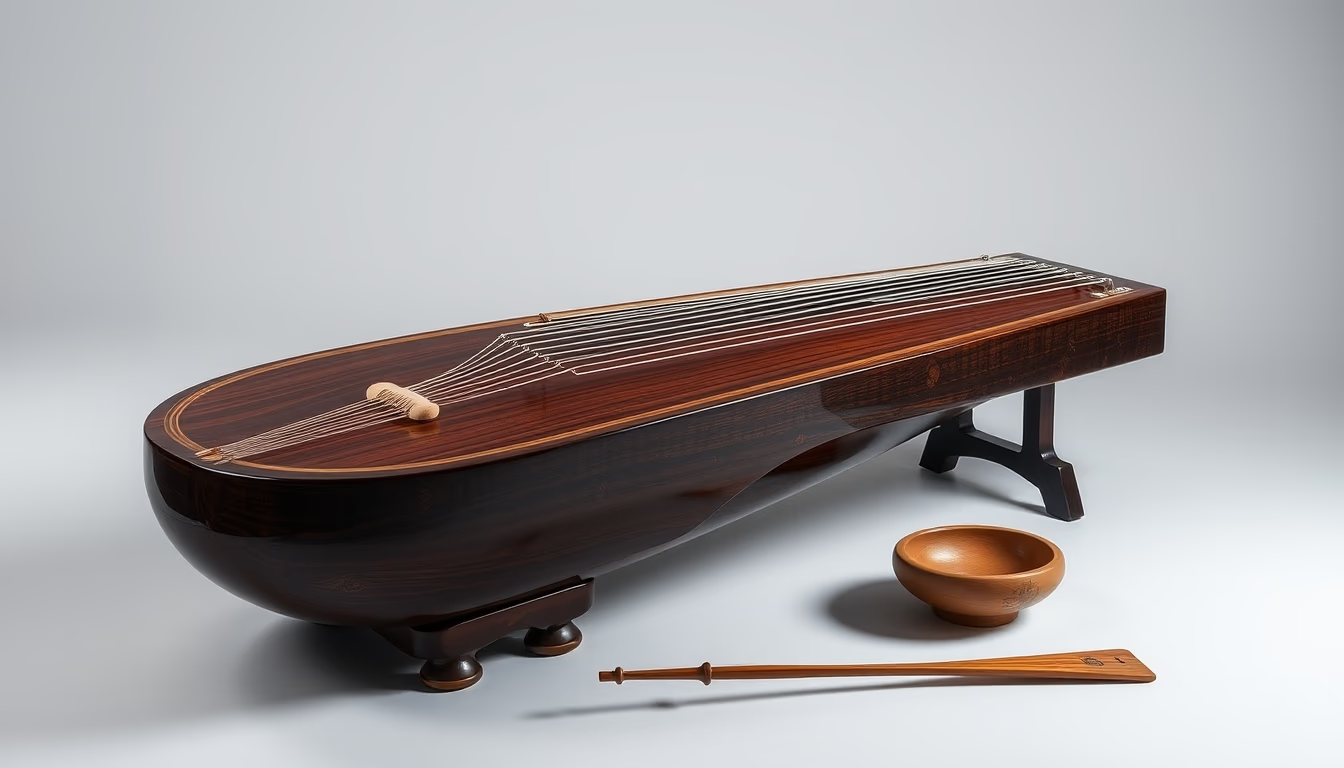
The guzheng is a Chinese plucked zither with over 2,500 years of history, prominent in traditional and contemporary music.
About this subject
The guzheng, also known as the Chinese zither, is one of the oldest musical instruments in China, with records dating back to the Warring States period (475, 221 BCE). Its construction features a wooden soundbox, usually made from paulownia wood, with steel or silk strings stretched over movable bridges. Originally it had only 12 strings, but over centuries the number increased: the modern standard guzheng has 21 strings, tuned to a pentatonic scale. The instrument is played with picks attached to the fingers of the right hand, while the left hand presses the strings to produce ornaments and vibrato.
In Chinese culture, the guzheng holds a central place in classical and folk music. It is often associated with elegance and refined art, being a subject of ancient poems and paintings. Traditional repertoire includes pieces such as "High Mountain and Flowing Water" (Gao Shan Liu Shui) and "Fishermen Singing at Night" (Yu Zhou Chang Wan). Moreover, the instrument has gained popularity in modern genres like pop and jazz fusion, used by contemporary Chinese and international artists.
A technical curiosity: the guzheng is known for its rich range of playing techniques, including rapid glissandos, tremolos, and harmonics. Each string is individually tuned by moving the wooden bridges, allowing micro-adjustments. The paulownia wood is chosen for its lightness and acoustic properties, giving the instrument a bright and sustained sound. The guzheng also inspired regional variants, such as the Korean gayageum and Japanese koto, which share common historical origins.
Today, the guzheng is taught in conservatories in China and abroad, and there are international competitions dedicated to the instrument. Its sonic versatility and emotional expressiveness make it a favorite for both solo performances and orchestral ensembles.
Frequently Asked Questions
What is the difference between the guzheng and the Japanese koto?
The guzheng and koto share common origins but differ in construction and tuning. The guzheng has 21 strings with movable bridges, while the traditional koto has 13 fixed strings over a curved bridge. Playing technique also varies: guzheng uses picks on fingers; koto uses picks attached to the first three fingers of the right hand.
Is the guzheng difficult to learn?
Learning the guzheng requires practice, especially to coordinate both hands for different techniques. However, its pentatonic scale makes simple melodies easier. With dedication, beginners can play basic pieces within months. The instrument is known for its expressiveness, but mastery takes years.
What materials are used to make a guzheng?
The soundbox is traditionally made of paulownia (kiri), a light and resonant wood. Modern strings are steel coated or wrapped in copper, while ancient ones were silk. The bridges are made of hardwood such as rosewood or boxwood. The instrument's quality depends on wood drying and craftsmanship.
Direct URL
https://pub-c7d6a6ea828543ac903a74a341ccb2e1.r2.dev/imagens/guzheng-chinese-studio-still-life-p11.avifHow to credit
Include a visible link back to UtilizAí. Copy one of the snippets below:
<a href="https://xn--utiliza-eza.com/en/midia/imagens/guzheng-chinese-studio-still-life-p11">Guzheng chinese</a> by <a href="https://xn--utiliza-eza.com">UtilizAí</a>, licensed under <a href="https://creativecommons.org/licenses/by/4.0/">CC BY 4.0</a>.
[Guzheng chinese](https://xn--utiliza-eza.com/en/midia/imagens/guzheng-chinese-studio-still-life-p11) by [UtilizAí](https://xn--utiliza-eza.com), CC BY 4.0
License: CC-BY-4.0