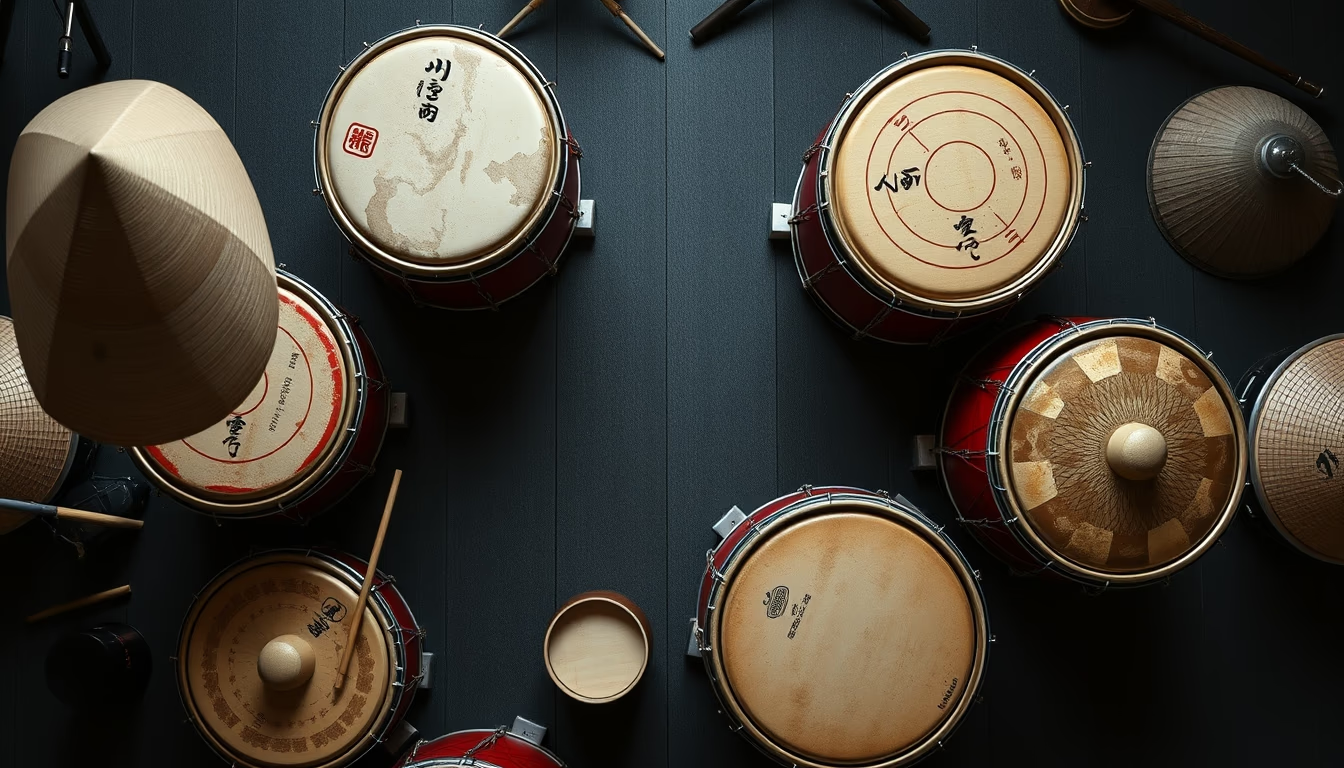
Guzheng chinese
1344×768 · AVIF · CC BY 4.0

The guzheng is an ancient Chinese plucked zither with a captivating sound, used in traditional and contemporary music.
About this subject
The guzheng is a plucked string instrument from China, with a history spanning over 2,500 years. It belongs to the zither family, featuring a long wooden body made of paulownia wood, over which strings of silk or metal are stretched. A distinctive element is the movable bridges, one per string, allowing individual tuning. In classical times, the guzheng graced imperial courts and ceremonies, symbolizing refinement and scholarship. Its handcrafted construction includes marquetry and mother-of-pearl inlays, making each instrument a work of art.
Modern guzheng typically has 21 strings, though models range from 16 to 25, tuned to a pentatonic scale. Playing technique involves plucking with the right hand while the left hand presses strings to produce vibrato and glissandi. The repertoire spans ancient pieces like “High Mountain and Flowing Water” to contemporary compositions. The instrument is also featured in Chinese orchestras and ensembles.
Historically, the guzheng appears in texts from the Zhou dynasty (1046, 256 BCE) and influenced other Asian instruments such as the Japanese koto and Korean gayageum. During the Tang dynasty, it was popular in entertainment venues and among poets. Today, the guzheng enjoys global recognition, studied in conservatories and used in fusions with jazz, pop, and electronic music. This image highlights the guzheng in an architectural setting, emphasizing its visual and sonic elegance.
Frequently Asked Questions
What is the origin of the guzheng?
The guzheng originated in China during the Warring States period (5th, 3rd centuries BCE), with ancestors like the se. It became popular in the Tang dynasty and spread to other Asian countries.
How many strings does a guzheng have?
Traditional guzheng had 16 strings, but modern ones typically have 21 strings, ranging from 18 to 25, tuned to a pentatonic scale.
What is the difference between guzheng and koto?
The Chinese guzheng has movable bridges and metal strings, while the Japanese koto has fixed bridges and silk strings. Playing techniques also differ, with the guzheng using more varied plucking.
Direct URL
https://pub-c7d6a6ea828543ac903a74a341ccb2e1.r2.dev/imagens/guzheng-chinese-architectural-photography-p8.avifHow to credit
Include a visible link back to UtilizAí. Copy one of the snippets below:
<a href="https://xn--utiliza-eza.com/en/midia/imagens/guzheng-chinese-architectural-photography-p8">Guzheng chinese</a> by <a href="https://xn--utiliza-eza.com">UtilizAí</a>, licensed under <a href="https://creativecommons.org/licenses/by/4.0/">CC BY 4.0</a>.
[Guzheng chinese](https://xn--utiliza-eza.com/en/midia/imagens/guzheng-chinese-architectural-photography-p8) by [UtilizAí](https://xn--utiliza-eza.com), CC BY 4.0
License: CC-BY-4.0