Grand piano in concert hall
1344×768 · AVIF · CC BY 4.0
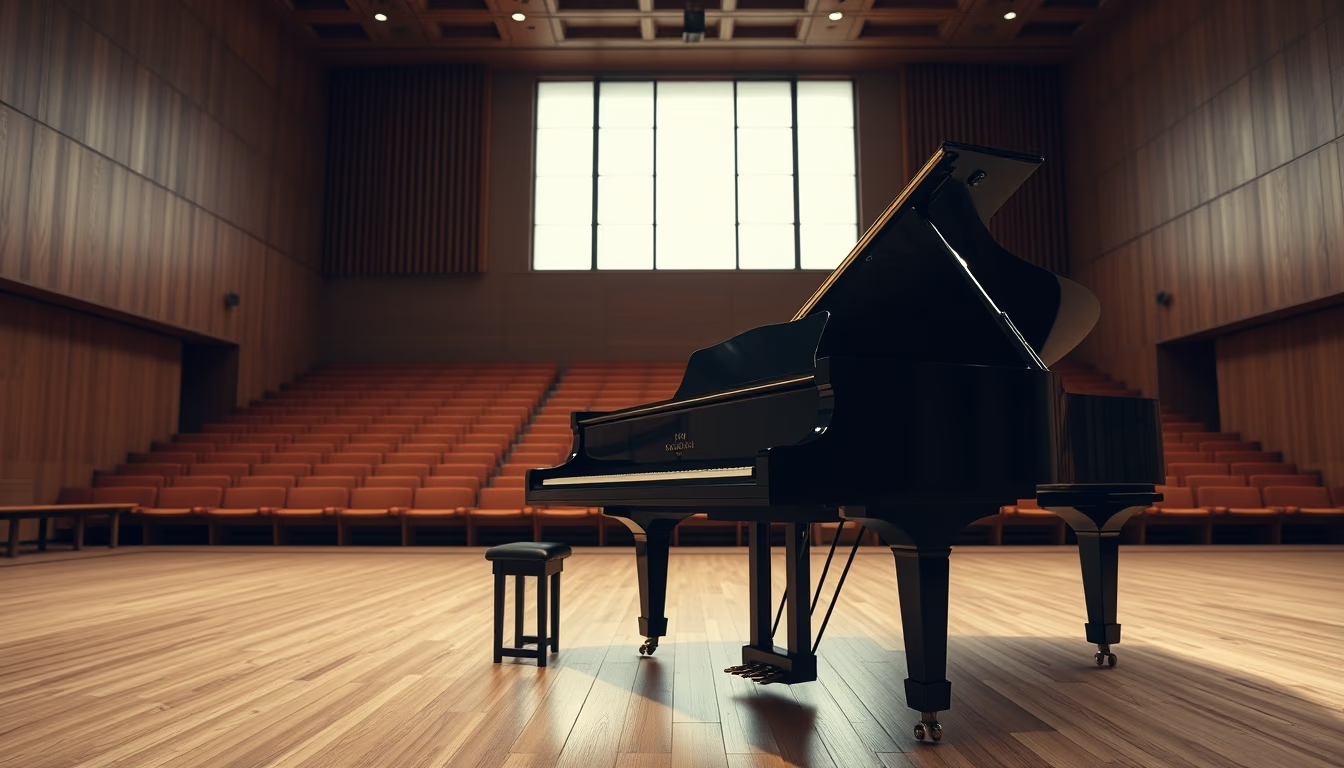
The grand piano, a centerpiece of classical music, takes the stage in concert halls, blending acoustic engineering and artistry.
About this subject
The grand piano is a musical instrument with percussed strings whose hammer and damper mechanism allows a wide dynamic and expressive range. Its origin dates back to the early 18th century with Cristofori in Italy, but the modern design was consolidated by manufacturers like Steinway & Sons, who perfected the cast iron frame and cross-stringing scale. In a concert hall, the grand piano occupies a central position, with its lid open projecting sound toward the audience, leveraging the room’s acoustics.
Grand piano dimensions range from 1.5 to 3 meters in length, directly influencing timbre quality and sound power. Long tail models, such as the Steinway D-274, are preferred in large theaters due to their resonance and ability to fill space without electronic amplification. The keyboard action, composed of about 88 keys and thousands of moving parts, requires precise regulation to respond to the pianist’s touch.
In classical music, the grand piano is the quintessential solo instrument in piano concertos with orchestra, as well as fundamental in recitals and chamber music. Composers like Chopin, Liszt, and Rachmaninoff wrote works that explore the instrument’s full range, demanding refined technique and dynamic control. In contemporary music, including minimalist compositions by Philip Glass and Steve Reich, the grand piano is used to create hypnotic textures with pattern repetition.
Choosing a grand piano for a concert involves factors such as the hall’s acoustics, repertoire, and the performer’s preferences. Famous halls like the Musikverein in Vienna, Carnegie Hall in New York, and Sala São Paulo maintain high-quality grand pianos, often customized for the venue. Constant maintenance, with regular tunings and action repairs, is essential to preserve the instrument’s integrity and ensure outstanding performances.
Frequently Asked Questions
Why is the grand piano the standard for classical concerts?
The grand piano offers greater sound power, better projection, and more refined dynamic response than upright pianos. Its horizontal construction allows longer strings and superior resonance, ideal for concert halls.
How does the action mechanism of a grand piano work?
When a key is pressed, a felt-covered hammer is propelled against the strings, which vibrate to produce sound. Immediately, a damper stops the vibration when the key is released. The repetition system facilitates rapid, controlled notes.
What is the difference between a grand piano and an upright piano?
The main difference lies in the orientation of strings and mechanism. The grand piano has horizontal strings and vertical action, providing better sensitivity and sustain. In contrast, the upright has vertical strings and horizontal action, making it more compact and less expensive.
Direct URL
https://pub-c7d6a6ea828543ac903a74a341ccb2e1.r2.dev/imagens/grand-piano-in-concert-hall-minimalist-composition-p2.avifHow to credit
Include a visible link back to UtilizAí. Copy one of the snippets below:
<a href="https://xn--utiliza-eza.com/en/midia/imagens/grand-piano-in-concert-hall-minimalist-composition-p2">Grand piano in concert hall</a> by <a href="https://xn--utiliza-eza.com">UtilizAí</a>, licensed under <a href="https://creativecommons.org/licenses/by/4.0/">CC BY 4.0</a>.
[Grand piano in concert hall](https://xn--utiliza-eza.com/en/midia/imagens/grand-piano-in-concert-hall-minimalist-composition-p2) by [UtilizAí](https://xn--utiliza-eza.com), CC BY 4.0
License: CC-BY-4.0