Grand piano in concert hall
1344×768 · AVIF · CC BY 4.0
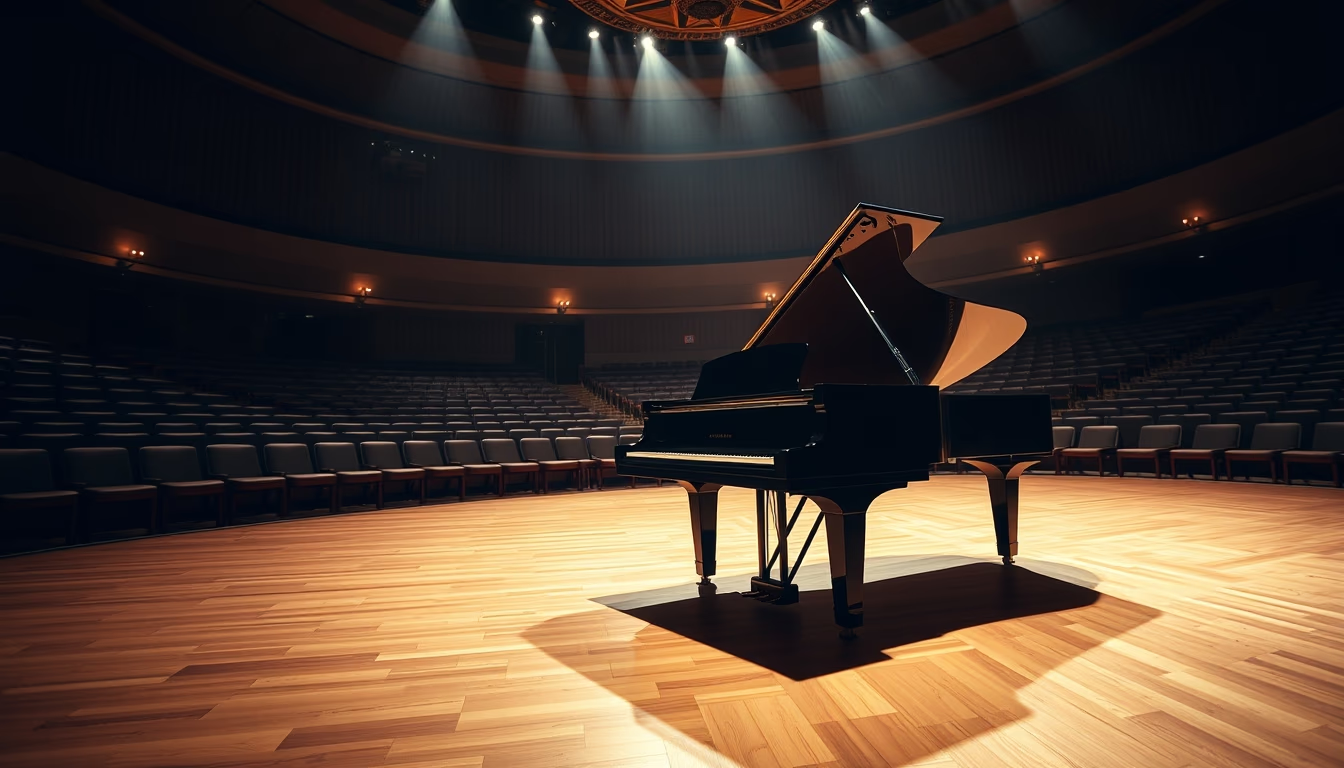
The grand piano is the centerpiece of concert halls worldwide, blending acoustic engineering with musical tradition.
About this subject
The grand piano is a stringed percussion instrument whose hammer and damper mechanism allows dynamic and expressive control. Its horizontal shape and large soundboard, which can exceed 9 feet in length, are designed to project sound in large auditoriums. The first grand pianos appeared in the early 18th century, built by Bartolomeo Cristofori in Italy, but the instrument reached its modern form in the 19th century with innovations from manufacturers like Steinway & Sons and Bösendorfer.
In a concert hall, piano placement is crucial for acoustics. Typically positioned center stage with the lid open toward the audience, sound reflects off walls and ceiling, creating an immersive experience. Famous halls such as Carnegie Hall in New York and the Teatro Colón in Buenos Aires were designed to enhance the grand piano's timbre. Instrument maintenance is rigorous: steel and copper strings are tuned before each performance, and hammers are periodically replaced to preserve attack quality.
Culturally, the grand piano symbolizes sophistication and virtuosity. Composers like Chopin, Liszt, and Villa-Lobos wrote works exploring the instrument's full potential. In Brazil, the Theatro Municipal de São Paulo and Sala Cecília Meireles in Rio de Janeiro house renowned grand pianos used in classical and popular music concerts. The piano's versatility ranges from classical sonatas to jazz improvisations, cementing its role as the "king of instruments."
Frequently Asked Questions
What is the difference between a grand piano and an upright piano?
A grand piano has horizontal strings and a larger soundboard, producing more powerful and rich sound. An upright has vertical strings, saving space but with inferior sound projection.
How does concert hall acoustics affect piano sound?
Acoustics depend on reverberation time, room shape, and materials. Halls with appropriate reverberation (1.5 to 2 seconds) enhance sustain and clarity, while reflective or absorbent surfaces alter timbre.
Which are the most renowned grand piano manufacturers?
Steinway & Sons, Bösendorfer, Yamaha, Kawai, and Fazioli are top-tier. Steinway dominates 90% of professional concerts, while Bösendorfer is known for its rich tone and heavier keys.
Direct URL
https://pub-c7d6a6ea828543ac903a74a341ccb2e1.r2.dev/imagens/grand-piano-in-concert-hall-magazine-editorial-p4.avifHow to credit
Include a visible link back to UtilizAí. Copy one of the snippets below:
<a href="https://xn--utiliza-eza.com/en/midia/imagens/grand-piano-in-concert-hall-magazine-editorial-p4">Grand piano in concert hall</a> by <a href="https://xn--utiliza-eza.com">UtilizAí</a>, licensed under <a href="https://creativecommons.org/licenses/by/4.0/">CC BY 4.0</a>.
[Grand piano in concert hall](https://xn--utiliza-eza.com/en/midia/imagens/grand-piano-in-concert-hall-magazine-editorial-p4) by [UtilizAí](https://xn--utiliza-eza.com), CC BY 4.0
License: CC-BY-4.0