Grand piano in concert hall
1344×768 · AVIF · CC BY 4.0
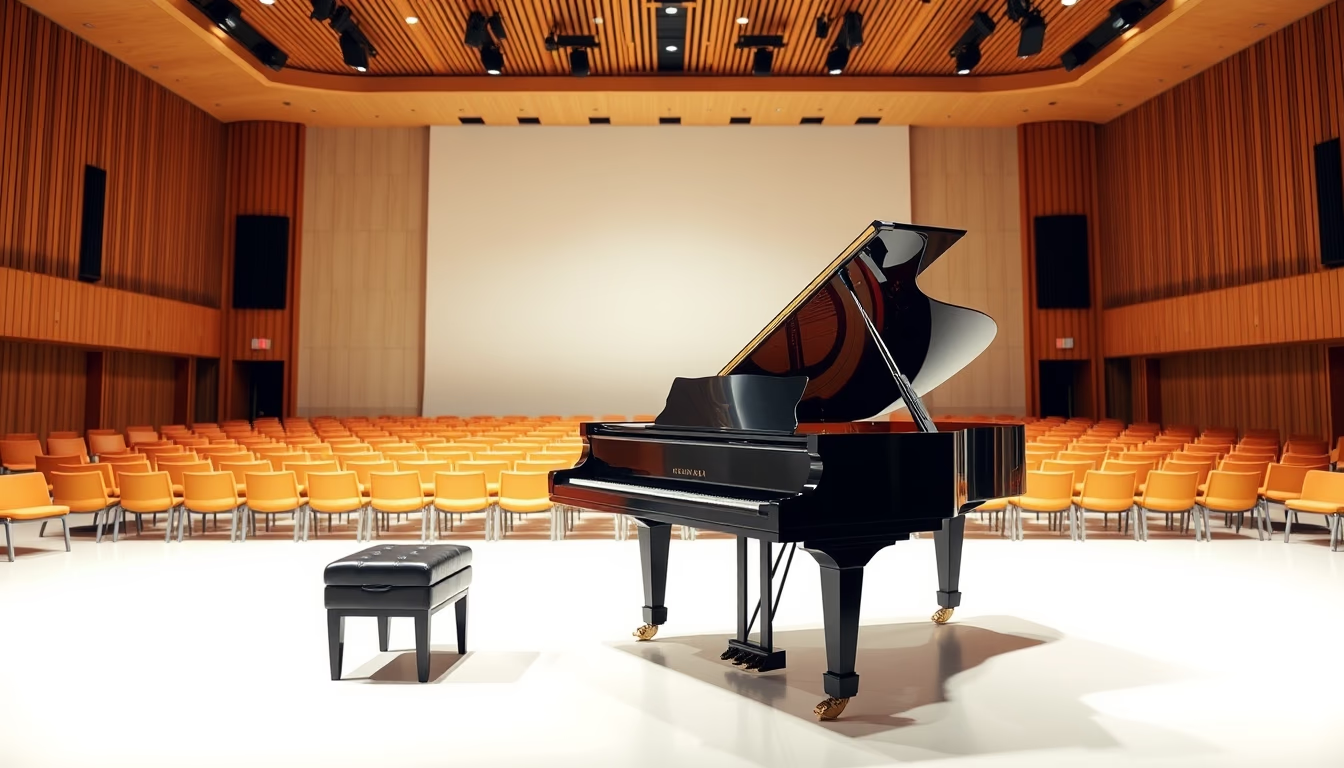
Grand piano in concert: explore the history, engineering, and cultural significance of this iconic instrument in major concert halls.
About this subject
The grand piano is the quintessential solo instrument in concert halls worldwide. Its elongated shape and horizontal string arrangement produce a more powerful and harmonically rich sound compared to upright pianos. Major manufacturers such as Steinway & Sons, Bösendorfer, and Yamaha dedicate years to building each unit, using selected woods like mahogany and spruce, and a felt-covered hammer system that strikes steel and copper strings. A professional concert grand piano is approximately 9 feet (2.7 meters) long and weighs over 1,100 pounds (500 kg), requiring a cast iron frame to withstand string tension often exceeding 20 tons.
The acoustics of a concert hall are designed to maximize the piano's sound. Halls like the Musikverein in Vienna, Carnegie Hall in New York, and Sala São Paulo in Brazil feature architecture that enhances natural reverberation and sound projection. The piano's placement on stage, typically with the lid open toward the audience, is crucial for directing sound. Great pianists, from Franz Liszt to Martha Argerich, choose specific pianos for each performance, often selecting after testing several instruments.
Culturally, the grand piano symbolizes sophistication and classical tradition, but it is also used in jazz, popular music, and film scores. Works like Rachmaninoff's Piano Concerto No. 2 or Beethoven's Moonlight Sonata were composed with the grand piano's expressive capabilities in mind. Maintaining such an instrument is complex: it requires frequent tuning, regulation of mechanisms, and occasional replacement of hammers and strings. A specialized technician may spend hours preparing it before a concert.
Interestingly, the modern grand piano evolved from the harpsichord and clavichord, with the escapement mechanism invented by Bartolomeo Cristofori around 1700. Since then, the design has been refined to allow greater dynamics and control. Today, digital grand pianos are also popular, but they cannot replace the unique acoustic experience of a real instrument in a concert hall. The image of a grand piano on stage immediately evokes the anticipation of a live performance, merging technique and emotion.
Frequently Asked Questions
What is the difference between a grand piano and an upright piano?
A grand piano has horizontal strings and a faster action mechanism, allowing greater dynamic control and a more powerful sound. An upright piano, with vertical strings, is more compact and suitable for smaller spaces, but has inferior response and resonance.
Why are grand pianos so expensive?
Their high cost is due to the handcrafted construction process taking months or years, use of premium materials such as hardwoods and high-quality felt, and the precision required for the mechanism. Concert grands can cost hundreds of thousands of dollars.
How is a grand piano maintained?
It requires periodic tuning (at least twice a year), regulation of hammers and action, and cleaning. In concert halls, a technician prepares the piano before each performance, adjusting the touch and tone for the pianist and repertoire.
Direct URL
https://pub-c7d6a6ea828543ac903a74a341ccb2e1.r2.dev/imagens/grand-piano-in-concert-hall-commercial-product-photography-p5.avifHow to credit
Include a visible link back to UtilizAí. Copy one of the snippets below:
<a href="https://xn--utiliza-eza.com/en/midia/imagens/grand-piano-in-concert-hall-commercial-product-photography-p5">Grand piano in concert hall</a> by <a href="https://xn--utiliza-eza.com">UtilizAí</a>, licensed under <a href="https://creativecommons.org/licenses/by/4.0/">CC BY 4.0</a>.
[Grand piano in concert hall](https://xn--utiliza-eza.com/en/midia/imagens/grand-piano-in-concert-hall-commercial-product-photography-p5) by [UtilizAí](https://xn--utiliza-eza.com), CC BY 4.0
License: CC-BY-4.0