Grand piano in concert hall
1344×768 · AVIF · CC BY 4.0
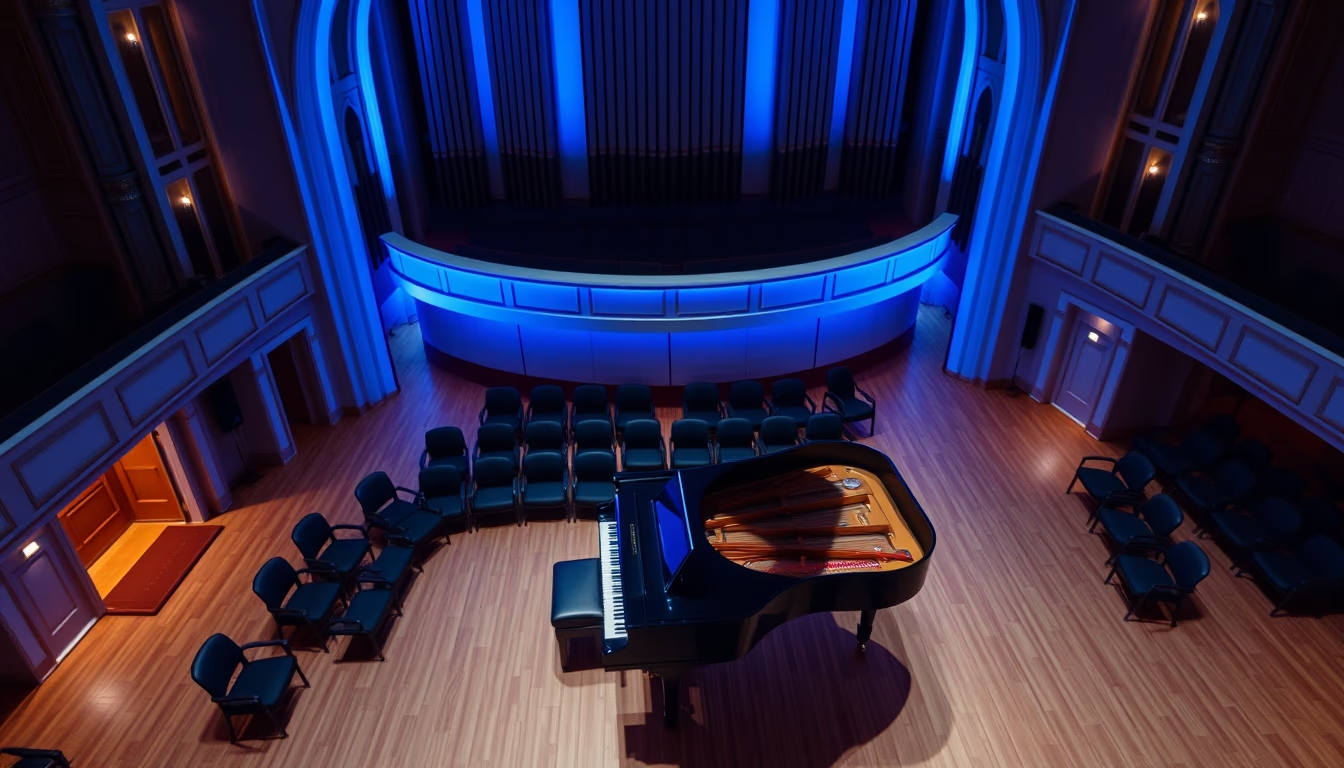
Grand piano in a concert hall: a symbol of musical excellence and acoustic engineering, captured from an aerial perspective.
About this subject
The grand piano stands as the most imposing and versatile instrument in classical and contemporary music. Its horizontal structure, with strings stretched over a massive soundboard, delivers greater volume and harmonic richness compared to upright pianos. Manufacturers such as Steinway & Sons, Yamaha, and Bösendorfer dedicate years to building each unit, using selected woods like spruce and mahogany, along with precision felts and hammers. The aerodynamic design and repetition action system allow pianists to execute everything from delicate passages to explosive chords with absolute control.
Concert halls designed to house a grand piano are masterpieces of architectural acoustics. Iconic examples include the Musikverein in Vienna, Sala São Paulo, and Carnegie Hall in New York. Each space is carefully dimensioned in terms of height, volume, and surface materials to optimize sound propagation. The stage is typically elevated and curved, placing the piano as the focal point. Theatrical lighting and the audience's absolute silence create an atmosphere of reverence, where every note resonates with clarity.
Historically, the grand piano evolved from the harpsichord and clavichord in the 18th century, gaining hammer and damper mechanisms. Great composers such as Chopin, Liszt, and Debussy explored its expressive capabilities, establishing it as the 'king of instruments'. In concert, the solo pianist or orchestral soloist uses the entire register, from deep bass to crystalline treble. Maintenance is constant: regular tunings, action regulation, and string replacement ensure optimal performance.
In Brazil, halls like Sala Cecília Meireles and Teatro Amazonas host renowned international pianists. The grand piano is not just an instrument but a cultural heritage that spans generations. Its presence in a concert hall evokes tradition, virtuosity, and the pursuit of sonic perfection.
Frequently Asked Questions
What is the difference between a grand piano and an upright piano?
A grand piano has horizontal strings and a larger soundboard, delivering more powerful and richer sound. An upright piano has vertical strings, making it more compact with less sound projection.
Why is the hall's acoustics important for a piano concert?
Acoustics determine how sound propagates and reverberates. A well-designed hall enhances the piano's timbre, allows notes to sustain, and avoids distortion, ensuring an immersive experience.
How long does it take to build a concert grand piano?
Manufacturing a concert grand piano can take from 9 months to 2 years, depending on the model and maker. The process involves wood drying, hand assembly, and extensive fine-tuning.
Direct URL
https://pub-c7d6a6ea828543ac903a74a341ccb2e1.r2.dev/imagens/grand-piano-in-concert-hall-aerial-drone-shot-p0.avifHow to credit
Include a visible link back to UtilizAí. Copy one of the snippets below:
<a href="https://xn--utiliza-eza.com/en/midia/imagens/grand-piano-in-concert-hall-aerial-drone-shot-p0">Grand piano in concert hall</a> by <a href="https://xn--utiliza-eza.com">UtilizAí</a>, licensed under <a href="https://creativecommons.org/licenses/by/4.0/">CC BY 4.0</a>.
[Grand piano in concert hall](https://xn--utiliza-eza.com/en/midia/imagens/grand-piano-in-concert-hall-aerial-drone-shot-p0) by [UtilizAí](https://xn--utiliza-eza.com), CC BY 4.0
License: CC-BY-4.0