Grand canyon sunset light
1344×768 · AVIF · CC BY 4.0
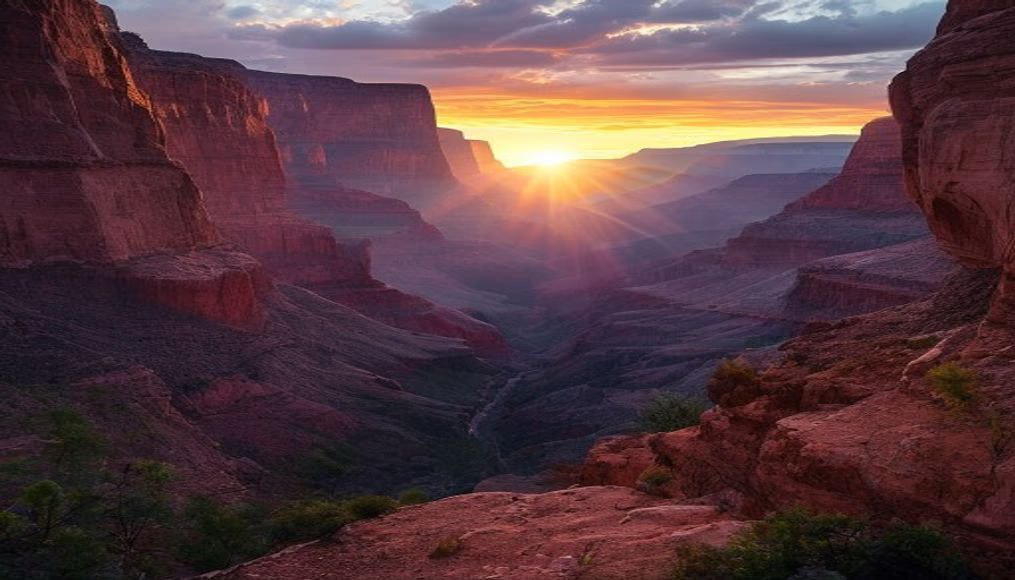
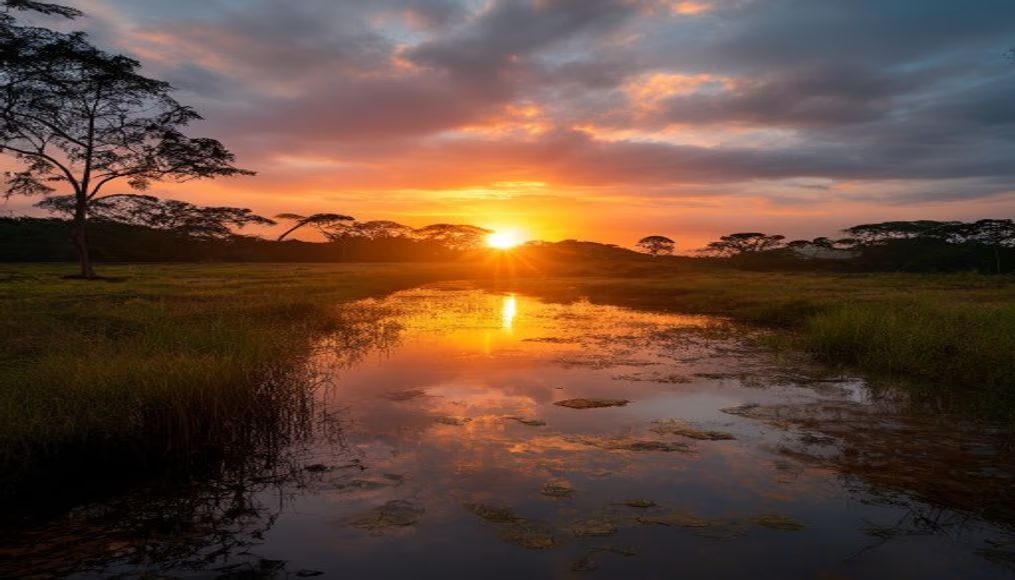
Sunset at the Grand Canyon paints the rock layers in shades of orange, red, and violet, an unforgettable natural spectacle.
About this subject
The Grand Canyon in Arizona, USA, is one of the most spectacular geological formations on Earth. Carved by the Colorado River over millions of years, the canyon reveals a geological history dating back 2 billion years. During sunset, oblique light highlights the different sedimentary rock layers, such as Kaibab limestone and Coconino sandstone, creating a color gradient from gold to deep purple.
This phenomenon occurs because sunlight passes through a thick atmospheric layer near the horizon, scattering shorter wavelengths (blue) and allowing warm tones to dominate. The canyon's irregular topography intensifies the effect, with elongated shadows accentuating the relief. Popular viewpoints to witness this spectacle include Mather Point, Yavapai Point, and Hopi Point on the South Rim, offering unobstructed views to the west.
Culturally, the Grand Canyon is sacred to Native American tribes like the Hopi, Navajo, and Havasupai, who have inhabited the region for centuries. For them, the canyon is a place of origin and spirituality. Grand Canyon National Park, established in 1919, attracts about 6 million visitors annually, with sunset being one of the most photographed moments. The low humidity of the desert air contributes to crisp light, making colors even more vibrant.
Interestingly, sunset colors vary by season: in winter, the sun sets further south, casting pinkish reflections on the north walls; in summer, direct light on the canyon produces intense orange hues. Factors such as volcanic dust and wildfires can also alter the color palette, making each sunset unique.
Frequently Asked Questions
What is the best time of year to see the sunset at the Grand Canyon?
Spring and fall offer mild temperatures and clear skies. Winter provides unique pinkish hues, while summer has longer days and intense orange tones, but haze may occur.
Why is the Grand Canyon sunset so colorful?
Sunlight passes through a thicker atmospheric layer near the horizon, filtering out blue and enhancing reds and oranges. The rock layers reflect and absorb light differently, intensifying the effect.
Where should I go to watch the sunset at the Grand Canyon?
Top viewpoints on the South Rim include Mather Point, Yavapai Point, and Hopi Point. They offer wide, unobstructed views to the west, ideal for sunset photography.
Direct URL
https://pub-c7d6a6ea828543ac903a74a341ccb2e1.r2.dev/imagens/grand-canyon-sunset-light-street-photography-v11.avifHow to credit
Include a visible link back to UtilizAí. Copy one of the snippets below:
<a href="https://xn--utiliza-eza.com/en/midia/imagens/grand-canyon-sunset-light-street-photography-v11">Grand canyon sunset light</a> by <a href="https://xn--utiliza-eza.com">UtilizAí</a>, licensed under <a href="https://creativecommons.org/licenses/by/4.0/">CC BY 4.0</a>.
[Grand canyon sunset light](https://xn--utiliza-eza.com/en/midia/imagens/grand-canyon-sunset-light-street-photography-v11) by [UtilizAí](https://xn--utiliza-eza.com), CC BY 4.0
License: CC-BY-4.0