Grand canyon panoramic
1344×768 · AVIF · CC BY 4.0
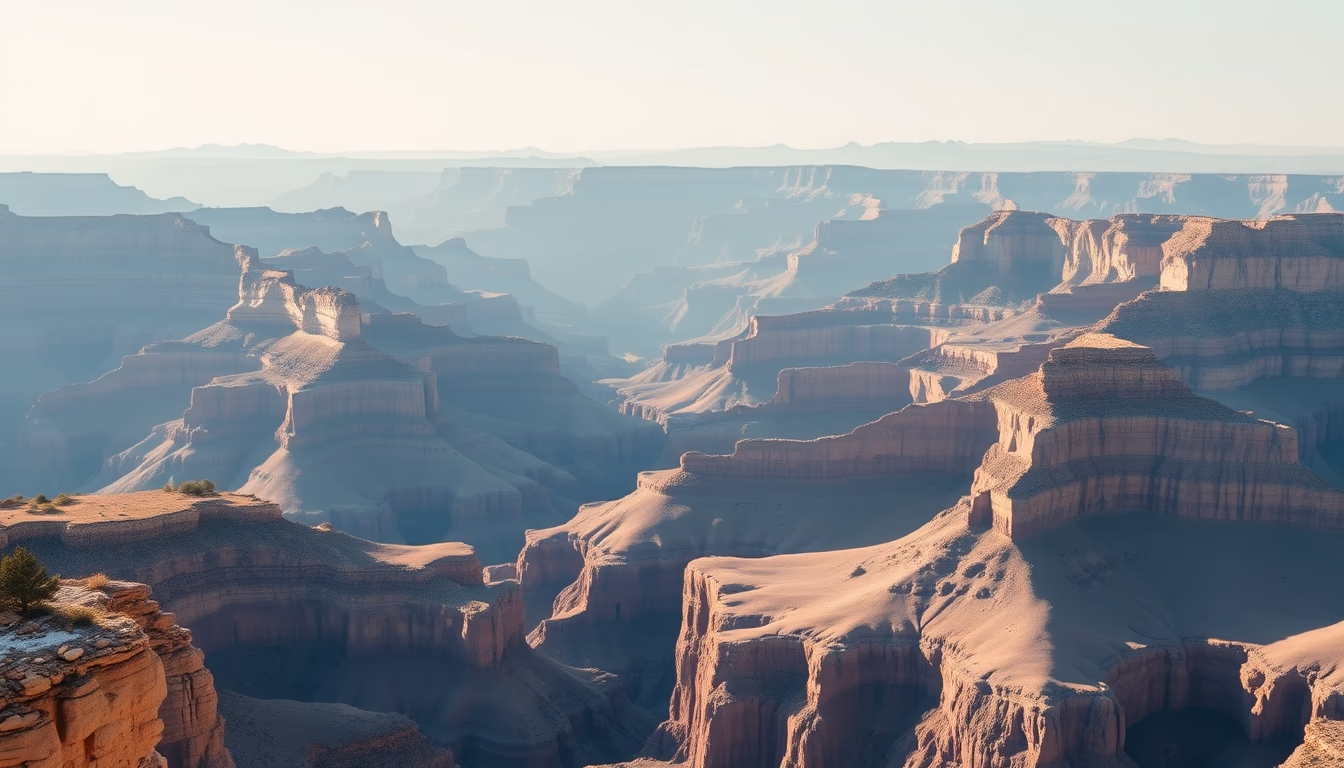
The Grand Canyon in Arizona displays 2 billion years of geological history in its rock walls and vast panoramic expanse.
About this subject
The Grand Canyon is one of the most iconic natural landmarks in the United States, located in northern Arizona. Carved by the Colorado River over millions of years, the canyon reaches depths of over 1,800 meters and stretches approximately 446 kilometers. Its rock layers reveal a geological timeline dating back to the Precambrian period, with formations like the Granite Gorge and Bright Angel Shale. Grand Canyon National Park, established in 1919, protects this unique landscape and attracts about 6 million visitors annually.
The region hosts surprising biodiversity, with ecological zones ranging from the Basin and Range desert to boreal forests on the Colorado Plateau. More than 1,500 species of plants, 355 species of birds, and 89 species of mammals have been recorded in the park. The canyon also holds deep cultural significance for Native American tribes such as the Havasupai and Navajo, who have inhabited the area for centuries. Archaeological sites indicate human presence for over 10,000 years.
Fun facts: The Grand Canyon is not the largest or deepest canyon in the world, Cotahuasi Canyon in Peru and Kali Gandaki Gorge in Nepal are deeper, but it is famous for its dramatic colors and immense scale. Viewpoints like Desert View and the Bright Angel Trail are popular. Weather conditions vary drastically: at the bottom of the canyon, summer temperatures exceed 38°C, while on the rim they can be mild. Additionally, the Skywalk at Grand Canyon West offers a panoramic view from a glass floor.
Frequently Asked Questions
What is the maximum depth of the Grand Canyon?
The Grand Canyon reaches depths of over 1,800 meters (approximately 1.1 miles) at some points.
How many years of geological history do the rocks of the Grand Canyon represent?
The exposed rock layers show about 2 billion years of Earth's geological history.
Which Native American tribes have historical ties to the Grand Canyon?
Tribes such as the Havasupai, Navajo, and Hopi have cultural and historical connections to the area, with evidence of habitation for thousands of years.
Direct URL
https://pub-c7d6a6ea828543ac903a74a341ccb2e1.r2.dev/imagens/grand-canyon-panoramic-minimalist-composition-p0.avifHow to credit
Include a visible link back to UtilizAí. Copy one of the snippets below:
<a href="https://xn--utiliza-eza.com/en/midia/imagens/grand-canyon-panoramic-minimalist-composition-p0">Grand canyon panoramic</a> by <a href="https://xn--utiliza-eza.com">UtilizAí</a>, licensed under <a href="https://creativecommons.org/licenses/by/4.0/">CC BY 4.0</a>.
[Grand canyon panoramic](https://xn--utiliza-eza.com/en/midia/imagens/grand-canyon-panoramic-minimalist-composition-p0) by [UtilizAí](https://xn--utiliza-eza.com), CC BY 4.0
License: CC-BY-4.0