GPU cluster in cooling data center
1344×768 · AVIF · CC BY 4.0
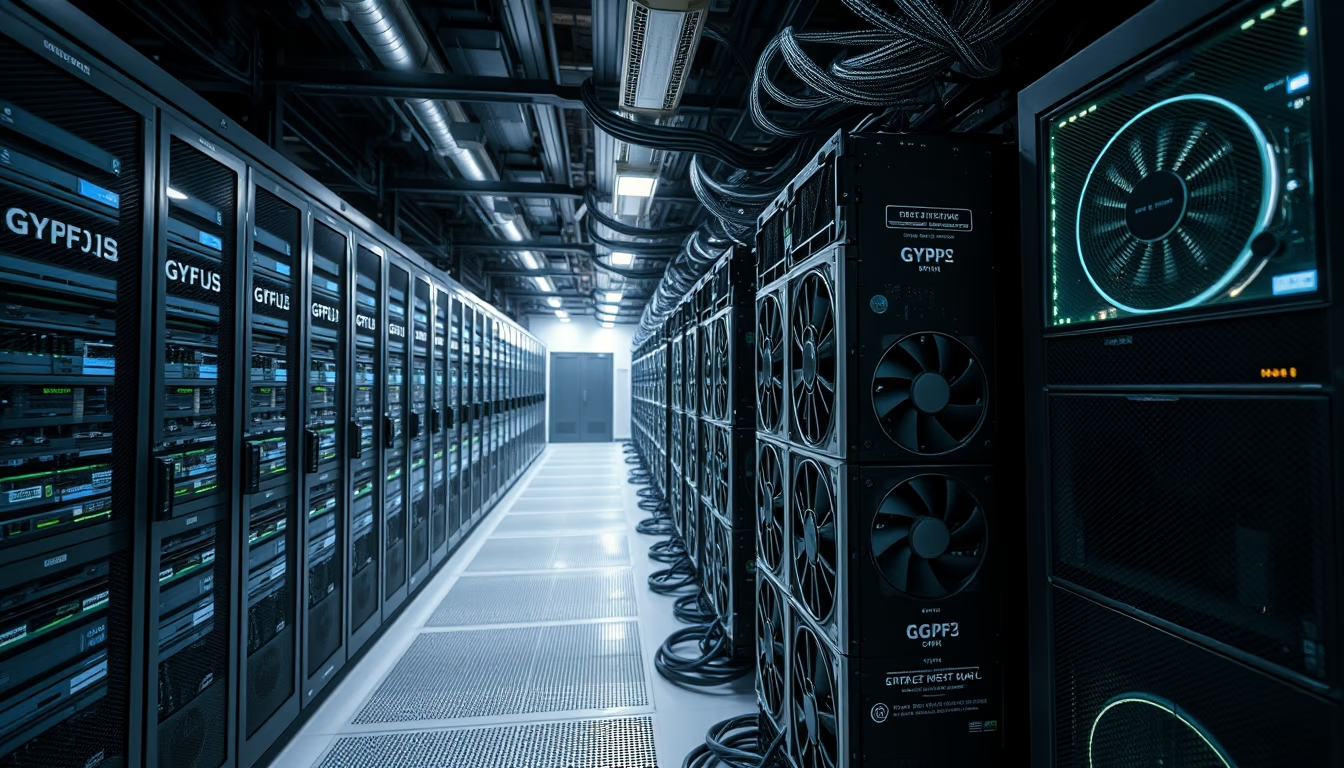
A GPU cluster in a cooling data center reveals the physical infrastructure enabling large-scale artificial intelligence model training.
About this subject
GPU clusters are the backbone of modern artificial intelligence model training, such as GPT-4 and BERT. Unlike traditional CPUs, GPUs have thousands of parallel cores that simultaneously process massive data volumes, reducing training time from weeks to hours. In data centers, these clusters are mounted in specialized racks, interconnected by high-speed networks like InfiniBand or 100 Gbps Ethernet.
Cooling is a critical aspect: a single GPU rack can consume 30 to 40 kW of power, generating intense heat. Direct-to-chip liquid cooling or dielectric immersion systems are increasingly common, as they dissipate heat more efficiently than air. Major cloud providers like AWS, Google Cloud, and Microsoft Azure invest billions in cooled data centers to support AI workloads.
Interestingly, the term "GPU cluster" also echoes the early days of high-performance computing, when supercomputers like the Cray-1 used liquid cooling. Today, NVIDIA dominates the market with its A100 and H100 GPUs, designed specifically for deep learning. Brazil, while lacking hyperscale data centers, has facilities like the LNCC Data Center in Petrópolis, which operates clusters for scientific research.
Demand for GPUs is growing exponentially: the AI chip market is estimated to reach US$100 billion by 2025. However, global semiconductor shortages and high energy costs raise sustainability concerns. Data centers already account for about 1% of global electricity consumption, with cooling representing up to 40% of that. Solutions like renewable energy and heat recycling are being explored to mitigate environmental impact.
Frequently Asked Questions
Why are GPUs better than CPUs for training AI?
GPUs have thousands of parallel cores, ideal for matrix operations common in neural networks. CPUs have few cores optimized for sequential tasks, making GPUs up to 100x faster for model training.
What is the ideal operating temperature for a cooled data center?
ASHRAE recommends temperatures between 18°C and 27°C. With liquid cooling, GPUs can operate at chip temperatures up to 85°C, while the coolant stays around 40°C to 50°C.
How much does a GPU cluster cost to train a model like GPT-4?
Training GPT-4 is estimated to have cost around US$100 million, involving thousands of GPUs running for months, plus energy, cooling, and engineering expenses.
Direct URL
https://pub-c7d6a6ea828543ac903a74a341ccb2e1.r2.dev/imagens/gpu-cluster-in-cooling-data-center-documentary-photography-studio-professional-lighting.avifHow to credit
Include a visible link back to UtilizAí. Copy one of the snippets below:
<a href="https://xn--utiliza-eza.com/en/midia/imagens/gpu-cluster-in-cooling-data-center-documentary-photography-studio-professional-lighting">GPU cluster in cooling data center</a> by <a href="https://xn--utiliza-eza.com">UtilizAí</a>, licensed under <a href="https://creativecommons.org/licenses/by/4.0/">CC BY 4.0</a>.
[GPU cluster in cooling data center](https://xn--utiliza-eza.com/en/midia/imagens/gpu-cluster-in-cooling-data-center-documentary-photography-studio-professional-lighting) by [UtilizAí](https://xn--utiliza-eza.com), CC BY 4.0
License: CC-BY-4.0