GPU cluster in cooling data center
1344×768 · AVIF · CC BY 4.0
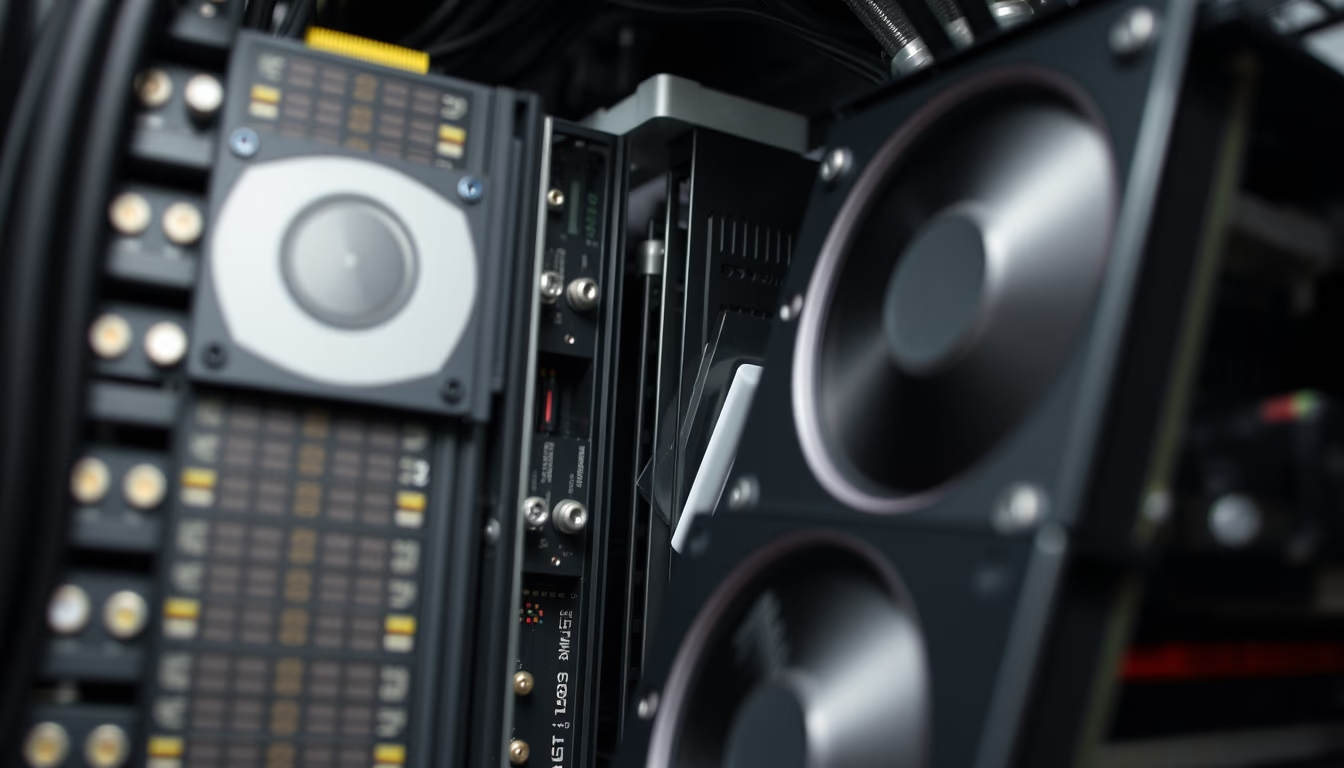
GPU cluster in a cooling data center: essential infrastructure for high-performance computing and artificial intelligence.
About this subject
GPU clusters are fundamental building blocks of modern computing, especially for artificial intelligence, machine learning, and scientific simulations. In a cooled data center, dozens or hundreds of GPUs are interconnected via high-speed networks such as NVLink or InfiniBand to operate as a parallel supercomputer. Liquid cooling or forced air is critical to dissipate heat from these components, which can consume up to 700 W per GPU in models like the NVIDIA H100 or AMD MI300X.
The physical layout of GPUs in racks follows standards like the Open Rack from the Open Compute Project, optimizing airflow and power density. Modern data centers employ immersion cooling or direct-to-chip cooling to maintain temperatures below 80°C, avoiding thermal throttling and extending equipment lifespan. Energy efficiency is measured by PUE (Power Usage Effectiveness), which in cutting-edge facilities reaches 1.1 or lower.
Demand for GPU clusters has exploded with the popularity of language models like GPT-4 and LLaMA, along with applications in computer vision and signal processing. Companies like NVIDIA, AMD, and Intel compete in the data center GPU market, with NVIDIA dominating about 80% of the segment. A cluster of 1000 GPUs can consume over 1 MW of power, requiring careful electrical and thermal infrastructure planning.
Fun fact: the world's largest GPU cluster, Frontier at Oak Ridge National Laboratory, uses over 37,000 AMD GPUs and occupies 7,000 m². Liquid-cooled data centers can reduce cooling energy consumption by up to 40% compared to traditional air cooling.
Frequently Asked Questions
What is a GPU cluster?
It is a set of multiple interconnected GPUs that work in parallel to process intensive computational tasks, such as AI model training and scientific simulations.
Why is cooling important in GPU data centers?
High-performance GPUs generate a lot of heat; without proper cooling, they can overheat, reduce performance, or damage components. Liquid or air cooling systems maintain optimal temperatures.
What is the difference between air and liquid cooling in data centers?
Air cooling uses fans and ducts, is simpler but less efficient. Liquid cooling (immersion or direct-to-chip) dissipates heat more effectively, allowing higher power density and energy savings.
Direct URL
https://pub-c7d6a6ea828543ac903a74a341ccb2e1.r2.dev/imagens/gpu-cluster-in-cooling-data-center-closeup-macro-shot-overcast-soft-daylight.avifHow to credit
Include a visible link back to UtilizAí. Copy one of the snippets below:
<a href="https://xn--utiliza-eza.com/en/midia/imagens/gpu-cluster-in-cooling-data-center-closeup-macro-shot-overcast-soft-daylight">GPU cluster in cooling data center</a> by <a href="https://xn--utiliza-eza.com">UtilizAí</a>, licensed under <a href="https://creativecommons.org/licenses/by/4.0/">CC BY 4.0</a>.
[GPU cluster in cooling data center](https://xn--utiliza-eza.com/en/midia/imagens/gpu-cluster-in-cooling-data-center-closeup-macro-shot-overcast-soft-daylight) by [UtilizAí](https://xn--utiliza-eza.com), CC BY 4.0
License: CC-BY-4.0