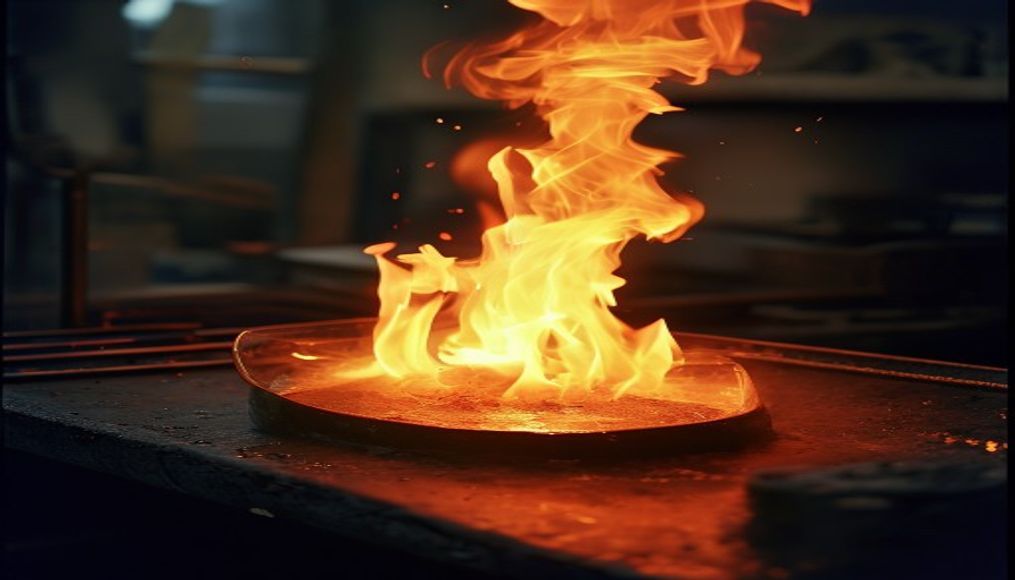
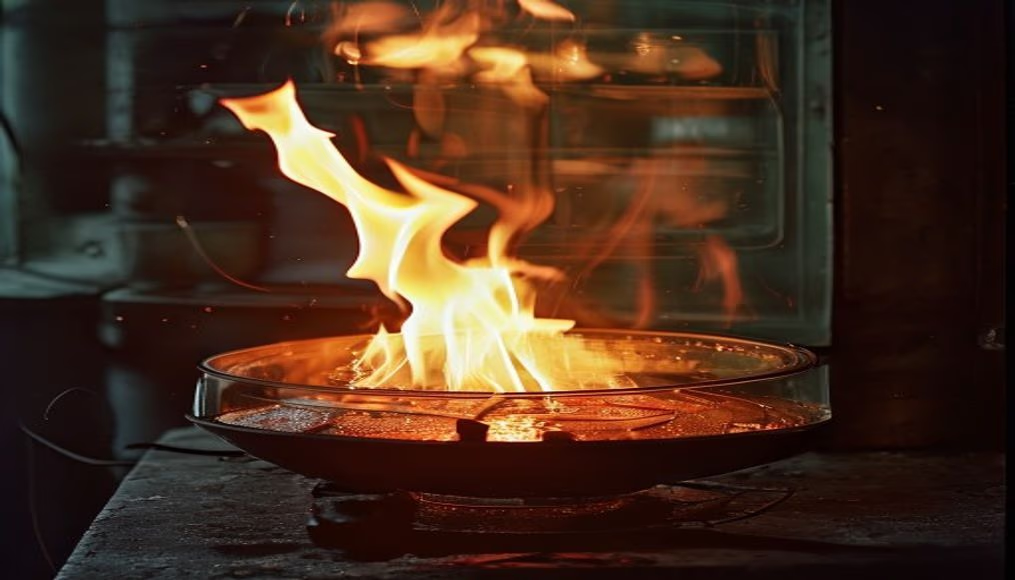
Glassblowing furnace flame
1344×768 · AVIF · CC BY 4.0
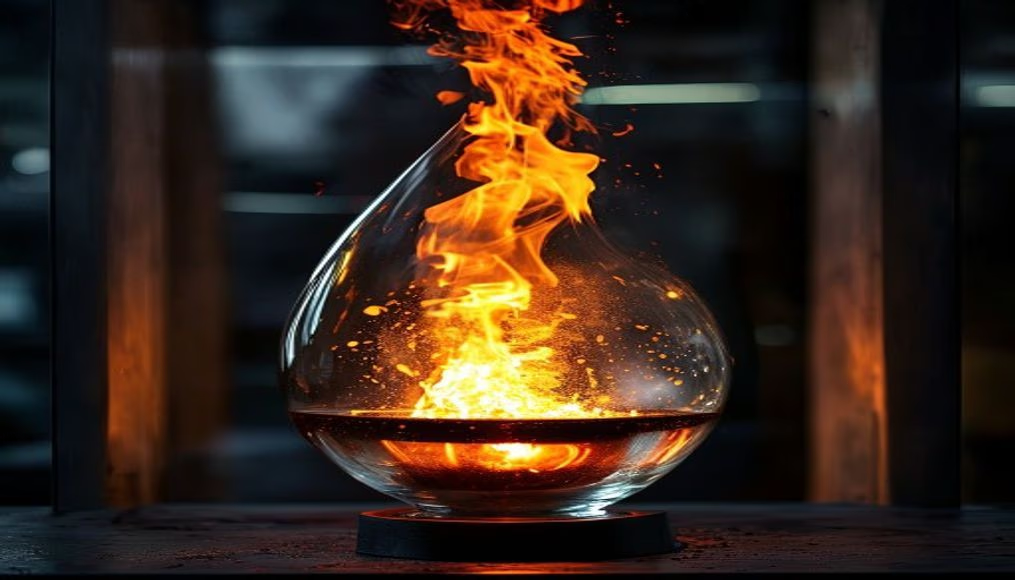
The flame of a glassblowing furnace reaches over 1000°C, crucial for shaping molten glass into artisanal and industrial pieces.
About this subject
Glassblowing is an ancient technique dating back to 1st century BC Syria. The furnace, the heart of the process, maintains glass at around 1100°C, the temperature at which glass becomes malleable. The visible flame at the furnace opening is fed by a mixture of gas and compressed air, creating an oxidizing or reducing flame as needed. This flame not only heats the glass but is also used to reheat pieces during shaping, preventing thermal shock.
In Brazil, glassblowing has a strong tradition in cities like João Pessoa and Olinda, where artisans produce everything from decorative vases to utilitarian objects. The technique requires years of practice: the artisan rotates and blows the glass on a metal rod, controlling temperature and viscosity. The furnace flame also influences the color of the glass, as certain metal oxides react differently under various flame conditions. For example, copper oxide can produce green or reddish tones depending on the furnace atmosphere.
Interestingly, modern glassblowing furnaces are designed for energy efficiency but maintain the same basic principle as Roman kilns. Temperature is monitored by thermocouples and controlled by computers, ensuring uniformity. The visible fire is not just a flame but an incandescent plasma: burning fuel particles emitting visible light. This light ranges from yellow to intense orange, depending on temperature and fuel composition. In gas furnaces, the typical flame is blue at the base and orange at the top, indicating complete combustion.
Beyond artisan use, the furnace is essential in the glass industry, such as in the production of glass for cars and windows. In these factories, continuous furnaces operate 24 hours a day, maintaining tons of molten glass. Human blowing gives way to automatic machines, but the principle of intense heat remains. The image of fire emerging from the furnace symbolizes the transformative power of heat, the element that allows glass to change from solid to liquid and back, creating objects of beauty and functionality.
Frequently Asked Questions
What is the temperature of a glassblowing furnace?
A glassblowing furnace reaches temperatures between 1000°C and 1200°C, depending on the type of glass and technique used. The exact point is controlled to keep the glass molten and malleable.
What determines the color of the furnace flame?
The flame color depends on temperature and fuel composition. Blue flames indicate complete combustion and higher temperatures, while orange or yellow flames suggest incomplete combustion or incandescent particles.
Is glassblowing dangerous?
Yes, glassblowing involves risks such as burns from hot glass or flames. Artisans use protective equipment like gloves and special glasses and follow strict safety protocols.
Direct URL
https://pub-c7d6a6ea828543ac903a74a341ccb2e1.r2.dev/imagens/glassblowing-furnace-flame-architectural-photography-p2.avifHow to credit
Include a visible link back to UtilizAí. Copy one of the snippets below:
<a href="https://xn--utiliza-eza.com/en/midia/imagens/glassblowing-furnace-flame-architectural-photography-p2">Glassblowing furnace flame</a> by <a href="https://xn--utiliza-eza.com">UtilizAí</a>, licensed under <a href="https://creativecommons.org/licenses/by/4.0/">CC BY 4.0</a>.
[Glassblowing furnace flame](https://xn--utiliza-eza.com/en/midia/imagens/glassblowing-furnace-flame-architectural-photography-p2) by [UtilizAí](https://xn--utiliza-eza.com), CC BY 4.0
License: CC-BY-4.0