Gladius roman short
1344×768 · AVIF · CC BY 4.0

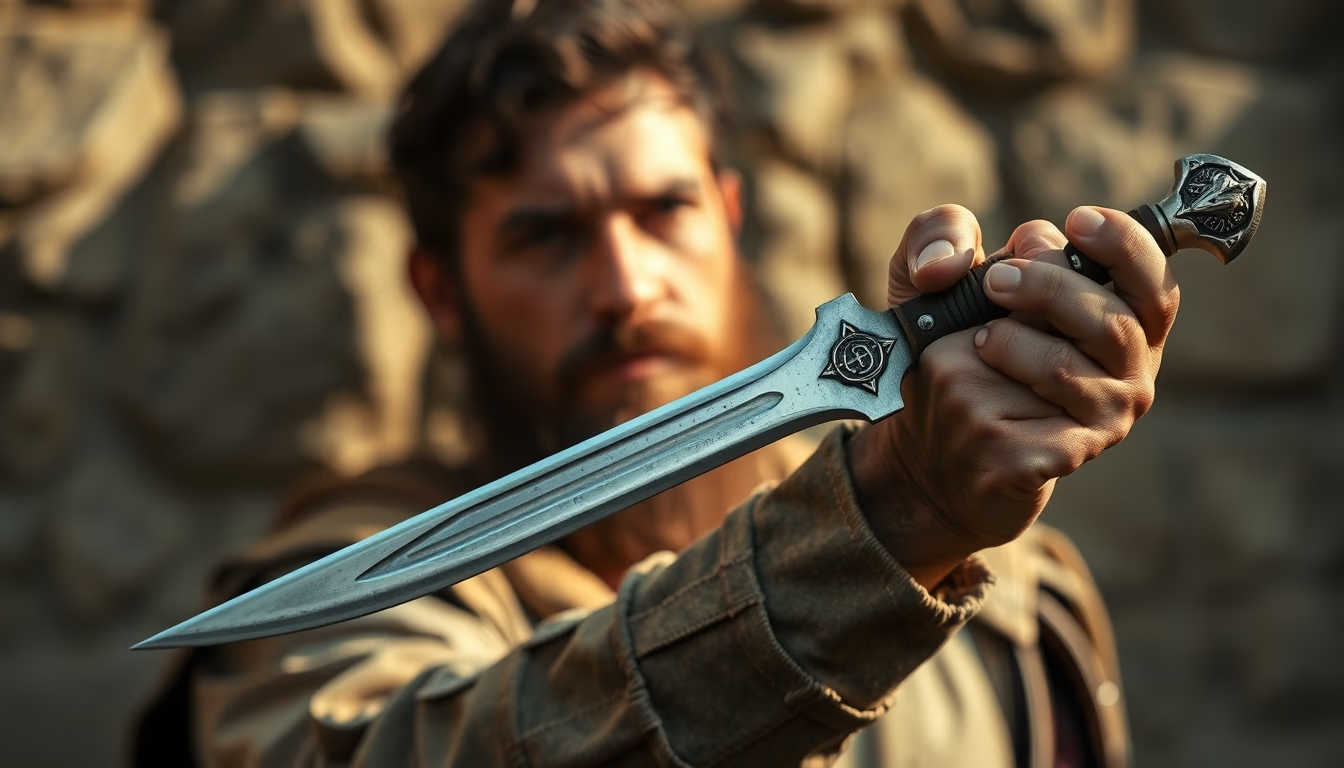
The Roman short gladius was the standard sword of legionaries, essential for close combat in the Roman Empire.
About this subject
The Roman short gladius, known as gladius hispaniensis, was the iconic sword of legionaries during the Republican and Imperial periods. Originating from the Iberian Peninsula, it was adopted by Romans after contact with Celtiberian warriors. Its blade measured between 60 and 85 centimeters, with two edges and a sharp point, designed for thrusting and cutting. The sword was lightweight, weighing about 1 kg, and balanced for use in close formation, such as the maniple or century.
Production of the gladius was centralized in military arsenals, such as those in Gaul and Britain. The hilt was often made of wood, bone, or ivory, and the guard and pommel reinforced the grip. The gladius replaced earlier longer models because its versatility in close combat was superior. Legionaries constantly trained with wooden swords, and the gladius's effectiveness was crucial for victories like the Battle of Zama (202 BC).
With the decline of the Roman Empire, the gladius gradually gave way to longer swords, such as the spatha, used by cavalry. However, its design influenced later weapons, including the medieval gladius and the Roman sword as a symbol of power. Today, replicas are used in historical reenactments and museums, such as the National Museum of Roman Art in Mérida, Spain. Interestingly, the term "gladiator" derives from gladius, highlighting its cultural significance.
Frequently Asked Questions
What was the typical length of a Roman short gladius?
The Roman short gladius typically had a blade between 60 and 85 centimeters, with an overall length ranging from 75 to 100 centimeters including the hilt.
Why was the gladius more effective in close combat than longer swords?
The gladius was lightweight, balanced, and short, ideal for quick thrusts in tight formations, allowing legionaries to attack precisely without exposing themselves.
Where can I see original examples of Roman gladii?
Original specimens are displayed in museums such as the National Museum of Roman Art in Mérida (Spain) and the British Museum in London (UK).
Direct URL
https://pub-c7d6a6ea828543ac903a74a341ccb2e1.r2.dev/imagens/gladius-roman-short-documentary-photography-fresh0.avifHow to credit
Include a visible link back to UtilizAí. Copy one of the snippets below:
<a href="https://xn--utiliza-eza.com/en/midia/imagens/gladius-roman-short-documentary-photography-fresh0">Gladius roman short</a> by <a href="https://xn--utiliza-eza.com">UtilizAí</a>, licensed under <a href="https://creativecommons.org/licenses/by/4.0/">CC BY 4.0</a>.
[Gladius roman short](https://xn--utiliza-eza.com/en/midia/imagens/gladius-roman-short-documentary-photography-fresh0) by [UtilizAí](https://xn--utiliza-eza.com), CC BY 4.0
License: CC-BY-4.0